Blog Posts

Mostrar mensagens com a etiqueta nasa. Mostrar todas as mensagens

sábado, 8 de dezembro de 2018

Raspberry Pi 3, A+! E alojar as Impressoras, Mini-satélites(!), Lixar sem Stress, e o PVC sem Mestre

A placa Raspi não pára!
Agora um autêntico Computador, Quad-Coore de 64 bits, e o que mais,  a 1,4 GHz, vão ver à página deste Link as Especificações desta bela máquina!


Raspberry Pi 3 Model A+ Unboxing
e14phil

Introducing the Raspberry Pi 3 Model A+, the latest product in the Raspberry Pi 3 range.
Like the Raspberry Pi 3 Model B+, it boasts a 64-bit quad core processor running at 1.4 GHz, dual-band 2.4 GHz and 5 GHz wireless LAN, and Bluetooth 4.2/BLE.
The dual-band wireless LAN comes with modular compliance certification, allowing the board to be designed into end products with significantly reduced wireless LAN compliance testing, improving both cost and time to market.


...Algumas dicas que não são óbvias, e são mesmo essas as que nos tramam, quando não as sabemos...
Saibam então como fazer uma caixa para as vossas Impressoras 3D, que permita uma temperatura estável, sem abafar a máquina, e mais!
Dicas porreiras.


5 Tips for Building a 3D Printer Enclosure
3D Printing Nerd

While at Printed Solid, I spoke to David Randolph about 3d printer enclosures. They sell a number of enclosures, and even white label their enclosures for other resellers. Knowing I tried to build one myself with Bill Doran, I asked Dave to give me his five best tips for building one!


MINI-SATÉLITES!!!
Muháháhá!
Malta Estudante, e Super-Geeks, aprendam como construír estes bichinos, mas para durarem, que lançá-los, não é pela UPS, ou pelos Correios.
Ainda... LOL
Maravilha.


ArduSat-1 and ArduSat-X launched from the ISS Picture credit: NASA
Build a CubeSat Satellite that actually works, Part 1: Make it Resilient
Bill Marshall

It’s such a great idea: students in schools and colleges inspired to become the next generation of Space engineers by building and orbiting their own satellite. But it’s not a new idea. The first amateur satellite, OSCAR 1 was actually launched in 1961 as a secondary payload - only four years after Sputnik 1. Project OSCAR continued with more launches until 1969 when the Radio Amateur Satellite Corporation (AMSAT) was formed to co-ordinate further activity. The OSCARs are primarily amateur radio communication satellites built by students in educational establishments worldwide. Three were constructed at Surrey University in the UK starting with UoSAT-1 (OSCAR 9) in 1981 then UoSAT-2 (OSCAR 11) in 1984 and UoSAT-3 (OSCAR 14) in 1990. The educational purpose behind these satellites was highlighted when a special purpose radio receiver with software for the BBC Microcomputer became available. In the late 1990’s the CubeSat was born when it was realised that thanks to microelectronics it had become possible to squeeze most of the functionality of an OSCAR satellite into a 10cm cube. Since the first one made it into Low-Earth Orbit (LEO) in 2003, many more have followed. But the failure rate has been high for two reasons: the stresses of launch can ‘break’ the CubeSat before it even reaches orbit, and the Space environment is very hazardous for delicate electronics once orbit is achieved. What can be done to increase the likelihood of success?


Para não ficarem piores da Vista, nem dos Pulmões, não se lixem, ao lixar à máquina, e usem mas é esta Caixa protectora, que a saúde é essencial.
E também é essencial à paz de espírito, uma Garagem limpa, para terem de ouvir a querida Esposa a ralhar à brava...
LOL


Garage Dust/Sanding Enclosure
corbor4shore

INTRODUCTION:
I have a very small shop in my two car garage. Unfortunately I have to share that space with two cars. When I am sanding, routing or drilling, dust seems to coat every surface in my garage, including my wife car. I was tired of washing my wife’s car so I needed to find a solution to all the dust I was creating. I did some research and found some sanding downdraft tables, but I couldn’t imagine those working without an incredibly powerful vacuum (which I do not have), plus they do not contain the dust jettisoned out. I then started looking at bead blasting cabinets and found that I liked the containment aspect of the cabinet but I needed the downdraft capabilities of the sanding tables, so I decided to create a hybrid.

https://www.instructables.com/id/Garage-DustSanding-Enclosure/


Aprendam 5 lições duma assentada, sobre como usar o humilde, mas tão útil, Tubo de PVC para uma data de coisas boas, cortesia da nodda amiga, audreyobscura, que não pára de nos surpreender com a sua creatividade:


PVC CLASS
audreyobscura

Plastic PVC is most commonly used by plumbers and very clever DIY enthusiasts. This material and pipe were designed to transport water, as it cannot wear out over time like rusting metal can. PVC is also structurally very strong. When parts are constructed properly, it can support structures that are hundreds of pounds!
This class aims to go over the material properties of PVC as well as the most common ways it is worked, machined, joined, and finished. You'll be inspired to create furniture, agriculture projects, and more after learning these simple techniques to work with PVC.


terça-feira, 5 de agosto de 2014

NASA em 3D, manejar Ímanes MESMO fortes, e KISSlicer

Já podem imprimir em 3D os vossos Modelos de Sondas Interplanetárias, e alguns Asteróides, e Paisagens Planetárias.
Não, o Modelo do Módulo Lunar Apolo ainda não lá está, nem sei se estará em breve, mas a Soanda Voyager, sim, já a podem imprimir.


NASA releases 3D-printable models to the public

David Szondy

If you have access to a 3D printer, then you can build your own space fleet courtesy of NASA – provided you don’t mind spacecraft that are plastic and four inches long. As part of its continuing program of education and outreach, the space agency has released 22 printable models of NASA and European space probes, asteroids, and planetary landscapes for the hobbyist and space enthusiast.

The 3D models are available from the NASA website for free and are printable on any desktop 3D printer using plastic filaments. It’s the latest in a long tradition of NASA science, technology artwork made available to the public going back to its founding in 1958.

http://www.gizmag.com/nasa-3d-printable-models/33116/


Os Ímanes em Neodímio não são brincadeira, e podem-vos esmagar um dedo ou dois, se manejados distraídamente!
Para evitar isso, aprendem com quem sabe, a separá-los, e a juntá-los:


How to Separate Strong Magnets

Neodymium magnets are strong. Really strong. If you have never handled neodymium magnets before, you will be surprised at their remarkable strength. They're not the ceramic magnets you find at craft stores.

Whether talking about relatively small magnets like 1/4" diameter D41 discs, or monstrously big block magnets like our BX8X8X8, separating these magnets can prove challenging to those without experience.

Here, we share some of our strategies and tips for separating strong neodymium magnets.
The Basic Idea

Neodymium magnets pull towards each other with a strong force. If you try pulling two magnets directly apart, you need quite a bit of force to pull them apart. To separate one magnet from another, you'll need to pull with a force equal to the listed Pull Force Case 1 number.

This can be difficult if the magnet is strong, or if there isn't much area to grab onto the magnet. Most methods of separating these magnets do two things:
They provide more leverage and/or a better way to grip the magnets
They move the magnets apart laterally (sideways), which requires less force

http://www.kjmagnetics.com/blog.asp?p=separating-magnets


Dica de Affonso Orciuoli, eis como operar o KISSlicer, que vos transforma os vossos Objectos em 3D, em G-Code, pronto para a Impressora, Fresa, etc.


Introduction to KISSlicer

transcendtient

This is a brief overview of KISSlicer settings. I cover what most of the fields mean and show how to select a file to slice and placement on the print surface.


quarta-feira, 30 de abril de 2014

Impressora 3D dos Instructables! E um medidor de pulsação, um Kit Espacial, e um projector Raspi

E que tal construírem a vossa própria Impressora 3D?
Eis uma forma de terem em casa uma Impressora 3D por muito pouco...


Eventorbot! Open source DIY 3D printer. Free plans
eventorbot
For those who do not have access to a 3D printer. You can order the plastic parts and frame at: http://www.kickstarter.com/projects/1874396831/eventorbot-open-source-3d-printer
http://www.instructables.com/id/Eventorbot-Open-source-3D-printer-Free-plans/


Homebrew Arduino Pulse Monitor (Visualize Your Heartbeat)
ASCAS

Movies look cool with those EKG (electrocardiogram), the one that beeps and detects heart activities. A few months ago, we had to shoot a hospital scene for our school project. We needed an EKG instrument. To keep the movie authentic, we didn't want to fake the readings so we made the next best thing, a pulse monitor. Since my dad is a doctor he gave me some advice to design the pulse monitor.


Temos aqui algo de fascinante, um Kit para os vosso filhos, ou até para vocês, mais um Kit da littlebits, e este, feito em colaboração com a NASA!


SPACE KIT

IN COLLABORATION WITH NASA


MAKE SOMETHING THAT TEACHES SOMETHING
littleBits brings you fun and powerful ways to explore Earth + Space science in the classroom and at home.

Designed in collaboration with NASA SCIENTISTS & ENGINEERS

Includes 12 modules, 5 NASA lesson plans and 10 STEAM activities

Learn scientific principles like Electromagnetic, Kinetic, & Potential Energy

Make a Mars Rover or an ISS; transmit music wirelessly and more!

Connect with the littleBits library to infinitely expand your discoveries 

http://littlebits.cc/kits/space-kit


E com este Projector, Impresso em 3D, e com Raspberry pi, podem fazer uma data de Multimédia, bastando-vos arranjar uma Lanterna LED decente...

É bom!


Augment Your Reality With The iTorch raspberry pi flashlight projector  
MrTravisHiggins

iTorch

Media Sharing

Created By: Travis Higgins
This Instructable is for a prototype homemade projector that can be illuminated by any decent LED flashlight/floodlight.

This is my first published instructable so please leave comments and/or suggestions! Any feedback is very welcome and I will try to respond to everyone as soon as I see it!
At this stage the iTorch is a kit that I hope to be able to make available if I were to somehow get my hands on my own laser cutter. I have been spending a good amount of money using school equipment to laser cut this project, and got a quote to use the 3d printer and the price was astronomical. So needless to say a laser cutter and 3d printer would go to good use and be greatly appreciated.

Though you could probably reverse engineer one of your own. ;)
http://www.instructables.com/id/iTorch-raspberry-pi-flashlight-projector/


terça-feira, 3 de setembro de 2013

Do Laser para a Fresa, Engenhocas pá criançada, Impressão 3D no Espaço, e TV de Cartão!


Se já fizeram algumas coisas com Desenhos Vectoriais que mandam cortar em placas, por Laser, fazer o mesmo Desenho, mas com uma Fresa CNC, não é tão simples...
Porque o corte da Ferramenta de Corte é muito mais grosso que o do Laser CNC!
Pois o nosso amigo Jon cantin dá-vos estes pareceres, e a sua experiência pessoal a fazer isso mesmo, por isso, têem aqui onde aprender como o fazer, para os vossos projectos:


Sydney Harbour Bridge: CNC Laser to Router Conversion 3 ~ Taking Shape 
Continuing on the file conversion here on CNCKing.com… As I design all my models based on material thickness, these kind of thickness issues will reek havoc on the final design if I don’t catch all of them. Although I work in a 3D environment, it’s really 2D extruded to the material thickness. In this picture, you see a major problem. If I layer a piece over the bottom step that’s 4mm (squares help for sizing), I will have 2mm sticking out and intersecting the piece above it. Solution? Bring it down to 4mm and review the model closely to catch all of these.
The model will already be highly modified simply due to the span doubling but throw-in a 150% increase in size using the same material thickness and what may “appear” easy and straight forward has a lot of issues that could derail it in the real world. I went through TONNES of these issues with my earlier models so I know what to watch-out for but sometimes they can be hard to spot until you cut the model out and build it in the real world for the first time.

http://blog.cncking.com/sydney-harbour-bridge-cnc-laser-router-conversion-3-taking-shape/


Isto é que motiva a criançada a meter mãos à obra! Os Vibrabots são umas Engenhocas simplissíssimas, e todavia, divertidas, logo que se montam!
Estas, até têem Controle Remoto:


RC circuit for a Bibberbeest / vibrobot

ynze
Last February I posted a vibrobot project "Scary bots and Super Creeps", making vibrobots out of connectors, cable binders and electrical wire. The creatures are named "bibberbeest" in Dutch.
Making Bibberbeests with kids is a HUGE success at schools, parties and festivals (second video in this step)! In the past months I witnessed 500 kids (6 yrs and up) making their very own, unique Bibberbeest.

Now what is more fun than a Bibberbeest? A remote controlled bibberbeest, using a standard audio/video RC? And it makes the project a bit more challenging to high school kids like monster-marit and emilyvanleemput :-)
So what I needed was a receiver circuit for a standard TV RC that can switch on and off a Bibberbeest, working on 3 Volts max.

At first I was tempted to go the microcontroller way, inspired by Masynmachien's Wiebelbot. But then I bumped into this IR toggle switch diagram, which I eventually used with some small modifications. The circuit worked fine on a breadboard, but turns out to be a bit unpredictable as a Bibberbeest brain... So the circuit in this I'ble is not a nicely polished and tested end result. It's a proof of concept and hopefully an inspiration if you're into vibrating creature making...


E tinha de acontecer, o Fabbing vai chegar ao Espaço!
Estes bacanos obtiveram um Prémio da Nasa, e lá vão eles, continuar a desenvolver uma ideia que vai facilitar enormemente a Exploração Espacial, porque o que se Fabricar lá encima...
Não presisa duma fortuna par ser montado cá embaixo, e mandado por Foguetão!


SpaceFab: 3D printing and robotic assembly in space

Colin Dunjohn

SpiderFab, a series of technologies under development by Tethers Unlimited, Inc. (TUI), combines 3D printing and robotic assembly to build and create spaceship components and structures in orbit. The groundbreaking systems are being designed to enable on-orbit construction of antennas, booms, solar arrays, trusses and other multifunctional components, ten to hundreds of times larger than currently possible with existing technology.
TUI has recently received an additional US$500,000 phase 2 NASA Innovative Advanced Concepts (NIAC) contract, supplementing an initial $100,000 phase 1 contract awarded in August 2012 to develop the new technology.


E chegámos à Televisão de Cartão! Mais própriamente, Televisores de Cartão uma versão em Cartão dos Televisores, Aparelhos de Televisão mais primitivos, os Mecânicos(!), e vejam como é fácil de fazer, utilizando uma Placa Arduino:


A cardboard televisor (with arduino and LEDs)

Sparticles

Recently I saw a documentary about the history of the television.  And to my surprise they showed that there existed a mechanical television before the well known CRT televisions.

Those mechanical televisions or televisors were pretty smart and simple.
A CRT is simply an electron beam that scans a surface covered with a luminescent phosphor line by line. And the intensity of the beam is then directly proportional with the whiteness of that particular spot on the screen.

A televisor works in a very similar way. But instead of an electron beam, holes are used. Holes in a spirally pattern on a disk scan a small area as the disk rotates.  After that particular area an electrical lamp varies its intensity. Bright means a bright spot wherever a hole is located.

There are some videos on youtube from people who have built other televisors. With more lines and far better image quality than this one. (but they aren't made out of cardboard)

This instructable documents the build of such a very small 24 line televisor completely from scrap cardboard, scavenged electronic parts a laptop and an arduino.
The image quality is very, very low but it is built out of cardboard and it has only 24 lines.
But it was a fun build.
If you want a good display, there are much better alternatives, (pretty much everything is a better alternative).


terça-feira, 13 de novembro de 2012

3D para a NASA, Memórias Wi-fi, Robots em revistas, Foto mesmo 3D, e antenas tele-controladas

A NASA usa a Impressão 3D para criar peças complexas, olhem que isto, não são Makerbots...
Estas Impressoras Laser, fundem pó de Metal!


NASA using 3D laser printing to create complex rocket parts

David Szondy

NASA engineers are using a 3D laser printing system to produce intricate metal parts such as rocket engine components for its next-generation Space Launch System (SLS). The method called “selective laser melting “ (SLM) promises to streamline fabrication and significantly reduce production costs.

Rocket engines are as complex as precision watches, but watches don’t have to deal with highly corrosive or cryogenic liquids, gases hot enough to melt steel, or destructive stresses and vibrations. Rocket engines have to do all this the first time they’re used and they have to fit a great deal of gear into a very cramped space. Fabricating the parts for these engines is an exacting, time consuming and expensive task. Since many of their components are very intricate, making them is just the sort of job for 3D printers.


Isto é fantástico, Memórias para as vossas Câmaras Digitais... Com ligação Wi-Fi!!!
Assim, não precisam de comprar outras Câmaras que as que já têem...


Transcend Wi-Fi SD cards give cameras a wireless boost

Simon Crisp

While many cameras now pack Wi-Fi connectivity for the wireless sharing and transferring of captured images, those owning cameras without such capabilities need not necessarily have to shell out cash for an entirely new camera to get wireless connectivity. Transcend has announced a new range of Wi-Fi SD memory cards that add wireless capabilities to SDHC-compatible digital cameras, along with a companion app for iOS and Android devices that allows users to browse the contents of the card, instantly view images on their mobile device as they are taken, and share content online.

http://www.gizmag.com/transcend-wifi-sd/24966/


O que mais podem as Revistas De Agostini oferecer, para montarem em casa, número a número?
Ora, um Robot!


Build your own Robi robot with weekly magazine subscription

Jason Falconer

The Japanese arm of De Agostini, an Italian-based publishing house known for magazines that drip feed buyers model components on a weekly basis, has chosen something a bit different for its latest offering. Instead of the traditional model car or boat, the company is letting subscribers build their own robot. After 70 issues, which cost JPY¥1,990 (US$25) apiece, buyers will have a fully assembled Robi that stands 13.4 inches (34 cm) tall and weighs just 2.2 pounds (1 kg).

http://www.gizmag.com/robi-robot-magazine-subscription/24964/


Esta Cabine Fotográfica, não é como as outras, não senhor...
Imprime em 3D!


World's first 3D printing photo booth set for scan

Jason Falconer

Ever wanted a life-like miniature of yourself or loved ones? Now's your chance, thanks to Omote 3D, which will soon be opening what's described as the world's first 3D printing photo booth in Harajuku, Japan. There, visitors will have their bodies scanned into a computer, a process which takes about 15 minutes. Then the company prints your statuette on their 3D color printer in one of three sizes.


E para acabar, aprendam como usar a Contriolbox para construír este orientador de antenas, câmaras, etc:


ImpBot: a Pan-Tilt Electric Imp Robot

With controlBox, you've got a great basic input device pushing data to the Electric Imp planner (and therefore to the internet at large, via the HTTP Out node), but what about output devices? Controlling lights is a good trick, as we saw yesterday, but it's not enough to start your quest for global domination. No, as the Instructables Robot is well aware, for all your real conquering needs, you need robots.
 

quinta-feira, 4 de outubro de 2012

Warp Drive, Tesla, e Papercraft

Warp Drive!
Parece ser só coisa de Ficção Científica, mas vocês estão a ler isto, através da Net, que ninguém sequer imaginou, na Ficção Científica, que eu saiba...
Mas é, agora, uma realidade!

No fundo, a ideia é simples de explicar, nenhum OBJECTO pode ultrapassar a Velociade da Luz, mas o Espaço-Tempo, não tem esses limites... 
Daí, basta cavalgar uma onda de Espaço-Tempo, que o Objecto, em si, não se move(!), só o Epsço-Tempo!

E na NASA, está-se a pensar nisso mesmo...

Warp drive looks more promising than ever in recent NASA studies

Brian Dodson

"Interstellar travel may still be in its infancy, but adulthood is fast approaching, and our descendants will someday see childhood's end." The Starflight Handbook


The first steps towards interstellar travel have been taken, but the stars are very far away. Voyager 1 is about 17 light-hours distant from Earth and is traveling with a velocity of 0.006 percent of light speed, meaning it will take about 17,000 years to travel one light-year. Fortunately, the elusive "warp drive" now appears to be evolving past difficulties with new theoretical advances and a NASA test rig under development to measure artificially generated warping of space-time.
The warp drive broke away from being a wholly fictional concept in 1994, when physicist Miguel Alcubierre suggested that faster-than-light (FTL) travel was possible if you remained still on a flat piece of spacetime inside a warp bubble that was made to move at superluminal velocity. Rather like a magic carpet. The main idea here is that, although no material objects can travel faster than light, there is no known upper speed to the ability of spacetime itself to expand and contract. The only real hint we have is that the minimum velocity of spacetime expansion during the period of cosmological inflation was about 30 million billion times the speed of light.


Tesla! Bobinas Tesla! Palavras para o que? Cá vai mais um Instructable:


Building a Tesla Coil In 9 Easy Steps!

Beachley


With Halloween right around the corner, there's no better time to build your very own Tesla Coil!

Over the past Summer, I built two Tesla Coils. The first one didn't work, so I started building a second one. This instructable will outline the steps I took.


E só para descontrair, eis uma coisa para os nervos, este Origami cúbico, que faz um efeito bestial:

Diamond Window Cube (Modular Origami)

sherrycayheyhey 

Follow these steps to make your very own Diamond Window Cube.

I'm not sure about the origin of these types of cubes (please share if you do) or their real name. I've seen many variations of this but they all involve really weird folding to show the white side of the paper. I figured out how to do what I assume is the classic version of these and they turned out really cute.

I've included pictures of each step for folding the model and also numbered them according to the text I wrote so it should be clear how to make some of these for yourself. I've also labeled the pieces for the assembly step and hopefully that helps too. Happy folding!

http://www.instructables.com/id/Diamond-Window-Cube-Modular-Origami/


.

sábado, 21 de janeiro de 2012

Da NASA, um programa Open Sorce para desenhar Aeronaves!

Acham que são os próximos Bert Rutamn?
Ou só querem fazer um Avião para o vosso Hobby?
De qualquer maneira, uma descoberta na net da Ponoko, a NASA ofereçe este programa para desenhar Aeronaves:


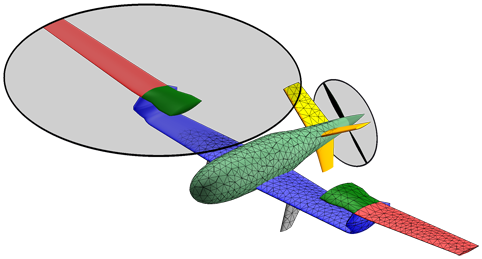
OpenVSP: parametric aircraft modelling tool 

NASA kicked off this year by greatly expanding their commitment to open source, launching their new site code.nasa.gov:
Ultimately, our goal is to create a highly visible community hub that will imbue open concepts into the formulation stages of new hardware and software projects, and help existing projects transition to open modes of development and operation
Some of the projects they’ve opened up are way over my head, but the one that caught my eye is OpenVSP:
OpenVSP is a parametric aircraft geometry tool. OpenVSP allows the user to create a 3D model of an aircraft defined by common engineering parameters. This model can be processed into formats suitable for engineering analysis.

Aviões, é bom!

terça-feira, 9 de novembro de 2010

5 vezes a velocidade do Som!

5 vezes a velocidade do Som!
...E de Nova Iorque a Sidney em 2 Horas e meia!

Eis o que a NASA está a planear construir, um Avião de Passageiros, que vai revolucionar o Transporte Aéreo:


New York to Sydney in just 2hrs 30mins: Nasa to develop 'hypersonic' passenger jets that travel at five times the speed of sound

By Daniel Bates

NASA is planning to build hypersonic jets that will fly through the Earth’s atmosphere and slash flight times around the world to a few hours at most.
The US space agency wants to manufacture a craft that would travel at five times the speed of sound and bring in a new age of aircraft akin to a turbo-charged Concorde.
Travelling at such speed would reduce the flight time from New York to Sydney to around two-and-a-half hours, from the 21 hours it is now.
The project is thought to be aimed at making a reusable aircraft that could fly to Mars but, as with previous space technology, it could have a huge impact upon passenger transport too.


http://www.dailymail.co.uk/sciencetech/article-1326618/Nasa-develop-hypersonic-jets-travel-5-times-speed-sound.html

segunda-feira, 11 de outubro de 2010

Novidades

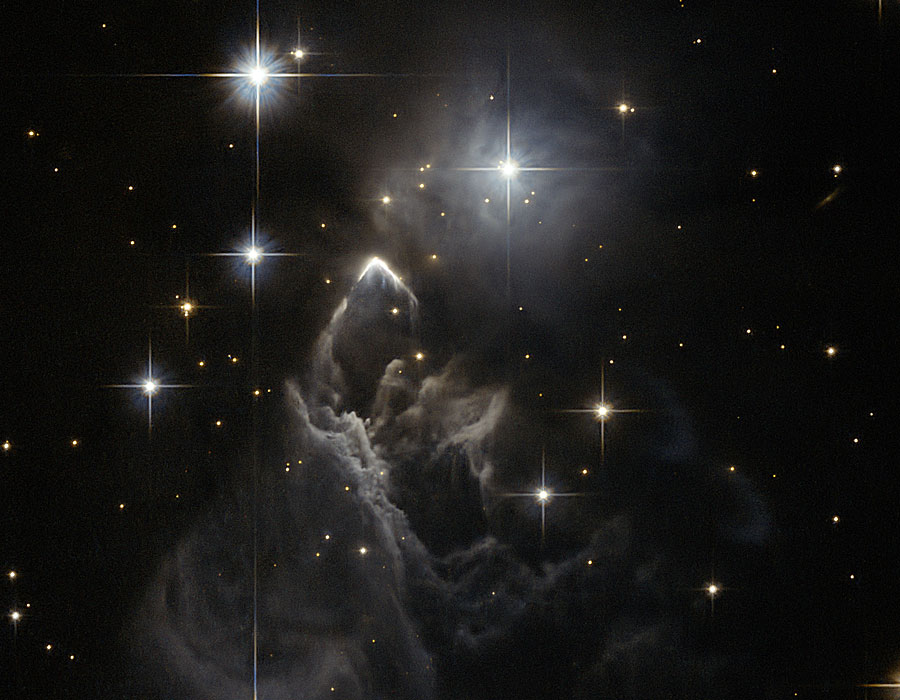
...Se não fosse a notícia, punha esta imagem aqui, à mesma, mas como também a notícia é boa, vai tudo...
Atenção, os Nano-Giroscópios, NÃO são estes!

Nano-Gyroscopes Will Let Cell Phones Navigate Indoors, Underground

By Julie Beck Posted 10.07.2010 at 12:16 pm

Israeli researchers have created the tiniest-ever optical gyroscopes, as small as a grain of sand, but still maintaining the keen accuracy of their counterparts hundreds of times larger. Optical gyroscopes are generally used for navigation in airplanes, ships and satellites, in which they track movement without reference to external navigation points, by measuring the vehicle’s rotation rate and linear acceleration. This is called inertial navigation. It’s extremely accurate but, up until now, only possible in gyroscopes and weighing two to three pounds.


A NASA vai mandar Aviões para explorar Marte...

NASA Moves Ahead With Robotic Plane to Take Mars Exploration to the Skies
By Clay Dillow Posted 10.07.2010 at 4:15 pm
As a general rule, when NASA flies a scientific mission all the way to Mars, we expect that mission to last for a while. For instance, the Spirit and Opportunity rovers were slated to run for three months and are still operating 6 years later. But one NASA engineer wants to send a mission all the way to the Red Planet that would last just two hours once deployed: a rocket-powered, robotic airplane that screams over the Martian landscape at more than 450 miles per hour.

ARES (Aerial Regional-Scale Environmental Surveyor) has been on the back burner for a while now, and while it's not the first Mars plane dreamed up by NASA it is the first one that very well might see some flight time over the Martian frontier. Flying at about a mile above the surface, it would sample the environment over a large swath of area and collect measurements over rough, mountainous parts of the Martian landscape that are inaccessible by ground-based rovers and also hard to observe from orbiters.
http://www.popsci.com/technology/article/2010-10/nasas-robotic-mars-plane-would-take-mars-exploration-skies
...E futuros Metamateriais que vão mudar as propriedades ópticas dos Painéis Solares, conforme o tempo que está a fazer:

Tunable, Stretchable Optical Materials
Active metamaterials might be used in solar cells that change properties with the weather.

By Katherine Bourzac
The field of metamaterials has yielded devices that seem to come from science fiction--invisibility cloaks, highly absorbent coatings for solar cells and ultra-high-resolution microscope lenses. Metamaterials are precisely tailored to manipulate electromagnetic waves--including visible light, microwaves, and other parts of the spectrum--in ways that no natural materials can.

With few exceptions, however, these materials work in a very limited range of wavelengths of light, making them impractical--an invisibility cloak isn't very useful if it only redirects light of one color but can be readily seen under others. Now researchers at Caltech have shown that by mechanically stretching an optical filter made from a metamaterial, they can dynamically change which wavelength of infrared light it responds to.
http://www.technologyreview.com/energy/26482/?p1=A5

quarta-feira, 15 de setembro de 2010

A NASA está a comprar...

Têem uma ideia para uma Nave Espacial?
A NASA, agora, já quer saber disso:


NASA Thinks Big in Quest for New Space Technology
By Denise Chow
SPACE.com Staff Writer
posted: 15 July 2010
10:12 am ET


ADELPHI, Md. – NASA is redoubling efforts to position itself at the vanguard of space technology, with plans for ambitious new projects to spur innovative ideas from industry, academia and even ordinary citizens.

The U.S. space agency's nascent Space Technology Program, born as part of President Barack Obama's fiscal year 2011 budget request, is currently pending congressional approval. If it passes muster, the program could represent a significant push toward greater external collaboration and technological development for NASA.

http://www.space.com/businesstechnology/nasa-space-technology-program-overview-100715.html

quinta-feira, 2 de setembro de 2010

Um Barulhão, e muitas Boas Notícias

Um novo motor de Foguete de Combustível Sólido da NASA, BAIXEM O VOLUME DO SOM, antes de verem este Vídeo!!!


newbox.TV
 

Um Interruptor de 5 Nanómetros promete revolucionar os Circuitos Integrados:

O Metal Tório promete Reactores Nucleares de ter por casa, e muito mais seguros que os actuais, o Tório recicle-se a si próprio!
There is no certain bet in nuclear physics but work by Nobel laureate Carlo Rubbia at CERN (European Organization for Nuclear Research) on the use of thorium as a cheap, clean and safe alternative to uranium in reactors may be the magic bullet we have all been hoping for, though we have barely begun to crack the potential of solar power.
Dr Rubbia says a tonne of the silvery metal – named after the Norse god of thunder, who also gave us Thor’s day or Thursday - produces as much energy as 200 tonnes of uranium, or 3,500,000 tonnes of coal. A mere fistful would light London for a week.
Thorium eats its own hazardous waste. It can even scavenge the plutonium left by uranium reactors, acting as an eco-cleaner. "It’s the Big One," said Kirk Sorensen, a former NASA rocket engineer and now chief nuclear technologist at Teledyne Brown Engineering.
 http://www.telegraph.co.uk/finance/comment/7970619/Obama-could-kill-fossil-fuels-overnight-with-a-nuclear-dash-for-thorium.html 
...E uma notícia que agrada a todos, uma promessa de aumentar em 30%o rendimento dos Motores a Gasolina!


http://green.autoblog.com/2010/08/26/autobloggreen-qanda-with-transonic-combustion-can-supercritical-f/

domingo, 1 de novembro de 2009

Uma casinha na Lua!

Qualquer dia, há lá Portugas!

Do Correio da Manhã Online:


29 Outubro 2009 - 17h55
Agência espacial prepara estadia do Homem na Lua
NASA desenha primeiras 'casas' lunares


A NASA começou há alguns dias a estudar a possibilidade de utilizar as cavernas lunares como ‘locais de alojamento’ para os astronautas que visitarem a o satélite da Terra em futuras missões. No entanto a agência espacial já pensa em opções mais confortáveis.


Os engenheiros da NASA desenharam já as primeiras ‘casas lunares’, uns iglus insufláveis que podem alojar até quatro pessoas de forma permanente, na primeira estadia do Homem na Lua.
O projecto está a ser dirigido por Pablo de León, engenheiro argentino e director do Instituto de Equipamento, no Departamento de Estudos Espaciais da Universidade de Dakota do Norte.

“Trata-se de um módulo insuflável com dez metros de largura por três de altura. Estes módulos têm ainda a capacidade para a agregarem-se a outros, permitindo a criação de uma base maior.”

Para o desenvolvimento do projecto, a NASA decidiu a investir 750 mil dólares (aproximadamente 505 mil euros) e um montante igual para financiamento da universidade.

“O primeiro passo será testar o equipamento na Terra e só depois se pensa na Lua. O objectivo é mesmo a criação de uma base lunar permanente”, clarificou o engenheiro.

Com vista à protecção dos astronautas da radiação na Lua, os iglus serão revestidos com particulas de solo do satélite terrestre.
Luís Murteira Nunes