
Blog Posts

Mostrar mensagens com a etiqueta supercondutor. Mostrar todas as mensagens

quarta-feira, 30 de março de 2011

Novidades

Como funciona o novo Motor, mais detalhes...

MSU researchers create a new engine prototype (w/ video)
PhysOrg.com) -- Researchers at Michigan State University have built a prototype, based on the research first released in 2009, of the Wave Disk Generator -- an engine that does not have pistons, crankshafts or valves.


http://www.physorg.com/news/2011-03-msu-prototype-video.html


Um Taser que funciona à distância...

New Taser can strike suspect 100 feet away

Weapon shoots cartridge that delivers shock

Columbus police have deployed a new shotgun-style stun gun that can hit targets up to 100 feet away.
The Taser X12 shoots wireless cartridges that travel about 260 feet per second, according to Taser International. The projectiles are similar in size and shape to traditional shotgun shells
"It's incredibly accurate," said Sgt. Matt Weekley.
The projectile is barbed and flies prongs first. Once it strikes its target, the prongs attach to the body through clothing.
http://www.dispatch.com/live/content/local_news/stories/2011/03/27/new-taser-can-strike-suspect-100-feet-away.html?sid=101


Transformar óleo de motor em combustível usando Microondas, atenção, Transportadoras!

Microwaves utilized to convert used motor oil into fuel

By Ben Coxworth


It has been estimated that over 8 billion US gallons (30.3 billion liters) of used motor oil are produced every year by the world's cars and trucks. While some of that is re-refined into new oil or burned in furnaces for heat, neither of those processes are entirely environmentally-innocuous. In other cases, it is simply discarded. Today, however, researchers from the University of Cambridge announced the development of a process that uses microwaves to convert waste oil into vehicle fuel.

Scientists have already been using a process known as pyrolysis for recycling oil. It involves heating the oil to a high temperature in the absence of oxygen, and causes the oil to break down into a mixture of gases, liquids, and solids. While the gases and liquids can be converted to fuel, the Cambridge scientists state that traditional pyrolysis doesn't heat the oil very evenly, making the fuel conversion process difficult and impractical.


 ...E uma ideia genial, um método para transformar uma data de superfícies em Painéis Solares:


Wysips technology can turn any surface into a PV power plant

By Paul Ridden

Mobile phones sporting photovoltaic panels are nothing new but thanks to some lens wizardry, a French company recently showed off a prototype phone where the touchscreen display itself housed the solar-soaking cells. Similar to the lenticular optics which sends slightly different images to each eye for glasses-free 3D viewing, Wysips technology allows light to pass through a semi-cylindrical lens onto thin strips of photovoltaic cells below, while also allowing the surface underneath to show through. The developers say that many surfaces could potentially become self-sufficient power producers.


Supercondutividade a 20 Graus!
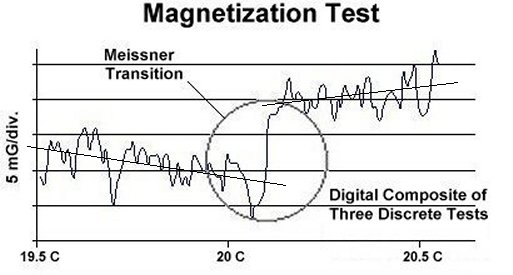


Superconductivity Near 20 Celsius
- Superconductivity Approaches Room Temperature - 
 Superconductors.ORG herein reports the observation of superconductivity near 20 C.        In eight magnetization tests a small amount of the compound (Tl5Pb2)Ba2MgCu10O17+ consistently produced sharp diamagnetic transitions (the Meissner effect) near 20 Celsius (see above graphic), and resistive transitions that appeared near 18.5C (see below right). These temperatures are believed accurate +/- 2 degrees. 

http://www.superconductors.org/20C.htm


Algo mais sobre Impressoras 3D:

How It Works: The Make-All 3-D Printer

The Objet Connex churns out complex objects by spraying eight million plastic droplets a second 
 
Since the first 3-D printer was invented by Charles Hull in 1984, machines have seen vast improvements in speed and accuracy. Today’s best 3-D printers operate much like a standard inkjet, spraying millions of droplets of polymer to build an object layer by layer. But there’s a hitch: Most 3-D printers use only use a single material at once, thus each product they produce can be just one color or consistency.
The Objet Connex can print two materials at a time, and even mix composites. In doing so, it can craft items with varied flex, shade and feel. The Connex has helped hospitals fabricate see-through medical models and even allowed a Massachusetts Institute of Technology student to construct a working flute complete with moving hinges and rubber gaskets.

http://www.popsci.com/technology/article/2011-03/how-it-works-make-all-machine


sábado, 18 de setembro de 2010

Novidades

Novos progressos nos Supercondutores:

Roller coaster superconductivity discovered

August 18, 2010 Roller coaster superconductivity discovered

This graphic shows the crystal structure of three-layered bismuth oxide. Credit: Xiao-Jia Chen
Superconductors are more than 150 times more efficient at carrying electricity than copper wires. However, to attain the superconducting state, these materials have to be cooled below an extremely low, so-called transition temperature, at which point normal electrical resistance disappears. Developing superconductors with higher transition temperatures is one of physics' greatest quests.
http://www.physorg.com/news201355600.html
Um Cartão de crédito com um Computador(!)

Credit Card with a Computer Inside


A smarter credit card could mean new security features and other functionality.
By Tom Simonite

A programmable credit card can display useful information, offer added security features, and even act as several different cards by rewriting its own magnetic strip.
Two types of programmable credit cards were unveiled this week at the DEMO conference in Santa Clara, California, by Dynamics, a startup based in Pittsburgh that's been developing the technology in stealth mode for three years. The company raised $5.7 million of funding last year.
http://www.technologyreview.com/computing/26303/?p1=A1&a=f

Aumentando a capacidade das Baterias em Lítio:

Doubling Lithium-Ion Battery Storage


Portable electronics could run 40 percent longer using a new type of anode.
By Katherine Bourzac

Battery startup Amprius says it has developed batteries capable of storing twice as much energy as anything on the market today, thanks to nanostructured silicon electrodes. The company says it is partnering with several as-yet unnamed major consumer electronics manufacturers to bring the batteries to market by early 2012. The batteries will allow portable electronics to run 40 percent longer without a recharge.
http://www.technologyreview.com/energy/26294/?p1=A2
...E roupas em Spray!!!


Make Clothes Out of a Can With Spray-On Fabric


http://www.wired.com/gadgetlab/2010/09/spray-on-fabric/?pid=367

quinta-feira, 2 de setembro de 2010

Um Barulhão, e muitas Boas Notícias

Um novo motor de Foguete de Combustível Sólido da NASA, BAIXEM O VOLUME DO SOM, antes de verem este Vídeo!!!


newbox.TV
 

Um Interruptor de 5 Nanómetros promete revolucionar os Circuitos Integrados:

O Metal Tório promete Reactores Nucleares de ter por casa, e muito mais seguros que os actuais, o Tório recicle-se a si próprio!
There is no certain bet in nuclear physics but work by Nobel laureate Carlo Rubbia at CERN (European Organization for Nuclear Research) on the use of thorium as a cheap, clean and safe alternative to uranium in reactors may be the magic bullet we have all been hoping for, though we have barely begun to crack the potential of solar power.
Dr Rubbia says a tonne of the silvery metal – named after the Norse god of thunder, who also gave us Thor’s day or Thursday - produces as much energy as 200 tonnes of uranium, or 3,500,000 tonnes of coal. A mere fistful would light London for a week.
Thorium eats its own hazardous waste. It can even scavenge the plutonium left by uranium reactors, acting as an eco-cleaner. "It’s the Big One," said Kirk Sorensen, a former NASA rocket engineer and now chief nuclear technologist at Teledyne Brown Engineering.
 http://www.telegraph.co.uk/finance/comment/7970619/Obama-could-kill-fossil-fuels-overnight-with-a-nuclear-dash-for-thorium.html 
...E uma notícia que agrada a todos, uma promessa de aumentar em 30%o rendimento dos Motores a Gasolina!


http://green.autoblog.com/2010/08/26/autobloggreen-qanda-with-transonic-combustion-can-supercritical-f/

segunda-feira, 2 de agosto de 2010

Novidades

Um Top dos Gadgets...
http://www.popsci.com/technology/article/2010-07/goods-august-2010s-hottest-gadgets

Os Robots Ajudantes, para Deficientes Motores, Idosos, e uma data de mais coisas, até um Robot-Mordomo... Impecável!

http://www.popsci.com/technology/article/2010-07/rise-helpful-machines

...E um passo em frente na direcção dos Computadores Quantum:

On the path to quantum computers: Ultra-strong interaction between light and matter realized


Researchers around the world are working on the development of quantum computers that will be vastly superior to present-day computers. Here, the strong coupling of quantum bits with light quanta plays a pivotal role. Professor Rudolf Gross, a physicist at the Technische Universitaet Muenchen, Germany, and his team of researchers have now realized an extremely strong interaction between light and matter that may represent a first step in this direction.

sábado, 27 de março de 2010

Reactores a Fusão mais próximos?


Progressos na corrida à Energia Nucelar limpa, por Fusão, e não por Fissão:

Next Big future blog has been working hard at keeping on top of developments around the Bussard Polywell.  I have tacked together the last three posts and added some of the pictures.  We pretty well know how big the reactor sphere has to be and it looks like technical issues are getting sorted out.
The sphere needs to be at least 1.3 meters in radius.  More importantly, a small increase above that will have a dramatic effect on energy production.  Thus if you can achieve break even the next step could be already at hand.
http://globalwarming-arclein.blogspot.com/2010/03/bussard-polywell-fusion-advances.html

segunda-feira, 1 de março de 2010