Blog Posts

Mostrar mensagens com a etiqueta telemóveis. Mostrar todas as mensagens

segunda-feira, 2 de março de 2015

Papercrete! E a Turbina 3D, ligar Micro-controladores pelo telefone, Fita de carbono, soldar sem electricidade, e um Gancho à maneira

Papercrete!
Uma mistura de Polpa de Papel e Cimento, e faz-se de tudo um pouco com este Material fácilmente moldável...
Facilita a vida, quando se faz, por exemplo, uma Oficina, no Quintal e metade do Material é Papel que iria pró lixo.
Tomem nota da Maquineta de que se fala neste Artigo embaixo, porque acho que se podem fazer muitas mais coisas, com essagigajoga, sabe-se lá se não se usa para mil e um fins no Quintal, como preparar a uva pró Morangueiro, e transformar a Mata em lenha:


Everything You Need To Know About Papercrete

Expert Prepper 

For all those who aren’t much familiar with it, Papercrete, in essence, is a type of fibrous cement (cement with a certain proportion of fiber in it). Because of its unique composition, papercrete is lightweight and strong, hence a perfect fit for a multitude of tasks. But more on that later – let’s first begin with,
The Ingredients in Papercrete

The ingredients that make papercrete can vary wildly based on what it’ll be used for. From cotton, wool and hemp to paper (wood fiber), flax and jute, different fibers can be used to make papercrete. For example, papercretes for building the walls of a house are usually composed of basic formula of cement and plastic. However, for any load bearing platforms or walls, a small amount of sand can boost compressive strength even further.

The addition of fiber to the cement results in a much stronger mixture – more or less the same way as the addition of fiber fibers boost the strength of fiberglass.


Já apareceu numa data de lugares, mas para os que ainda não viram, eis uma Turbina impressa em 3D!


Researchers create world's first 3D-printed jet engines

Ben Coxworth 

Working with colleagues from Deakin University and CSIRO (Commonwealth Scientific and Industrial Research Organisation), researchers from Australia's Monash University have created the world's first 3D-printed jet engine. While they were at it, they created the world's second one, too. One of them is currently on display at the International Air Show in Avalon, Australia, while the other can be seen at the headquarters of French aerospace company Microturbo, in Toulouse.


E se sempre quizeram ligar o Smartphone ao RaspberryPi, ou as vossa maquinetas entre elas, ligação 2G ou 3G, ora cá está, podem agora, com isto:
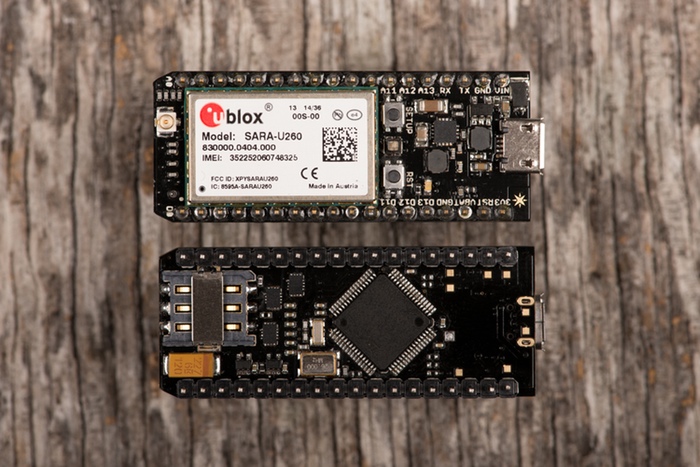


Cellular Connectivity Comes to Microcontrollers With The Spark Electron

David Scheltema

Meet Electron from Spark, the new board that puts GSM cellular connectivity directly on the microcontroller.
With its onboard cellular antenna, this diminutive board will offer a huge range of deployment options and alleviate the hassle of using a custom cellular breakout board with your micro controller projects. They’re offering two versions, with either 2G or 3G connectivity.
It thankfully also reduces the frustration of dealing with mobile carriers — more on that in a moment.


A Fita de Fibra de carbono serve para uma data de usos invulgares e vejam só estes 6 usos, para sobreviver no Mato:


Carbon tape to survive. 6 in 1

Shenzhen 

What is your the minimum kit to survive? Maybe a big knife and reliable lighter? We found one more thing - carbon fiber tape.
Using one piece of carbon tape you can make:
1. Water filter
2. Gas-mask
3. Torch
4. Oil lamp or stove
5. Care of open wounds and burns
6. Fiery sign
------------------------
6 in 1
I really love this stuff!


Eis como soldar mesmo no meio dum Apagão, ou no descampado, fora da Rede Elèctrica!
É bem pensado!


How to Solder Without Electricity (or a Soldering Iron)
DIY Hacks and How Tos

Soldering is a valuable skill. There are a lot of situations where the ability to repair or modify electronics can really save the day. But most people don't carry a soldering iron around with them. And even if you did have a soldering iron, there is a good chance that you might not have access to electricity.
So today I am going to show you how to solder using random objects that you might find lying around (and a little bit of solder).


E eis um Gancho de Génio, agarra obectos no chão, e serve para apanhar de tudo um pouco, ou atirar a Àrvores e telhados:


High Performance Grappling Hook
Mrballeng

We carry a lot of different things. Sometimes we drop them. Instead of leaving your everyday carry items out of reach, get your grappling hook!
This is the sequel to the original grappling hook I posted. The first one worked great but didn't stow so well. Here's what I'm working on now. It's a cross between a mechanical claw and grappling hook. When it touches down, gravity pushes the jaws open. Lifting it closes the jaws around your prize. Now I feel better about all the quarters I've lost in claw machines.
This is funding on Kickstarter right now of you'd like check it out. And for all you DIY folks, once the project closes I'll attach the file in step 4.


segunda-feira, 9 de fevereiro de 2015

CNC faça--você-mesmo! E um Teléóvel/Celular impresso em 3D, uma Impressora 3D Steampunk, e uma fábrica de Placascaseira!

Isto é um mundo de coisas boas!

Um Site duma Empresa que tem de tudo um pouco, para tudo de Robótica e CNC..
É bom!


19 Secções de máquinas e ofertas diferentes, ou para vocês comprarem Kits desde Fresas, e Cortadoras/gravadoras Laser CNC(!)...


...A componentes Pneumáticos e Hidráulicos, passando por Componentes deImpressora 3D, Electrónica, Hardware e Software.
E tudo para construírem vocês as Máquinas que quizerem!
Vão lá!
Who are we?
This website endeavor was started in late 2006 with a passion for building DIY CNC machines and sharing the knowledge so others can benefit. The main purpose of this website (the mission) is to offer free to low cost solution to provide automated fabrication to hobbyists. The products on this website are the hard to find parts that match (fit and function) the common level of the machines on this website and of the general DIY CNC machines found on the internet. We have a passion for designing these machines and products necessary for the easy assembly of these machines with explanations and tutorials with easy to read instructions. The customers and users of this website have made hundreds of suggestions and I have received more than 4000 testimonials. The individuals out in the world that actually built the machines on this website is vast and these responses encourage the updates and tutorials to spread the knowledge of CNC Machines and related technologies.


...Dica do nosso amigo Eddy de Ridder, eis um Telemóvel, ou Celular, ou caixa de chatices, faça-você-mesmo!
Pode parecer limitado, mas é configurável, e serve perfeitamente para quem não tiver paciência para aprender "modernices", ou como aparelho de reserva.


OwnFone launches custom 3D printable mobile phone on Kickstarter

A simple phone that will only allow you to contact a handful of people, and that won’t let you surf the web every five minutes? What’s the appeal of that? It might not seem like much to today’s teenagers, but if you stop to think about the advantages the OwnFone offers, you’ll be surprised about how useful it actually is.
Launched in 2011 by the English designer Thom Sunderland, the OwnFone is a deviously clever and surprisingly single concept. These 3D printed phones are approximately the size of a credit card, and feature a set number of numbers it can dial, like a child's parents, health care workers and the emergency number. Each button has been programmed to phone the person mentioned on it (the 'mom' button only phones your mom), and can even be modified to feature braille, rather than letters.


Os seguidores do Movimento Steampunk vão adorar esta Impressore 3D, que não fica mal o lado da Mobília Antiga, até parece parte dela!


Jules Verne Needed This Gorgeous Steampunk 3D Printer
Jeremy Cook 
3D printers and steampunk don’t generally go together (feel free to correct me on this), but for some reason this one fits in quite nicely. It’s based on a Printrbot Go, which is built into an unstained folding wooden case. John decided to stain this case, and after adding a few bumpers, the closed 3D printer looks like something out of the 1800s… That is unless you’re looking at the LCD display in the upper-left corner of the box.
Although he never removed the LCD display, (As John points out in the comments below, the LCD was an upgrade, the GO did not come with one)John did replace the bluish one that came with it with an amber-colored display. It still might not pass inspection before the age of transistors, but it does at least fit the color scheme. To compliment, and perhaps distract from, the LCD, analog temperature and humidity dials were added on the opposite side of the enclosure. This decision was justified by the fact that these variables could affect print performance.


Uma Placa electrónica envolve componentes que é dolorosamente complicado de colocar, sem uma Lupa de Relojoeiro, nos nossos dias, de tão pequenos que são...
Mas esta Máquina, faz isso por nós!
Indispensável, hoje em dia, em Garagens, Oficinas, Laboratórios, FabLabs e tudo o mais...


LitePlacer 
The Low Cost DIY Pick and Place Machine

LitePlacer is a pick and place machine aimed for a prototype building stage. LitePlacer:

  • is accurate! – Reliably places 0402 passives

  • is easy to assemble! – No special tools or precision instruments needed

  • has vision! – Two cameras

  • is affordable! – DIY kit is 1199€ / $1349


sexta-feira, 30 de agosto de 2013

SparqEE! A vossa Invenção vira Global! Muáháhá! E Titâneo em 3D, 2 novos Materiais, e façam o vosso próprio UAV

SparqEE!
Esta, foi para a frente das outras, é FENOMENAL!
Dica dos nossos amigos da DesignSpark, esta plaquita, a SparqEE, permite-vos nada mais, nada menos, que ligarem as vossas Invenções, casas, veículos, etc, a um nível Global, através duma Rede dos Tele-Móveis, ou Celulares. 


Devkits/Add-on Boards

Pete Wood


There are so many add-on boards now available for Raspberry Pi's and Arduino's, however, this one really caught my attention. It's by a company called SparqEE and is tiny Cellular development board that gives you Wireless Worldwide. That means internet to anything anywhere! Great for remote applications. This is their kickstarter video below. You can also find out more about this great product on their KickStarter page.

http://www.designspark.com/eng/blog/i-want-one-of-those-august-2013


A Imaterialise também vos imprime em 3D, os vossos Objectos em Titâneo, com ou sem Polimento:

Material Monday: i.materialise for all your titanium 3D prints!

Tatiana

Are you looking for a strong and super light material? i.materialise is one of the few online 3D printing services to 3D print your design in titanium. Read all about it!
Titanium is great for jewelry and light weight parts that need to be very strong. When we launched it, almost three years ago, we didn’t quite know what you would do with this technology. But you’ve amazed us with a lot of incredible designs.We’ve seen bike parts, rings, eyewear, earrings (you cannot have any allergic reactions from it), accessories,….you name it. At this stage, titanium is still the strongest material to 3D print in.


O Magnésio já poderá ser fabricado Inoxidável, o que vai abrir um sem-fim de novas possibilidades de construír os vossos Motores,  Veículos, e Engenhocas, num Material leve e estruturalmente resistente, e agora, também resistente à corrosão. 


Stainless magnesium breakthrough bodes well for manufacturing industries

Brian Dodson

Magnesium alloys are very attractive for a range of weight-sensitive applications. They have the largest strength-to-weight ratio of the common structural metals, are lighter than aluminum and are particularly favored for being easy to machine and for their ability to be die cast to net shape. Unfortunately, magnesium alloys tend to corrode too easily. A team at Monash University in Australia has now discovered a novel and potentially game-changing approach to the problem: poisoning the chemical reactions leading to corrosion of magnesium alloys by adding a dash of arsenic to the recipe.
Magnesium alloys are of great interest as lightweight replacements for aluminum, titanium, and steel components in a range of transportation and aerospace applications. However, such alloys corrode easily, and this often prevents their use as replacements for noncorroding metals, particularly in applications requiring high reliability over a range of environments.


Outro Material, este completamente novo, é o Zeoform, um Aglomerado, mas sem Colas, e com a resistência de Madeiras duras, que pode ser moldado, e vai ser usado sabe-se lá em mais o quê, Cabos de Ferramentas, Móveis, para Modelismo, e porque não, Impressão 3D!!!


Zeoform: The eco-friendly building material of the future?

Antonio Pasolini

Australian company Zeo has developed and patented a glue-fee process that creates a strong, versatile new building material out of just cellulose and water. The resulting hardwood-like material known as Zeoform can then be sprayed, molded or shaped into a range of products. And it's not just trees that stand to benefit – Zeoform also promises an eco-friendly alternative to the use of plastics and resins.
...
Zeo says the resulting material that is recyclable, "as strong as ebony" and can be shaped using a range of techniques that make it suitable for use in "any industry requiring woods, plastics and resins for manufacturing." At higher densities, Zeoform is water- and fire-resistant and the company is also working on coatings that could resist some of the most extreme weather conditions.


E que tal este Instructable, para acabarmos em beleza, por hoje, façam os vossos próprios UAVs, para Pesquisa e Vigilância...
É bom!


Make a UAV for research and photography

McMagical Engineer

You, yes you, can build and fly a personal UAV. Read this and see how!
If you like this instructable, consider voting for me in the RC contest.

I remember riding in the car when I was little, watching the shadow of our car float over the ground beyond the guard rail. I would imagine that the shadow was from a plane and would think about what it would be like to see the journey from the air. What if I had a little plane that I could fly from the car and explore the areas just behind the trees. What if I could launch a plane on a hike, and see the far peak on the other side of the glacier, or take a video of myself and friends waving from the top of a mountain?
These days, I live near the ocean and wonder what it would be like to capture video of sailboat races, darting in and out of the masts like the seagull scene in "Finding Nemo." What about a video of whales from the air? To see what the seagulls see as they float over the water, under massive bridges and over tiny islands...

Then I found FPV UAVs and the dream became a reality.
This instructable will walk through your my first FPV UAV, teach you how to get started, how to make one, how to fly one, and introduce modifications you can make as you dive deeper into the sport.


terça-feira, 20 de agosto de 2013

Uma Micro-Turbina, uma Mão artificial, Bambú 6mm, a Revista DesignSpark, e um Qaudracóptero-Smartphone!

O que é mais fixe que esta Micro_Turbina? 
Impecável! 
Feita em Acrílico, eis algo para irem fazer às FabLabs... Mas atenção ás RPMs, que a segurança é muito importante.


How to Make a Mini Compressed Air Turbine
fozzy13 

In case you didn't know this yet, compressed air is pretty awesome.  With simple mechanical systems - pumps - energy can be stored and used for an infinite amount of applications.  What I like about compressed air is how simple and accessible it is.  Anyone with a bike pump can start moving air to greater pressures.  Soda-pop bottles can be turned into air tanks, and by looking a little online and on Instructables, you'll find people who've used compressed air to do everything from shooting water balloons to powering a bicycle.

In this Instructable, I will show how I made a miniature compressed air turbine. 


Isto não é só importantíssimo para os Deficientes Físicos, porque pode ser feito por vós mesmos, como pode servir para quando precisam de mais uma mão, para segurar em algo, quando estão a trabalhar, e não há ninguém... Á mão!
E o que dizer de tarefas demasiado perigosas para lá arriscar os dedos?
Altamente útil e meritório.


DIY Prosthetic Hand & Forearm (Voice Controlled)

Mizchief100
Do you live with only one hand, or ever feel two just isn't enough? Well now you can make another! This project combines two very cool things: an arduino voice recognition shield and an open-source 3D printed robotics project called InMoov. Basically what I've done is modify the InMoov hand/forearm to be usable as a prosthetic (or additional appendage) and add a VR (voice recognition) shield to receive verbal commands and then make corresponding motions with the hand. The advantage of voice control is that it doesn't require muscles and is more flexible to different physical conditions (also hands free!). My program includes 15 general hand gestures and actions for everyday living! When I was looking into myoelectric arms kept thinking that the functionality wasn't worth the thousands of dollars. While mine isn't as fancy as some it's remarkable what you can create with desktop 3D printers, an arduino, and servos!


Se precisarem de mandar cortar em 6,7 mm, à Ponoko experimentem nesta Placa de 3 Camadas de Bambú:


NEW material: 3 ply Blonde Bamboo at Ponoko USA

We’ve expanded our wood material selection with a thick, 3 ply version of our blonde bamboo.

This 3 ply bamboo is 6.7mm (about a quarter inch) thick, making it a great option for home decor designs like coasters, clocks, table top surfaces, and wall art. It’s double sided, so you could also make bangles.


Já saíu a 2ª Edição da Revista Designspark, em 6 Línguas, façam o Download:


DesignSpark Magazine, your quarterly digest for news

DesignSpark magazine is a quarterly magazine for electronics design engineers. Full of information about the latest technologies, software and tools and build yourself projects DesignSpark magazine is available to download for your pc, iPad, iPhone or Android tablet.

This issue of DesignSpark Magazine focuses on a new Raspberry Pi expandable development solution; PiGo, highlights a new way you can share and collaborate on projects via DESIGNSHARE, and gives you more information about how to get involved in Paul Clarke's Earth Rover project.


E para quem gosta de Quadracópteros e Smartphones, eis este Quadracóptero Autónomo, com um Smartphone como Cérebro!
Esta Rapaziada de Viena, com a Líder do Projecto, a bonita Annete Mossel, ah, ganda Engenhocas, esta Equipe está de parabéns...
Será que não seria uma altternativa barata para vigiar as nossas Florestas, à cata de Incêndios?


Autonomous quadcopter uses a smartphone as its brains

Ben Coxworth

With one possible exception, autonomous quadcopters are not something that you would expect to be inexpensive. A relatively cheap model may indeed be on its way, however. Designed by the Vienna University of Technology’s Virtual Reality Team, the tiny aircraft utilizes the processor and camera of an off-the-shelf smartphone.
The Vienna team, led by chief engineer Annette Mossel, programmed the quadcopter’s navigation software into the processor using an app.
Once in flight, the UAV uses the phone’s camera to identify QR-like coded squares placed on the floor within a room. These allow it to create a map of the room, so it can subsequently find its way around the space on its own. Ultimately, plans call for it to be able to identify actual objects naturally present in a room (such as tables and chairs) using a Kinect-style depth sensor, and create its map using those.


segunda-feira, 11 de outubro de 2010

Novidades

...Se não fosse a notícia, punha esta imagem aqui, à mesma, mas como também a notícia é boa, vai tudo...
Atenção, os Nano-Giroscópios, NÃO são estes!

Nano-Gyroscopes Will Let Cell Phones Navigate Indoors, Underground

By Julie Beck Posted 10.07.2010 at 12:16 pm

Israeli researchers have created the tiniest-ever optical gyroscopes, as small as a grain of sand, but still maintaining the keen accuracy of their counterparts hundreds of times larger. Optical gyroscopes are generally used for navigation in airplanes, ships and satellites, in which they track movement without reference to external navigation points, by measuring the vehicle’s rotation rate and linear acceleration. This is called inertial navigation. It’s extremely accurate but, up until now, only possible in gyroscopes and weighing two to three pounds.


A NASA vai mandar Aviões para explorar Marte...

NASA Moves Ahead With Robotic Plane to Take Mars Exploration to the Skies
By Clay Dillow Posted 10.07.2010 at 4:15 pm
As a general rule, when NASA flies a scientific mission all the way to Mars, we expect that mission to last for a while. For instance, the Spirit and Opportunity rovers were slated to run for three months and are still operating 6 years later. But one NASA engineer wants to send a mission all the way to the Red Planet that would last just two hours once deployed: a rocket-powered, robotic airplane that screams over the Martian landscape at more than 450 miles per hour.

ARES (Aerial Regional-Scale Environmental Surveyor) has been on the back burner for a while now, and while it's not the first Mars plane dreamed up by NASA it is the first one that very well might see some flight time over the Martian frontier. Flying at about a mile above the surface, it would sample the environment over a large swath of area and collect measurements over rough, mountainous parts of the Martian landscape that are inaccessible by ground-based rovers and also hard to observe from orbiters.
http://www.popsci.com/technology/article/2010-10/nasas-robotic-mars-plane-would-take-mars-exploration-skies
...E futuros Metamateriais que vão mudar as propriedades ópticas dos Painéis Solares, conforme o tempo que está a fazer:

Tunable, Stretchable Optical Materials
Active metamaterials might be used in solar cells that change properties with the weather.

By Katherine Bourzac
The field of metamaterials has yielded devices that seem to come from science fiction--invisibility cloaks, highly absorbent coatings for solar cells and ultra-high-resolution microscope lenses. Metamaterials are precisely tailored to manipulate electromagnetic waves--including visible light, microwaves, and other parts of the spectrum--in ways that no natural materials can.

With few exceptions, however, these materials work in a very limited range of wavelengths of light, making them impractical--an invisibility cloak isn't very useful if it only redirects light of one color but can be readily seen under others. Now researchers at Caltech have shown that by mechanically stretching an optical filter made from a metamaterial, they can dynamically change which wavelength of infrared light it responds to.
http://www.technologyreview.com/energy/26482/?p1=A5

quinta-feira, 1 de julho de 2010

Novidades

Um Robot que muda de forma:


Morphing cars and planes closer as Pentagon develops shape-shifting robot
By Tom Chivers
Published: 12:16PM BST 30 Jun 2010

At the moment the tiny robot - a sheet just half a millimetre thick, scarcely thicker than a piece of paper - only folds itself into a boat, like a child's toy, or a "paper glider" plane shape. But it is anticipated that in future it will be used to create full-sized cars and aircraft that morph as they move, or robots that can "flow" like mercury into small openings, or multipurpose military uniforms that can adapt to different environments.

http://www.telegraph.co.uk/motoring/news/7863181/Morphing-cars-and-planes-closer-as-Pentagon-develops-shape-shifting-robot.html
O Raixo X mais forte do Mundo, para tirar Micro-Fotografias estroboscópicas a Moléculas em movimento:
World’s Most Intense X-Ray Laser Takes First Shots
By Lisa Grossman
June 30, 2010 1:58 pm

The world’s most intense X-ray laser may soon be the fastest strobe-light camera ever. Two of the laser’s first experiments show the device will be able to take snapshots of single molecules in motion — without destroying them first.

The laser, called the Linac Coherent Light Source, takes up a third of the two-mile-long linear accelerator at the SLAC National Accelerator Lab in Menlo Park, California. In the accelerator hall, tight bunches of electrons wriggle through a series of magnets and give off X-rays billions of times brighter than earlier X-ray sources could muster. The wavelength of these X-rays is comparable to the radius of a hydrogen atom — about one angstrom, or one ten-billionth of a meter — and each pulse can be as short as a few quadrillionths of a second.

http://www.wired.com/wiredscience/2010/06/x-ray-laser/
Ipods a bordo!
Um novo avião com navegação por... Ipod!

iCub Brings iPad and Apps to Avionics

By Jason Paur
June 30, 2010 7:00 am


One of the airplanes we’re excited to see next month in Oshkosh is the new Zlin iCub. As the name hints, the iCub brings together an updated version of the classic airplane design, with an Apple iPad front and center in the cockpit that can be used for navigation, checking the weather, or … well, the list goes on.

The idea makes a lot of sense. The airplane belongs to the Light Sport Aircraft category and is aimed at pilots who are looking for a fun-to-fly plane, not a serious transportation machine. So rather than spend thousands of dollars on a purpose-built, Federal Aviation Administration–approved GPS unit, the company instead went with a much more versatile and less-expensive option.

http://www.wired.com/autopia/2010/06/new-airplane-should-motivate-apple-fanboys-to-be-pilots/

quarta-feira, 30 de junho de 2010

terça-feira, 22 de junho de 2010

Novas Tecnologias...

Um RADAR feito com material caseiro!


A DIY Synthetic Aperture Radar System for $250 
By Rebecca Boyle

Don't Worry, Air Force, It's Just a Model A homemade synthetic aperture radar system takes high-resolution images of small objects, like this model F-14 in maker Gregory Charvat's garage. Gregory Charvat
For about $250, you can make your very own space-age spy tech, following an MIT professor's instructions.
It can capture high-resolution images of small objects -- like a message written in push pins that had been hidden behind a foam plate.
Using a garage-door opener, microwave parts and a cordless drill, Gregory Charvat made a working synthetic aperture radar (SAR) system, the same kind of technology the military and NASA use. Charvat used algorithms to combine the back-scattered radar images into a high-res photos of things in his garage, like a Cannondale bike and a model F-14.
SAR is useful because it combines multiple radar images to create higher-resolution images than would otherwise be possible. There are a couple ways to do it -- by using a single antenna on a moving object, like an airplane or spacecraft, or by using multiple small antennae scattered over a large area. NASA uses SAR to create detailed maps of other planets, and it can be used to map the spread of oil in the Gulf of Mexico, for instance.
http://www.popsci.com/diy/article/2010-06/diy-synthetic-aperture-radar-system-250

Os Grafenos, outra vez, um écran flexível:

Flexible Touch Screen Made with Printed Graphene

Sheets of atom-thick carbon could make displays that are super fast.
By Nidhi Subbaraman


Graphene, a sheet of carbon just one atom thick, has spectacular strength, flexibility, transparency, and electrical conductivity. Spurred on by its potential for application in new devices like touch screens and solar cells, researchers have been toying with ways to make large sheets of pure graphene, for example by shaving off atom-thin flakes and chemically dissolving chunks of graphite oxide. Yet in the thirty-some years since graphene's discovery, laboratory experiments have mainly yielded mere flecks of the stuff, and mass manufacture has seemed a long way away.

See through: Researchers have created a flexible graphene sheet with silver electrodes printed on it (top) that can be used as a touch screen when connected to control software on a computer (bottom).
Credit: Byung Hee Hong, SKKU.


"The future of the field certainly isn't flaking off pencil shavings," says Michael Strano, a professor of chemical engineering at MIT. "The large-area production of monolayer graphene was a serious technological hurdle to advancing graphene technology."

Desta vez, são nanotubos, e melhoram a eficiência das Pilhas, assim como em, 10 vezes mais!
Nanotubes Give Batteries a Jolt
Lithium-ion batteries with nanotube electrodes could go longer between charges.
By Katherine Bourzac

A lithium-ion battery with a positive electrode made of carbon nanotubes delivers 10 times more power than a conventional battery and can store five times more energy than a conventional ultracapacitor. The nanotube battery technology, developed by researchers at MIT and licensed to an undisclosed battery company, could mean batteries that extend the range of electric vehicles and provide longer periods without recharging for electronic gadgets, including smartphones.

E uma pesquisa que promete duplicar o rendimento dos Painéis Solares, utilizando os electrões de alta energia, que até agora não são aproveitados:

Capturing "Hot" Electrons to Double Solar Power

Researchers demonstrate that high-energy electrons lost in conventional solar cells can be captured.
 
By Katherine Bourzac

There's a limit on the conversion efficiency of a conventional solar cell. No matter how it's tweaked, it can only convert 31 percent of the light that hits it into usable electrical current. That's because there's a broad spectrum of wavelengths in sunlight, and some of it has more energy than the active material in the solar cell can handle. High-energy light hits the active material in a solar cell and knocks loose electrons that have a similarly high energy--then these electrons rapidly lose that excess energy as heat.
Physicists know that if they could capture "hot electrons", they could more than double the efficiency of solar cells. The problem is that they lose their energy in a picosecond. Now, researchers have for the first time demonstrated that it's possible to capture hot electrons while they're still in their high energy state, before that heat loss happens.
Careful design at the nanoscale is key. Instead of a conventional bulk semiconductor, the researchers used quantum dots, because these nanomaterials can confine electrons over a longer timescale. "Nanomaterials can keep electrons electrons hot for a longer period of time, so that you can get them out," says Xiaoyang Zhu, professor of chemistry at the University of Texas, Austin.
http://www.technologyreview.com/blog/editors/25345/