Blog Posts

Mostrar mensagens com a etiqueta nanotecnologia. Mostrar todas as mensagens

segunda-feira, 4 de março de 2013

Holdfast, Dragon, Nanoscribe, e o Robofold!

Do nosso amigo Scotttland, um Instructable fenomenal.
Paradoxalmente, este Antepassado do Torno pode vir a ser muito útil para os Fabbers:

Ye Olde Holdfast
Scotttland
Before steel vises, before iron clamps, and before the industrial revolution, before even the fall of Rome, there were holdfasts; innocuous bent iron bars with the potential to hold a workpiece firmly in place while a craftsperson goes to town on it.  The holdfast holds a few advantages over modern work-holding tools.  It drops into a hole in the top of a bench, giving it an extended reach across the bench top and a 360 degree range of direction.  Application is a simple drop and a tap with a mallet, giving it an instant grip.  No manual tightening.  Release is a simple strike in the back.  And a holdfast keeps a low profile; some will lay nearly flat across a workpiece and won't interfere with planing or routing.  


Imagens do agrado de qualquer Engenhocas, a Dragon atraca na Estação Espacial International, apesar de com um dia de atraso, eis um autêntico Vagão de Carga do Espaço, não-tripulado, que vai ajudar em muito a Estação, e a Exploração comercial do Espaço:


Dragon docks with ISS a day late

David Szondy

Today at 8:56 AM EST (13:56 GMT), the Spacex Dragon CRS-2 mission berthed with the International Space Station (ISS). The unmanned cargo ship was captured using the station’s robotic arm at 5:31 AM EST (10:31 GMT) by ISS Expedition 34 Commander Kevin Ford and Tom Mashburn of NASA before being secured to the Earth-facing port of the station’s Harmony module.


Se precisarem duma Impressora 3D para trabalhos MESMO minúsculos, já está à venda, para quem queira, esta Impressora, uma Micro e Nano-Impressora 3D:


Nanoscribe claims world’s fastest commercially available nano-3D printer title

Leon Gettler

Shoes, robots, houses and prosthetic hands, 3D printing has already gone well beyond the bounds of model making, and biotechnology is another of the new frontiers where the technology is set to make a huge impact. Nanoscribe GmbH, a spin-off of the Karlsruhe Institute of Technology (KIT), is pushing the boundaries of this space with the release of what's claimed to be the world’s fastest and highest resolution commercially available 3D printer of micro- and nanostructures – the Photonic Professional GT.
http://www.gizmag.com/3d-printing-photonic-professional-gt--nanoscribe/26329/


E agora, eis algo, dica da página Facebook da FabLab EDP.
Isto está mesmo à espera duma versão Desktop, Robofold, um Método de dobrar Chapa CNC que promete dar novos horizontes ao Fabbing!
Pois podem desenhar e vender os vossos Projectos no Site...
Ou até, comprar os Robots que dobram Chapa, e iniciar, ou expandir, o vosso Negócio!
É bom!


RoboFold Webstore.

Artworks, furniture, lighting, surfaces and structures.
Made using the RoboFold process and hand-folding.

All works are in lightly brushed anodised aluminium. Prices include VAT and Shipping.
Each product has a development "Status":
Available: The product is ready to buy.
Kick Start: Become a backer of new products. First editions are limited, so pre-order to ensure you get priority.
Remix: Download our software and re-design pre-existing designs. Upload via the Production page.
Co-Develop: RoboFold works with you to create a design that suits your requirements.

http://www.robofold.com/index.php?WEBYEP_DI=26


quinta-feira, 24 de janeiro de 2013

Reparar Fibra-de-Vidro, Rasperry Pi e Lego, Hidrogénio à descrição... E a Ray-Gun!!!

Como a vida está dura para quase todos, eis algo que faz sempre muito jeito, como reparar rachas e buracos, em Fibra-de-Vidro, da nossa amiga audreyobscura:


Repairing Fiberglass

audreyobscura

This Instructable comes from a recent project I have been working on that involves fixing up an old fiberglass travel trailer. In the remodeling of this trailer, I was left with many small holes from antiquated peripherals on the sides of the trailer (like a phone jack). There was also a six inch crack in the front from a rock hitting it on the road.

I actively searched for the best way to patch small holes in fiberglass on the web, and couldn't quite find concise answers - this lead to a more dedicated search. I ended up talking to surfers, sailors, and prop-masters about how they make repairs to structual fiberglass and came up with the following methodology.

Hope this is helpful, and I would love to hear back from the community on this.


Como o Raspberry Pi não vem com caixa, eis mais uma sugestão... Lego! 
Isso, e mais um Bootloader, e uma série de dicas, vão ver:


Adventures in Raspberry Pi-land: Bootloaders and LEGO sets

James Holloway

After several shameful weeks of having it sit on a bookshelf, Gizmag recently decided it was time to embark upon not one but two very ambitious projects for its Raspberry Pi: turning it on, and building a LEGO case for it. Needless to say, in both cases we turned to the worldwide web for fast, easy answers.
I say "turning it on," but considering that's as simple as connecting a power adapter (not included), we thought we'd go one better and get the thing properly up and running. This is all fairly straightforward if you follow the Raspberry Pi Foundation's quick start guide.


Gerar Hidrogénio, com nano-partículas, basta juntar Àgua!
Isto é importante, não precisa de luz, calor ou electricidade, e o único subproduto é um àcido não-tóxico:


Silicon nanoparticles could lead to on-demand hydrogen generation

Darren Quick

Researchers at the University of Buffalo have created spherical silicon nanoparticles they claim could lead to hydrogen generation on demand becoming a “just add water” affair. When the particles are combined with water, they rapidly form hydrogen and silicic acid, a nontoxic byproduct, in a reaction that requires no light, heat or electricity. In experiments, the hydrogen produced was shown to be relatively pure by successfully being used to power a small fan via a small fuel cell.


Mais um dia, mais uma dezena de peças, a Ray-Gun continua a ser feita, e até agora, tudo vai encaixando...
É bom!
Sim, faltam peças... Amanhã!


sds

terça-feira, 15 de janeiro de 2013

Nanotecnologia para Motores, Cubo de Rubik Altifalante, e um Avião de lata

Já pensaram em usar Nanotecnologia para protegerem as vossas Engenhocas da Corrosão?
Pois não é que já há Empresas que estão a pensar nisso, como relatado neste Site...
Aznano, de A a Z da Nanotecnologia: 

Corrosion Resistant Nanocoatings - News Item

NANOMAG is developing corrosion-resistant nanocomposite coatings to replace hazardous chromium-based coating treatments for magnesium alloys applicable specifically to the needs of the automotive, aeronautics and aerospace industries.
Reducing the weight of motor vehicles is a primary means of decreasing their fuel consumption. Eliminating 100 kg of weight allows a fuel saving of 0.5 l/100 km – thereby cutting the output of environment-damaging exhaust emissions.
Magnesium (Mg) – which is one third lighter than aluminium and 80% lighter than steel – has been used increasingly for this purpose since its first appearance in racing cars during the 1920s. Applications of Mg-based alloys now range from transmission casings, intake manifolds and cylinder head covers to wheels, body sections, steering wheel cores and column components.
http://www.azonano.com/article.aspx?ArticleID=329


Eis um Altifalante Wireless, que é um Cubo de Rubik, da nossa amiga, BritLiv:


Wireless Rubik's Cube Speaker 
BrittLiv
n this instructable I am going to show you how to make a Rubik's cube that houses a speaker and is fully functional. It is compatible with all wireless Bluetooth devices or can be used with a 3.5 mm audio jack. The integrated battery can be loaded via USB as shown in the second picture.

As you can see in the pictures the plugs are well hidden, so it is a great way to prank your friends, by making the cube talk to them.


E eis um Avião de Lata, mas Lata, mesmo!
Pois é feito duma Lata de Bebida, e voa, obra de awesomecreations...
Já repararam que este, e outros Artistas, estão a fazer uma nova forma de Papercraft, ou seja, Tincraft?
E com a possibilidade de se CURVAR a Lata, tem-se muita mais Liberdade Criativa!


Aeroplane from an Aluminium Can (and it flies too) 
awesomecreations
This aeroplane can definitely be improved by measuring before cutting. I didn't do this and it ended up looking a little bit uneven. This aeroplane will fly, but only if you make it from an ALUMINIUM can. Most canned energy drinks use all-Aluminium cans. This model is not a scale version of any real aircraft. This is my first ever aluminium-built model aeroplane and it was quite satisfying to see it fly.

quinta-feira, 20 de dezembro de 2012

Kartódromo, Bambu, Nano-partículas, um Avião experimental, uma Dremmel a comprar, etc.

Isto é bacano, e é renovando-nos, assim, que damos a volta à Crise!
E também é uma boa ideia para momentos de convívio memoráveis.
E por isso, cá vai o Destaque:

KARTÓDROMO DE OIÃ

O KARTÓDROMO DE OIÃ, fundado em 1994 e com nova gerência desde 2003, tem vindo desde então a trabalhar junto dos seus clientes no sentido de prestar mais e melhores serviços.

Estando situado na Zona Industrial de Oiã em Oliveira do Bairro, o complexo do KARTÓDROMO DE OIÃ, é composto por:
- Espaço de Bar/Restaurante;
- Pista de Karting com um perímetro de 620m na sua maior configuração, com espaço de boxes, oficinas, armazém de karts e balneário/vestiário.

Prestamos serviços na organização de convívios para particulares e empresas, na forma de provas desportivas de karting que podem ser de sprints individuais ou de resistência por equipas, ou até mesmo pequenos campeonatos que pretenda fazer na sua empresa ou entre o seu grupo de amigos.
O KARTÓDROMO DE OIÃ funciona durante todos os dias e todo o ano (com a excepção dos dias 1 de Janeiro e 25 de Dezembro) de modo a podermos estar sempre prontos a receber os nossos clientes.


Para oferecer às Namoradas, Patroas, Mães, e etc, e também porque a ideia pode ser aproveitada para sucateiros amadores como eu, que aproveitem fio eléctrico enrolado, eis esta ideia original, em Bambu:


Bamboo Yarn Bowl 
dtextor
So your girlfriend likes knitting things and x-mas is coming soon? Making her a beautiful bamboo yarn bowl that keeps the yarn from getting entangled and unrolls the yarn would be a nice option.

--------------------------------------
Materials needed


- wooden bowl (I used a bamboo bowl from Ikea)
- Dremel with a wood milling bit
- small wood drill bit that fits into your Dremel
- Sandpaper stripes
- Dremel polishing bit
- Beeswax block
- Two really steady hands!


Portugueses de valor criam esta arma certeira contra o Cancro... 
(do Blogue Portugal Inovador)
Bravo, e assim se prova que cá se vai fazendo Ciência e Tecnologia, com fins práticos e nobres!
A ESTES, sim, eu chamaria de Senhores Doutores, mesmo a jogar à bola, na praia!


Nanopartícula contra cancro da mama criada em Coimbra tem patente nos EUA

Fonte: Lusa
A patente para uma nanopartícula de nova geração destinada ao tratamento do cancro da mama, desenvolvida por investigadores portugueses, foi concedida nos Estados Unidos, anunciou esta segunda-feira a Universidade de Coimbra.
Criada por especialistas do Centro de Neurociências e Biologia Celular e da Faculdade de Farmácia da Universidade de Coimbra, a nova nanopartícula teve ainda no seu desenvolvimento a colaboração do Instituto Português de Oncologia de Coimbra, da Faculdade de Farmácia de Lisboa e da Faculdade de Medicina do Porto e dispõe de um apoio de meio milhão de euros, concedidos no âmbito do Quadro de Referência Estratégica Nacional (QREN).
A nanopartícula “previne os efeitos secundários associados à quimioterapia” e, simultaneamente, “aumenta a eficácia terapêutica” do tratamento, sublinhou à agência Lusa João Nuno Moreira, investigador envolvido no projecto. Além de “matar as células cancerosas”, a nanopartícula para o tratamento do cancro da mama também aniquila “os vasos sanguíneos que alimentam o tumor, evitando reincidências”.

http://portugalinovador.wordpress.com/2012/12/19/nanoparticula-contra-cancro-da-mama-criada-em-coimbra-tem-patente-nos-eua/


Para quem pensa que ter um Sonho e realizá-lo, é para uns poucos, eis este bom exemplo:


Avião experimental feito em casa 

manfredpw
Olá pessoal, Desta vez resolvi compartilhar como vocês um projeto "faça você mesmo" de nível hardcore, porém do meu pai e não meu. Como vocês poderão notar no vídeo não se trata apenas de um "projeto", mas sim da realização do sonho de um homem (meu avô, seu Alfredo Wilke) e seu filho (meu pai, Olavo Wilke). Trata-se de um avião feito totalmente em casa, com materiais hoje tido como "rústicos" ou "de baixa qualidade", mas que na época eram mais facilmente encontrados e permitiam bastante manipulação sem ferramental especializado: madeira (Balsa e Quiri), cola Epóxi (Araldite), Dope aéreo, tecido de algodão, etc... Mas não se enganem: apesar de ser um projeto caseiro e deveras antigo o "Domingueiro" era (é?) o que se pode chamar de "estado da arte" para este tipo de empreitada.


Esta é uma Ferramenta a ter em casa, uma Serra Pendular, mas com a capacidade de ser retirada da sua base, e usada tal e qual como uma Serra de Arco, mas eléctrica, por isso serve para uma data de coisas...


DREMEL® Moto-Saw

A Dremel Moto-Saw é uma serra estacionária compacta e fácil de usar para fazer cortes detalhados em diversos materiais. Com a sua gama de diferentes lâminas de serra, a Dremel Moto-Saw permite facilmente trabalhar um sem-número de diferentes materiais. Graças à sua serra de arco amovível, pode usá-la não só de modo estacionário, mas também em qualquer lugar, como ferramenta portátil. Esta prática serra não só é fácil de armazenar e montar, como também é muito simples de usar. A Dremel Moto-Saw é a serra estacionária mais fácil de usar.


segunda-feira, 1 de outubro de 2012

Voley Roótico, e mais coisas incríveis!

Isto é espantoso, obra de Cientistas Suíços, é um Vídeo a ver, mesmo.
E terá fins futuros que nem podemos imaginar...
Como exemplares bem maiores, apanhando gente que cáia dum prédio, sei lá!


Flying robots cooperate to play catch

By Jason Falconer


Swiss researchers have published a new video showcasing the impressive aerial cooperation capabilities of robotic quadrocopters. In the demonstration, a trio of quadrocopters tethered to a net fly in formation to catch balls tossed at them. Once they've caught the ball in the net, they are able to launch it upwards by stretching the net at each end.
"To toss the ball, the quadrocopters accelerate rapidly outward to stretch the net tight between them and launch the ball up. Notice in the video that the quadrocopters are then pulled forcefully inward by the tension in the elastic net, and must rapidly stabilize in order to avoid a collision. Once recovered, the quadrotors cooperatively position the net below the ball in order to catch it." explained Robin Ritz, Lead Researcher at ETH Zurich’s Flying Machine Arena.

http://www.gizmag.com/flying-robots-play-catch/24349/


Querem comprar, ou vender?
Podem fazê-lo através deste novo Site na Net, Bizspeaking.com, é Grátis, e por isso, é claro que eu já lá estou a vender! LOL


I shared a deal Halbach 12 Magnet Laser-cutiing Eps files at $10 about an hour ago
A Circular Halbach Array, of 12 Magnets, 10mm Cubes. almost all the magnet's both poles stenght is concentrated on the inner part of the ring.
http://bizspeaking.com/biz/287479187018046497/Halbach-12-Magnet-Laser-cutiing-Eps-files


Do nosso amigo e Autor de Instructables, brazilero2008, vem esta intrigante criação, uma Roda de Guizos, para anunciar Épocas Festivas! Já a pensar no Natal, cá vai, e Hó, hó, hó!


Ring in the Holidays with a Bell Wheel

brazilero2008

 Bell wheels have been used for centuries to announce the arrival of holidays and special events. When the tops or crowns of heavy bells were attached to a wheel rim, multiple bells could be rung with less effort by just turning the wheel with a hand crank. Here is a desktop version of a bell wheel (actually a bell "tube") that you can build using recyclables and inexpensive sleigh bells available from pet supply stores.

   This miniature bell wheel uses alternating rows of different sized sleigh bells to produce a soft, jingling sound. Of course, the dimensions can be up-scaled to accept better, cast metal sleigh bells if you want your project to sound like those Budweiser Clydesdales that star in Super Bowl commercials.  :>)

http://www.instructables.com/id/Ring-in-the-Holidays-with-a-Bell-Wheel/


Como há falta de Polícia nas ruas, e os ex-Polícias, mesmo em Cadeira de Rodas, ainda se lembram do Ofício, eis como pô-los em bom uso, através da tele-presença!
Com que então, os Robots roubam empregos?
Estes, não!


The first Robocop could be a telepresence robot

Darren Quick

Telepresence robots are already making their way into space and operating rooms and onto the battlefield, but Jeremy Robbins, a lieutenant commander in the U.S. Navy Reserves, wants to get telepresence robots (or telebots) on the mean streets to combat crime. He’s enlisted the help of researchers at Florida International University (FIU) to develop telerobotics systems that would let disabled law enforcement officers get back onto the beat using robots originally conceived for military applications.

http://www.gizmag.com/telepresence-law-enforcement-robot/24354/


Os Cientistas Noruegueses, a trabalhar com o Grafeno, prometem revolucionar a Electrónica, com esta placa de um àtomo de espessura, o que quer dizer, flexível, e transparente, para além de muito melhor condutora que o Cobre, e baratíssima!


Scientists create ultra-thin, cheap, flexible, transparent graphene semiconductors

Ben Coxworth

Ordinarily, electronics are made with silicon semiconductors that are rigid, opaque, and about half a millimeter thick. Thanks to research being carried out at the Norwegian University of Science and Technology, however, that may be about to change. Led by Dr. Helge Weman and Prof. Bjørn-Ove Fimland, a team there has developed a method of making semiconductors out of graphene. At a thickness of just one micrometer, they are flexible and transparent. Also, because they require so little raw material, they should be considerably cheaper to manufacture than their silicon counterparts.
Graphene, for anyone who still doesn’t know, is a material made up of a one-atom thick sheet of hexagonally-linked carbon atoms. It is very electrically-conductive, inexpensive to produce, and is simultaneously the thinnest material in existence yet also one of the strongest.

http://www.gizmag.com/graphene-semi-conductors/24346/


.

terça-feira, 13 de março de 2012

3D basta juntar àgua?

Mirabolante!
3d instantâneo, basta juntar àgua!


Flat polymer sheets bend themselves into 3D shapes - just add water

By Ben Coxworth

When the petal of a flower is being formed, its shape is achieved by cells in one area expanding more than cells in an adjacent area. This uneven expansion causes the material to buckle, creating the desired curves and creases. Scientists from the University of Massachusetts, Amherst have taken that same principle, and applied it to flat polymer gel sheets that fold themselves into three-dimensional shapes when exposed to water. Some day, such sheets could serve a number of useful purposes.

The researchers use a photolithography process, in which parts of each sheet are masked with a thin painted-on coating, followed by an exposure to ultraviolet light. The polymer that is masked from the UV light will uniformly expand like a sponge when exposed to water. In areas that aren't masked, however, the UV light causes the molecules within the polymer to become cross-linked. This means that the material in those areas will only experience limited expansion when water is added.


Ainda no campo do 3D, notícia que vem pelos nosso amigos da Ponoko, este método também promete, Estéreo-Litografia bem mais detalhada... E bem mais rápida!

 
...Vejam só este vídeo!


Nanoscale 3D printing

Is this the smallest race car you’ve ever seen?

Researchers at the Vienna University of Technology have a bit of a penchant for speed. And it’s not just the nanoscale 3D printed race car that gives it away… the team there have developed a mirror guided, laser equipped 3D printer that is officially faster than any that has come before.
…printing speed used to be measured in millimetres per second – our device can do five metres in one second.
Not only is it fast, it is also remarkably accurate. The printed structures are highly detailed, yet no bigger than a grain of sand. These results are achieved using a process called two-photon lithography – developed through the combined might of specialised molecular chemists working together with mechanical engineers.


Para descontraír, este Instructable, um Raio de Plasma Stempunk, mas atenção, isto é para ser feito com cuidadinho... Altas Voltagens!


Steampunked plasma-beam generator

Hi everybody

I just returned from my steam-powered-laboratory (Dampfkraftlabor, in german) to present you my latest invention:

The Steampunked plasma-beam generator:

To get an first impression please watch this short movie


E um robot para salvar vidas, nos barcos de guerra, e um dia, nos outros também, como sempre acontece, eventualmente...


SAFFiR robot could be putting out fires on Navy ships

By Ben Coxworth

If there's one thing that you don't want happening on board a ship, it's a fire. People on board burning ships can't simply run out onto the streets, as they hopefully could in the case of a structural fire, plus many people caught belowdecks don't have windows nearby to climb out of. Then, there's also the fact that crew members fighting such fires have to work in narrow, claustrophobic passageways, instead of wide-open roads. Given that fires are particularly possible on military ships, due to attacks by enemy forces, America's Naval Research Laboratory is now developing a special something to help fight fires at sea - it's called SAFFiR, the Shipboard Autonomous Firefighting Robot.

SAFFiR will be an autonomous bipedal humanoid robot, based on the CHARLI-L1 robot created at Virginia Tech - the school is a partner in the project, as is the University of Pennsylvania.

sexta-feira, 18 de novembro de 2011

Lisboa, e um Novo Material

Eis eu a armar-me em bom, um Vídeo que fiz com uma Câmera Vídeo, que comprei pela PayPal, oxalá todas es Empresas apanhassem esta dica, e vendessem também assim...


http://www.dealextreme.com/p/12mp-cmos-compact-digital-video-camera-w-8x-digital-zoom-sd-slot-2-4-tft-lcd-50842


E, atenção Inventores, um Novo material, 100 vezes mais leve que a Esferovite!

È uma estrutura metálica tal como a Torre Eiffel, só que muito mais pequena, é claro... Vai ser utilizada, sabe-se se lá para o quê, tantos novos usos poderão surgir.


Newly developed metallic "micro-lattice" material is world's lightest

By Darren Quick

Earlier this year we looked at a "multiwalled carbon nanotube (MCNT) aerogel" -also dubbed "frozen smoke" - that, with a density of 4 mg/cm3, became the world's lightest solid material. Now frozen smoke has been knocked off its perch by a new metallic material with a density of just 0.9 mg/cm3, making it around 100 times lighter than Styrofoam. Despite being 99.99 percent open volume, the new material boasts impressive strength and energy absorption, making it potentially useful for a range of applications.

The 0.01 percent of the material that isn't air consists of a micro-lattice of interconnected hollow nickel-phosphorous tubes with a wall thickness of 100 nanometers - or 1,000 times thinner than a human hair. These tubes are angled to connect at nodes to form repeating, three-dimensional asterisk-like cells.


...E só porque me apetece, e é porreiro, cá vai este outro vídeo:

segunda-feira, 12 de setembro de 2011

David 3D, e mais

O programa David, um Scanner 3D cada vez melhor, está na versão 3.0:


A newsletter é tão cheia de coisas boas, que decidi apresentar uma parte, tal-qual:

New DAVID Version 3
Voilà: After more than a year of development, DAVID 3.0 is now available!
The most important innovation:
DAVID is the first and only software that supports both, "classic" Laser Scanning AND Structured Light Scanning! The Structured Light method is presented below.
Also, the completely new user interface (see below) makes DAVID3 more flexible, extendable and user-friendly.
Of course the new version is compatible to the same hardware: cameras, lasers, calibration patterns...
As always we offer a Free Version for everyone. Please feel free to test everything! Only saving results is limited. Download DAVID 3 now!
If you would like to purchase a license, please click here.
Of course if you already own a DAVID 2.x license or original USB key, you can upgrade to DAVID 3 at a lower price.

To purchase your upgrade, please contact your local reseller or visit our shop.

Structured Light Scanning
Structured Light (SL) makes scanning faster and easier! For this method you can use a standard video projector instead of the line laser.
This animation demonstrates the setup:


The video projector is connected to the PC and DAVID 3 uses it to illuminate the object with several stripe patterns. Click "Start" - wait a few seconds - see 3D result on screen!
Our Mexican reseller VISI Series has already tried it and made a short demo video (thank you!). Watch this video on YouTube.
Of course an SL setup needs to be optimized and calibrated (first the camera, then the laser). Our DAVID 3 user manual will guide you through it.
So what are the pros and cons of Structured Light Scanning compared to Laser Scanning:
+ Scanning without calibration panels in the background! (Panels are only initially required for camera and projector calibration.)
+ Much faster
+ One-click scan
+ No moving parts / no influence of hand tremors etc.
+ Can use photo camera, e.g. DSLR (still not recommended, but will be great and comfortable with a future DAVID version - work in progress)
- Projector prices are dropping, but they are still more expensive than lasers
- Room needs to be rather dark, usually darker than required for laser
- Not suitable for very small details on small objects because projectors usually can't be focused to very short distances
You should definitely give it a try!
E já vos disse que tem uma... Versão grátis desse programa?
Pois...

E como não fosse tudo eis mais 2 links para impressão 3D, sim, também da Newsletter!

All  in 3d:

Often, interesting ideas do not get the attention they deserve. In a presentation they lack that certain something, the transfer from intangible brainchild to tangible, true-to-life object. One or another idea can be acceptably outlined by pictures and texts, but any type of creative conceptual design turns into a real eye-catcher only when showing its third dimension. This is when imagination transforms into a physical likeness and literally takes shape, when a thought turns into a real “object of desire”.

At 3D-Idea, we make this come true for you.


...E Rapid Objects:
http://www.rapidobject-shop.com/en/products


Um Jet-Pack já à venda!

After Record-Making Flight, Martin Jetpack Will Soon Be on Sale
Buy one next year for just $100,000
By Gregory Mone

In May, inventor Glenn Martin—along with fire-rescue officers and crews on board a pair of chase helicopters—watched as his jetpack flew for nine minutes and 43 seconds, soaring 3,500 feet into the New Zealand sky. Had the machine been holding a live person instead of a 150-pound dummy, it would have smashed the record for the longest and highest jetpack flight ever. Every other such device in history has managed to be airborne for, at most, only a minute or two. But Martin was out to do more than set records with his demonstration. He wanted to prove that his design was safe enough to become the first commercial jetpack—one anyone could buy and fly.


E para o fim, por hoje, Nanotubos de Grafeno para substituír o fio de Cobre.

Lightweight Cable Made of Braided Nanotubes Could Replace Copper Wires
By Rebecca Boyle

Cables made out of nanowires could be just as efficient as the copper cables we’ve been using for more than a century, but at a fraction of the weight, according to a new paper. Braiding billions of carbon nanotubes into a nanowire cable can efficiently replace copper in a light bulb circuit.

Traditional cables are made by braiding or twisting together two or more wires or optical fibers, usually metal or silicon, to carry a current or signal. In a new study, Rice University researchers instead used double-walled carbon nanotubes, made of concentric rolled-up sheets of graphene.

terça-feira, 6 de setembro de 2011

Motor-molécula!

Um Motor eléctrico do tamanho... DUMA MOLÉCULA!


Electric motor made from a single molecule 
Researchers have created the smallest electric motor ever devised. The motor, made from a single molecule just a billionth of a metre across, is reported in Nature Nanotechnology. The minuscule motor could have applications in both nanotechnology and in medicine, where tiny amounts of work can be put to efficient use. Tiny rotors based on single molecules have been shown before, but this is the first that can be individually driven by an electric current. "People have found before that they can make motors driven by light or by chemical reactions, but the issue there is that you're driving billions of them at a time - every single motor in your beaker," said Charles Sykes, a chemist at Tufts University in Massachusetts, US. "The exciting thing about the electrical one is that we can excite and watch the motion of just one, and we can see how that thing's behaving in real time," he told BBC News. 


Uma Célula de Combustível a Propano quadruplica o alcance dum Avião Não Tripulado, e o que não fará ela por Ultra-Leves?


Flight time of Stalker small UAS quadrupled with ruggedized propane fuel cell
By Darren Quick

Small unmanned aircraft systems (UAS) have become an increasingly important intelligence, surveillance and reconnaissance tool for the military and their use will only continue to expand. While vehicles that are small enough to be carried provide soldiers in the field with capabilities such as over-the-next-hill imagery or the short-term monitoring of convoys, much research is going into finding ways to extend mission duration through better battery systems. DARPA researchers say they have overcome this limitation with the development of a compact solid oxide fuel cell (SOFC) fueled by propane that quadruples the endurance of Lockheed Martin's Stalker small UAS.

The new fuel cell formed the basis of the hybrid power source for the Stalker XE, (eXtreme Endurance), a variant of the Lockheed Martin-developed Stalker UAS that boasts a wingspan of 120-in (305 cm) and is powered solely by a battery-driven electric motor that gives it a flight time of around two hours. By combining a high density fuel cell system with a conventional lithium polymer battery to handle peak power requirements, the Stalker XE is able to quadruple the endurance of the baseline Stalker version to provide a flight time of over eight hours.


E algo para os Ciclistas:


Hase Bikes' KLIMAX tricycle converts into a velomobile


By Ben Coxworth

While there are those of us who are strangely attracted to velomobiles - recumbent tricycles with full aerodynamic fairings - the idiosyncratic vehicles certainly have their drawbacks. Among these are the fact that the fairing, which is usually a hard shell, adds weight and traps heat inside with the rider. It also contributes to the sky-high price of the trikes, which can reach around US$15,000. Hase Bikes has taken an interesting approach with its KLIMAX 2K recumbent tricycle by using a weatherproof fabric fairing, that folds down and comes off when not wanted.

http://www.gizmag.com/hase-bikes-klimax-faired-trike/19732/

sexta-feira, 2 de setembro de 2011

Aeromodelismo e Oxigénio

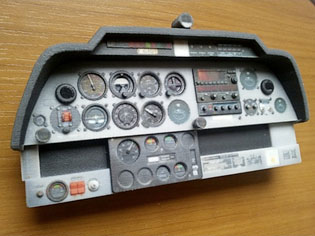
Eis um Objcto que pode servir de inspiração a muito Modelista, um Painel de Controlo para um Modelo de Avião feito através da Sculpteo:

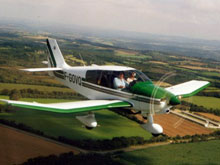
Eis o Avião, do qual o Modelo foi feito:


Aeromodelling – 3D Printed Plane Dashboard Replica 
Posted on 2011/09/02 by sculpteo 
User “Tortilla”, from Dijon Flying Club, modeled this Robin DR400 dashboard ready to be 3D Printed. “The Robin DR400 is a wooden sport monoplane, conceived by Pierre Robin and Jean Délémontez. The Robin DR400 first flew in 1972 and was still in production in 2008. It has a tricycle undercarriage, and can carry four people. The DR400 aircraft have the ‘cranked wing’ configuration, in which the dihedral angle of the outer wing is much greater than the inboard, a configuration which they share with Jodel aircraft. This model is considered easy to fly by many and quiet during flight due to its wooden frame” (Wikipedia)


... E algo de incrível, nano-geradores de oxigénio para combater o Cancro!

O tamanho da coisa!


Miniature oxygen generator implants to boost effectiveness of cancer treatments 

By Darren Quick 

Some cancers, such as pancreatic and cervical cancers, are notoriously hypoxic, which means they contain low oxygen levels. Because radiation therapy needs oxygen to be effective, hypoxic areas of a tumor can be difficult to kill. To combat this, researchers at Purdue University have developed and tested a miniature electronic device that is designed to be implanted into solid tumors to generate oxygen and boost the effectiveness of radiation and chemotherapy treatments. Once implanted into a tumor, the new "implantable micro oxygen generator" uses ultrasonic signals to generate a small voltage to separate oxygen and hydrogen from water in a chemical process called water electrolysis. The devides are just under one centimeter (0.39-in) long and are inserted into tumors with a hypodermic biopsy needle.