Blog Posts

Mostrar mensagens com a etiqueta digitalizador. Mostrar todas as mensagens

sábado, 2 de julho de 2016

Impressora 3D DLP super-rápida! E de Fotos para 3D em 5 passos, uma Impressora por 60€, Um mini-engenho, e uma Impressora 5D!!!

Uma Impressora 3D de Resina, com velocidade de Impressão de 3mm por minuto, dá um objecto com 18 Cm de altura, numa hora! 
E é claro, com uma qualidade de impressão inigualável pelas Impressoras de Filamento...


Gizmo GiziPro Super Speed 
The world’s first continuous print super speed, high quality top down DLP 3D printer: The GiziPro is now on Indiegogo. GiziPro is designed for producing high quality 3D models at an amazing speed up to 3mm/minute! Gizmo GiziPro has received an A rating from iMakr's test report. 
Utilizing a multiple built-in USB connections and an HDMI connection, the GiziMate can connect directly to your PC. One USB connection is used by Gizmetor to control the printer and the second USB connection can be used for anything the user might require, e.g. adding a web camera to the printer. The HDMI connection is used to display the layers when building 3D models.


Dica da Imaterialise, podem agora transformar uma data de objectos em Ficheiros 3D, com esta técnica simples.
E tudo isto, com Software grátis?
É bom! 


How To Make a 3D Model from Photos in 5 Easy Steps

Billy
Looking for turning a photo into a 3D model? You can easily create 3D printable objects and 3D models from images and photos nowadays. In this tutorial we will show you how you can turn ordinary 2D pictures of everyday objects into extraordinary 3D models. Turning 2D into 3D has never been easier as this project requires no coding experience and runs 100% on free software. If you think about 3D printing these 3D models, you don’t even have to buy a 3D printer and you can do it all without leaving your house.  Let’s get started!


Se estão apertados de Finanças, mas têem MESMO de ter uma Impressora, podem então construír esta Impressora 3D, por só 60€, o que já estará ao alcance, práticamente, de qualquer um...
E feito por um engenhoso Geek de 16 anos de idade, por isso, não me venham com desculpas, façam uma destas! 


Cherry- 60€ 3D-Printer

Vulcaman 
Hello, in this instruction, I will show you how to make a 3D-Printer for less than 60€ (maybe the cheapest in the world)
I'm 16 Years old and I made everything by myself.
This 3D-Printer, works with the cheapest motors on the market (28Byj-48), for the electronics I use the Ramps 1.4 . It also has an all metal hotend for around 5€.
Specs:
Buildsize : 10x10x10cm
Travel speed: 20mm/s
Printspeed: 10mm/s
Resolution: 0.2mm 


Do nosso amigo Andrea Biffi vem mais esta ideia, de  como podem  ter um mini-Engenho, para as vossas Dremmel, para furos como devem de ser furados, sem falhas nem brocas partidas:


Cheap precision drill stand

andrea biffi
When I begun to etch my custom pcb I felt the need to improve circuit drill tecnique. I drilled my first circuits by free-hand with my Dremel, but despite it's very fast, it's subject to errors, and it's also dangerous, because the drill bit is very narrow and weak.
I've searched a column drill as the "Proxxon Bench Drill Press TBM 115" but it's a little too expensive. I've found also a vertical stand for Dremel alt 50€, but it was a model with a single metal column as rail, similar to the most you can see with a "drill stand" search, and it had a low precision in horizontal movement of the bit. In fact you felt the head moving of about a millimeter, which is a lot when your bit is so narrow. So I decided to build it by myself.


E ainda fora do alcance do Público em geral, eis uma Impressora...
5D!
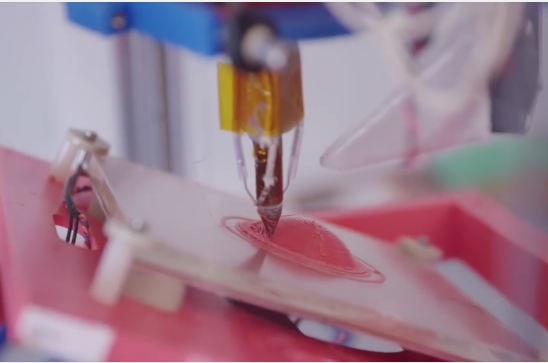
Mas bnão se assustem, que é uma Impressora de Filamento, com um Extrusor normal, mas que pode inclinar a placa de deposição, em 2 eixos, e daí 5D, ou mais exactamente, 5 graus de liberdade, no movimento.

O que isto traz de muito útil, é que esta máquiina imprime não só em camadas planas, mas em camadas CURVAS, o que para além dum sem-fim de usos possíveis, e do fim das "escadinhas", significa sobretudo, Objectos com um grau de resistência muito maior...
Por serem feitos seguindo as Linhas de Força exercida sobre esse Objecto, tal como os Edifícios, que seguem a arquitectura da maior força com o menor Material.


3D Printing is So Last Week...Say Hello to "5D Printing" at Mitsubishi Electric Research Labs!
Clare Scott  
 
We all know what 3D printing is – obviously. (If you don’t, here’s a handy overview. Welcome, newcomer.) We’ve also explored 4D printing, which involves printed objects that mutate and morph into different shapes when exposed to an outside stimulus such as light, water or temperature changes. So what’s involved in 5D printing? Printed objects that levitate? Printed objects that teleport? Time-traveling printed objects?!
Well…no. You can 3D print a TARDIS, but you still can’t make it travel. 5D printing is simply another name for five-axis additive manufacturing, and while it may not be as exciting as teleportation, it’s still pretty cool – and useful. The term “5D” as applied to five-axis printing is being used by Mitsubishi Electric Research Laboratories (MERL), the North American subsidiary of the multinational corporation’s research and development branch. They’ve been experimenting with a print bed that actually rocks back and forth on two axes, creating a fourth and fifth axis as a result.
What this means for the final printed part is that instead of being created as a series of flat layers, the layers are curved. William Yerazunis, Senior Principal Research Scientist at MERL, describes the advantages of this process as applied to a pressure cap. A cap printed using standard 3D technology will be quickly ripped apart along the adhesion lines when pressure is applied, he explains. But if that same part is printed with the 5D method, curving the lines where the maximum stress will be applied, the part will be three to five times stronger – and will use 25% less material.


sexta-feira, 10 de janeiro de 2014

Watercooling, Makerbot linha profissional, esculpir com o Computador, e um Analizador Lógico Open Source

Agora, também perto da Av. de Roma, em Lisboa, podem encontrar a simpática Loja da AquaPC, uma ideia posta em prática, assim é que é, numa Empresa que vos fornece Computadores feitos à vossa medida, ou seja, para as vossas necessidades reais, montando algo que vos serve, de raíz, indo até aos PCs refrigerados a àgua:


Aquapc
A Aquapc é um projecto diferente anti-loja globalizante. Se se preocupa apenas com o preço, passa a vida a ver tabelas com milhares de artigos, então talvez este não seja o melhor lugar. Gostamos de testar e brincar com as coisas que vendemos. Temos como objectivo principal manter stock regular dos artigos (e disponível o stock para que possa confirmar) e prestar uma assistência diferente.
Enviamos à cobrança para todo o País por CTT/EMS 18. Estamos também disponíveis para atendimento ao público, no Parque das Nações em Lisboa.
Aquapc - Quality Computers é uma marca registada e propriedade de WEBPRO - Comunicações e Sistemas Lda.


Depois de ter sido adquirida pela Stratasis, a Makerbot virou uma Linha Profissional de Impressoras 3D.
Isso por si, até pode ser uma boa notícia, mas o que me chateia foi a atitude Moralistazinha da Makerbot e Thingiverse, com a laracha de serem os Santos Padroeiros da Open Source, politizando a Impressão 3D para além da naúsea, com os seus lindos ideaizinhos, para agora venderem tudo, por um bom preço!!!
Mas a vida continua, e cá vai o seu Modelo mais acessível:


MakerBot Replicator Mini

Compact 3D Printer

The easy-to-use, no-compromise compact 3D printer for everyone, from beginners to professionals.


  • Easy-to-use and reliable compact
    3D printer
  • Plug and play
  • Build Volume
    10.0 L x 10.0 W x 12.5 H cm
    [3.9 L x 3.9 W x 4.9 H in]
  • Fifth generation technology defines
    the new standard for ease of use,
    quality, and reliability
  • App and cloud enabled for seamless
    workflow and Wi-Fi connectivity
  • No leveling required
  • Optimized for speed
  • Powered by the new, user-friendly
    MakerBot Replicator Platform

Shipping Spring 2014


E que tal, esculpirem para dentro do vosso Computador, as vossas criações, para um Ficheiro 3D?
Já o podem fazer, agora, a um preço acessível:


Touch

Grab hold of your design

Touch is the first-ever haptic-based, consumer 3D mouse for intuitive 3D sculpting and design, with instant force feedback that mimics the sense of physical sculpting. Touch works with 3DS’ Cubify Sculpt, a powerful virtual sculpting tool that transforms 3D modeling from a complex, skills-centric design experience to a simple, easy sculpting delight for students, designers and hobbyists alike.
Touch is priced at $499 and comes with Cubify Sculpt. Availability expected in Q2 2014 – sign up for updates at 3dsystems.com/ces.


E passando a Open Source, que ainda não virou a casaca, eis um Analizador Lógico Open Source, que fará decerto, muito Engenhocas, muito feliz...
Vem na E-Zine Hacked Gadgets, sempre cheia de notícias frequinhas,  que recomendo a míudos e graúdos:


DSLogic – Open Hardware Logic Analyzer and More


If you are in the market for a Logic Analyzer the DSLogic might fit the bill. At time of writing it is fully funded and you can get the early backer board for $49 (there are still 13 left). The next step up is $40 more and gets you the test clips and a USB cable, if you don’t mind making some test leads yourself you can save some cash.
Thanks for sending this in Andy.


domingo, 5 de janeiro de 2014

Fabbing para catástrofes! E Digitalizar estátuas, fazer Cestas de Jornais, e dobrar Metal, e Madeira

Da Designspark vem-nos agora oferecer mais esta razão para encorajar o Movimento Fabber, uma fantástica ideia para imprimir nada menos que Filtros para a Àgua, para evitar surtos de Cólera, em Situações de catástrofe...
Ou para Comunidades Lusófonas, e outras, em que falta tudo!
Parabéns à Team Tesla!!!

Two bottle water filtration system

A water filtration system to provide clean water in the event of natural disasters.Designed by Team Tesla at the DesignSpark Mechanical 48 Hour Design Challenge Sept 2013 
http://designshare.designspark.com/eng/projects/87/view/stage/brief


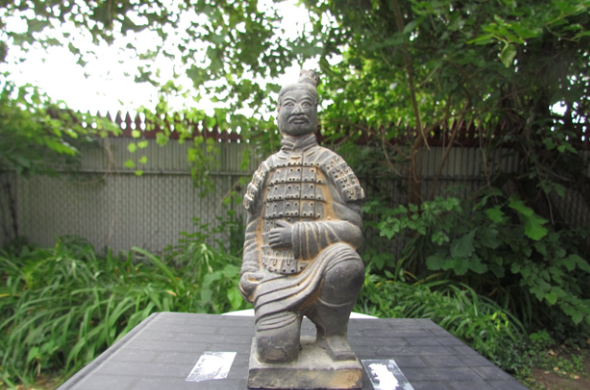
Podem-se agora transformar Fotos de objectos de grandes dinensões, como Estátuas, em Objectos 3D, com este Programa que podem testar Grátis, entre outros Programas, da Autodesk, vão ao Link das Novidades:


Project Memento
Visualize huge meshes from laser scans or photos, analyze for errors, and automatically/manually fix for digital use or fabrication. 

http://labs.blogs.com/january2014/innovation_edge.htm


Eis algo de diferente, fazer Cestas, como as de Vime... 
Mas em Papel de Jornal!
Poderá ser uma saída para um Hobby que dá dinheiro, lembrem-se que é de Material Reciclado, e podem fazer desde Cestas, a Candelabros:


Weaving baskets with newspaper 
dezine

I have just discovered how easy it is to weave a basket using newspaper! It's so simple to roll paper tubes out of newspaper and then weave the tubes into a basket. You can bet I will be making plenty of these faux wicker baskets for future projects, as well as for storage in the home.

I discovered this post on a Russian website and the instructions don't quite make sense, so I started putting together my own paper weave basket using newspaper that I normally keep for cleaning windows and messy projects.

If you have never done basket weaving before, try starting out with this simple basket weaving project, and then work your way up to this basket chandelier


Passamos agora à viril Arte de Dobrar Tubos de Metal, com esta Calandra que podem fazer em casa, com Material que encontram por aí:


Bend Metal Without Expensive Tools

Captain Robert
I'm a big fan of Atomic Zombie's builds. Except I like curved lines once in a while. I don't have access to a pipe bender, but I really wanted to introduce some curves to our latest project. Here's how you too can bend metal without any fancy equipment.
http://www.instructables.com/id/Bend-Metal-Without-Expensive-Tools/


E para dobrar placa de Madeira, eis este Instructable, e já se vê que, com estes dois Instructables, podem-se fazer Projectos impecáveis!
Façam mas é o Download deles, que um dia, vai-vos fazer falta.


Bent Lamination Form (How To)
wizzinstuff

In this intractable, you will learn how to create a bending form for bent lamination. I made it at TechShop
http://www.techshop.ws
What you will need:

1. Metal ruler (3ft)
2. Heavy objects
3. French curves
4. Drafting & design fade-out vellum (drafting paper)
5. Blue painters tape
6. Number 2 pencil
7. Bandsaw
8. Drill (with Philips tip)
9. Drillbit for pilot holes
10. Drywall screws (2in)
11. Wood clamps
12. MDF board (3/4in) - With and height depend on your project
13. Birch plywood (thickness - 3/4in) (width - 2ft) (length - 2ft)
14. Wood router (Flush trim bit with bearing on top)


segunda-feira, 2 de setembro de 2013

Plasma pró Povo! Fantasmaravilhoso! E um Raspi para Server, um app para Digitalizar em 3D, e o Auto-Piloto mais pequeno do Mundo.

Isto é que é Malta porreira! 
Não têem muito dinheiro, mas precisam dum Cortador de Plasma?

(Silêncio, que se vai assistir a um Espectáculo... Pasmem com o Plasma!!!)

.

Querem um? É muito caro?
Estes bacanos da Torchmate, pensando em tanto Engenhoca sem grandes meios, como EU, fornecem uma maravilha de Kit, em que elae vos vendem apenas o que vocês não podem construír;
A Estrutura, podem bem ser vocês a fazer, ou mandar fazer, e poupa-vos uma Fortuna!
E ainda... Podem mandar vir um outro Kit, de aparafusar tudo, numa Estrutura de Alumínio, ou uma data de mais opções.
Sim, senhor!


Torchmate 1 DIY (do-it-yourself) Kit
  Most people who have a need for a CNC cutting machine are metal fabricators, who given enough time, could probably design and build the mechanical part of a coordinate drive cutting machine. However, just because you may be capable of doing something doesn't necessarily make it the most economical decision. While the physical machines may look simple, it took us hundreds of hours of experimentation, construction of prototypes, and modifications before we felt they were ready for the public. Since then, our machines have undergone further refinements based on customer feedback and suggestions.

Spending hundreds of hours of your time and ending up with an inferior machine with no warranty is false economy. The time would be better spent using the machine to do what you intend it to do. Those who want to save money by doing part of the fabrication can do so by purchasing our Torchmate 1 CNC DIY kit. The Torchmate 1 was our original offering to small shops that could benefit from the CNC process but could not justify the high cost of commercial units on the market at the time.

http://torchmate.com/products/torchmate_1/


Querem ter o vosso próprio Server, por pouco dinheiro?
Usem um Raspberry Pi!
Ou algum PC velho, ou que já não usem...
É bom!


Ultimate Pi Home Server

DrWilson
 Welcome reader.
First please note: This instructable can be done within a day, but a weekend is certainly recommended.

In this instructable I hope to teach you key skills involved with setting up and configuring a Linux Server. The knowledge used here can be applied to almost all PC architectures so if you don't own a Pi
(Why not dude?) or it's tied up in another project, any old or unused PC will work. In more detail the main skills taught will be:We


Sabemos que uma Campanha do Kickstarter é um Sucesso, quando ele ultrapassa a Meta, nas calmas...
Como esta, um App de Browser, que vos permite fazer Scans 3D, a partir duma Câmara de Profundidade, ou Paralaxe, e assim podem digitalizar em 3D sem limites de tamanho!


The 3D Scan-to-Print Web App

Volumental

The Future is Here. 

3D printers give you the promise to print amazing objects and unlock your creative potential. But to make 3D prints you have to first make a 3D model - and creating 3D prints from complex 3D models can quickly turn into a tricky process of complicated computer programs, tedious iterations and lots of melted plastic in the trash.
Imagine making a 3D model using only a depth camera and your browser, a process so quick that in moments your fully-textured 3D printable model loads on your web browser. The water-tight, closed model is then downloaded to your computer or sent off to an online printing service, ready to print. The dream of a replicator would be realized. The only limit would be your imagination.


E que tal, um Auto-Piloto bem pequeno?
Este, promete ser de bolso, e com um Autopiloto, nem precisa de controles!


TU Delft has developed the world’s smallest autopilot

Randall Marsh

As the word "drone" has become so commonplace that you can literally build a UAV out of anything, researchers are aiming to make the technology smaller and more usable in everyday practice. Bart Remes, project manager at the Micro Aerial Vehicle Laboratory at the TU Delft faculty of Aerospace Engineering, has led a group of researchers to the creation of the world's smallest autopilot.
The team's goal is to eventually create MAVs (Micro Aerial Vehicles) small enough to fit into your pocket, but that does little good when you have to carry around a controller for the craft as well – hence, the quest to create a tiny autopilot system.


quinta-feira, 18 de agosto de 2011

Uma dica para passarem pelo AltLab

Como o AltLab de Lisboa é do mais informal que há, como saber se lá está alguém, para ir imprimir 3D, ou montar um Arduíno?

Fácil, basta ver no Live feed, ou vídeo em directo, à dieita, e se virem nesse vídeo, que estão lá Engenhocas a bulir, em directo, criando coisas, vão lá...

Se disser "Offline", não lá está ninguém!


E do Blog da Ponoko, uma nova forma de montar Arduínos, o Teagueduino!

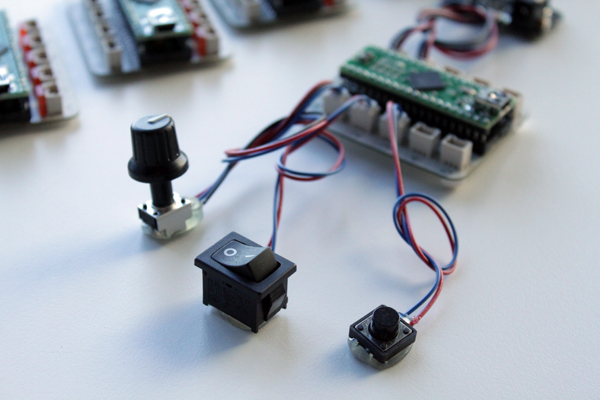
Teagueduino: the snap-and-go Arduino
On August 22nd Teague Labs will launch the Teagueduino, an open source hardware system based on Arduino.
Teagueduino is an open source hardware platform that makes Arduino a whole lot easier! There’s realtime feedback, always-valid code creation, and no soldering required. Teagueduino is designed for anyone interested in quickly making electronic projects, regardless of their background.

The snap-and-go system is reminiscent of Gadgeteer, the open source hardware system about to be launched by Microsoft. Perhaps this plug-in system is an inevitable improvement to open source hardware.
If you’re in the Seattle area, you can go to the launch party:
Monday, August 22nd
6pm–9pm
Metrix Create Space (Capitol Hill)
623A Broadway East
Seattle, WA 98102
Otherwise, you can look through the flickr photo pool and pre-order the
http://blog.ponoko.com/2011/08/18/teagueduino-the-snap-and-go-arduino/

quarta-feira, 17 de novembro de 2010

DAVID, Um Scanner 3D por quase nada...

Não há mais fácil nem barato que isto, e é tão bom quanto os melhores, para pôr o que quizerem em 3D:
-Um Laser de Nível de Pedreiro, com uma Pipeta cheia de àgua à frente, menos de 10€;
-A vossa webcam;
-Imprimir estes padrões de pontos;
-E um programa GRÁTIS!
Zás!

Mas podem comprar só o Laser, ou tudo, ou mais, e por quanto?

Desde 12,90 € pelo laser, 399 € pelo Kit completo, até um Laser DeLuxe por 464 €, há de tudo.

Vão lá ver:

http://www.david-laserscanner.com/wiki/user_manual/getting_started

sexta-feira, 29 de outubro de 2010

3D Printers Aurstalia, uma mina de informação

Com uma data de informação sobre tudo o que é Impressão 3D.

Como Estéreo-Litografia, ou SLA, em Inglês,


Deposição de Plástico Fundido, atenção, o vídeo só vai até meio, mas explica muito, mesmo assim:


SLS, como SLA, mas o material é plástico em pó:


Object:


...E Cold Sray, uma incrível nova tecnologia, de deposição de METAL, por um jacto de ar(!)

Fantástico!

Este Site é uma maravilha, portanto, vão lá:


http://www.3d-printers.com.au/3d-printers-australia/

quinta-feira, 23 de setembro de 2010

Luz visível para substituír Raios X

Estão-se a desenvolver maneiras de usar luz visível como uma alternativa aos Raios X:

Technology
Alternative to X-Rays Makes Its First Step
By Charles Q. Choi, LiveScience Contributor

The initial object imaged through a layer of white paint (A) was a 32-pixel by 32-pixel image of a flower; the image was reconstructed with a new technique (B), matching the original by roughly 94.5 percent. Credit: Sylvain Gigan et al.


A day when doctors need only visible light instead of X-rays to view a patient's innards can now be more easily imagined, with the announcement of a way to decipher the little light that passes through opaque materials.
Normally, one cannot see through opaque barriers such as paint, skin, fabric or eggshells because any light that does manage to make it through such materials is scattered in complicated and seemingly random ways. [Infographic: How Light Works]


E a Seda, como material para uma Capa de Invisibilidade!


Invisibility Cloak Made From Silk
A material used for thousands of years could be key to creating a soft, Harry Potter-style invisibility cloak.

By Eric Bland 

For thousands of years people have worn shimmering silk to stand out in a crowd. Within the next few years people could wear silk to become invisible in a a crowd.
For the first time ever, scientists have created an invisibility cloak made from silk, and coated in gold.
The new metamaterial, as invisibility cloaks and their kin are technically called, only works on relatively long terahertz waves (a region of the electromagnetic spectrum between radio and infrared light), but the Boston-area scientists who developed the technology think that silk could work as an invisibility cloak at much smaller wavelengths, even in the visible range.
The research could lead to a wide range of optically unique materials for use in biomedicine or defense.


segunda-feira, 30 de agosto de 2010

Autocad 2010 Imprime a 3D!

 Autocad 2010 Imprime a 3D!

...O que quer dizer que a vossa Impressora 3D feita em casa pode agora estar ligada ao PC, com o AutoCad, e imprimir, sem mais nada, como imprimit texto para a Impressora de papel...
É bom!


newbox.TV

quarta-feira, 16 de junho de 2010

Noticias incríveis!

Como voltar à vida, depois de Congelar:

Yeast and worms can survive hypothermia if they are first subjected to extreme oxygen deprivation, a new study finds.
The results could explain a long-held mystery as to how humans can be brought back to life after "freezing to death," the scientists say.
The study uncovered a previously unknown ability of organisms to survive lethal cold by temporarily slowing the biological processes that maintain life. 

"We have found that extension of survival limits in the cold is possible if oxygen consumption is first diminished," said researcher Mark B. Roth of Fred Hutchinson Cancer Research Center in Seattle, Wash.
One form of "forced hibernation," the behavior known as "suspended animation," literally involves the sudden halting of chemical reactions in the body due to the lack of oxygen. A 10-hour time lapse video of a garden worm embryo in the process of developing into a full-fledged baby worm showed a rapid process of cell division freeze to a stop upon the environment’s oxygen removal. That same cell division resumed unaffected two and a half hours after oxygen was restored.

http://www.livescience.com/health/cold-freezing-oxygen-deprivation-100611.html

...E ver a Erva a crescer!

Video: Scientists Watch Grass Grow, at the Cellular Scale

By Rebecca Boyle Posted 06.14.2010 at 4:44 pm
A. thaliana cell development A new video animation shows cellular development in Arabidopsis thaliana, shedding light on how plants grow. Nature Methods via Scientific American
Watching grass grow is way more interesting than you think. In an effort to understand cellular development in plants, a team of French scientists made a surprisingly exciting video animation of grass growing at the cellular scale.
The team stained growth cells in Arabadopsis thaliana and rice plants, and trained laser-scanning microscopes on the growing plants, according to Scientific American. They fed the microscope data into new computer algorithms that reassembled the structures, cell by cell, in three dimensions. The result is this video.


E a Microsoft criou uma TV em 3D, SEM os Óculos 3D do costume:
Hummm... Microsoft... Irá estar sempre a CRASHAR?
Microsoft's New Lens Promises 3-D TVs Sans Glasses
By Corinne Iozzio Posted 06.11.2010 at 12:43 pm 10 Comments

Everyone's got World Cup Fever this weekend, and for a lucky few that means getting the chance to break in their brand-spankin'-new 3-D TVs as the matches are broadcast from South Africa. For those who haven't taken the 3-D plunge yet -- be it because of prohibitive pricing or not wanting to deal with the dorky glasses -- Microsoft's Applied Sciences group has shared a new glasses-less 3-D display that could herald the adoption of the sets at long last.
http://www.popsci.com/technology/article/2010-06/microsofts-new-lens-promises-3-d-sans-glasses


...MARAVILHA, este drone para o Povo:

How does it work?

First quadricopter that can be controlled by an iPhone/iPod Touch/iPad

Thanks to its on-board Wi-Fi system, you can control the Parrot AR.Drone using an iPhone®, iPod Touch®, or an iPad®. It was initially designed for the Apple platforms and will be also available on other platforms in the next few months.

http://ardrone.parrot.com/parrot-ar-drone/en/how-does-it-work

Mais um?
'Tá bem!
Que tal um novo Metamaterial que vai fazer este Avião, Indetectável?
A New Engineered Stealth Metamaterial is the Blackest Ever
By Rebecca Boyle
Stealth Metamaterials A B-2 Spirit bomber flying over Guam. A team of researchers from Purdue University and Norfolk State University in Virginia designed a new metamaterial that absorbs almost all the light that hits it, heralding a new wave of stealth technology. Wikimedia commons/US Air Force
A new blacker-than-black metamaterial absorbs almost all the light that hits it, heralding a new breed of stealth technology.
The material's internal structure absorbs almost all the electromagnetic radiation in a particular range, New Scientist reports. Ordinary black objects, by contrast, always reflect a bit of light. The material could be applied to all parts of the electromagnetic spectrum, meaning it could be used to make materials invisible to radar.
Designed by Evgenii Narimanov of Purdue University, Mikhail Noginov of Norfolk State University in Virginia and their colleagues, the material consists of silver nanowires embedded in very thin 0.4-inch aluminum oxide squares. Their array-like structure gives them their unusual properties, New Scientist says.

Man-made metamaterials can also bend light to create invisibility cloaks, ultra-thin sound-proof walls and even miniature Big Bangs and megaverses.

The researchers tested their new black material with near-infrared radiation, just beyond the red end of the visible spectrum. When the radiation hit the polished material at less than 45 degrees from perpendicular, about 20 percent of the radiation bounced off. When they roughened the material so it wasn't smooth, less than 1 percent of the radiation bounced off.

Narimanov told New Scientist the technology would likely be used to build radar-proof stealth equipment.
http://www.livescience.com/environment/airplanes-punch-holes-in-clouds-create-rain-100614.html

...E para acabar, NAS NÚVENS:

Wow! Jets Punch Holes in Clouds and Create Rain
By LiveScience Staff
posted: 14 June 2010 12:21 pm ET
Aircraft can accidentally punch holes in clouds, leaving a trail of snow or rain in their wake, a new study finds.

Turboprop and jet aircraft that climb or descend under certain atmospheric conditions can inadvertently trigger what's known as cloud seeding. This technology is usually associated with schemes to control the weather. However, cloud seeding can happen by accident as planes soaring through mid-level clouds leave behind odd-shaped holes or channels in the clouds and cause narrow bands of snow or rain to develop and fall to the ground.

Holes punched in clouds are a phenomenon that has been recognized for many years and seen in photos from around the world. A front-page feature on Yahoo! carried the headline "A Halo over Moscow" after photos emerged of just such a hole in October 2009.

The secret behind these mysterious clouds has now been revealed: Supercooled water droplets that remain liquid even at subfreezing temperatures — below about 5 degrees Fahrenheit (minus 15 degrees Celsius). When an airplane cuts through clouds containing the supercooled water droplets, air is cooled behind aircraft propellers or over jet wings, and these water droplets freeze and drop toward Earth.
http://www.livescience.com/environment/airplanes-punch-holes-in-clouds-create-rain-100614.html


sexta-feira, 11 de junho de 2010

Olha! A fita PARTIU!

Olha! A fita PARTIU!
Todo o velho Ritual de ir buscar o projector, pôr a Giga-Joga a funcionar, e REZAR para que não queime ou parta a Fita, podem esquecer:

CCBS Multimédia Conversão de filmes antigos para DVD ( A PARTIR DE 24€)

A CCBS Multimédia, quer ajudá-lo a preservar as memórias passadas com toda a fidelidade e garantia. Para tal, conta com um serviço de transcrição onde poderá converter todas as suas cassetes de vídeo, películas de filme antigo (filmes de 8mm, Super 8mm e 16mm) e ou...tros formatos em DVD.

See More


http://www.facebook.com/pages/CCBS-Multimedia/125371107495323

quarta-feira, 10 de março de 2010

terça-feira, 29 de dezembro de 2009

Tesseract e Gscan2pdf

Lembram-se do Tesseract?


Era uma dor de dentes de operar, mas agora, já não!


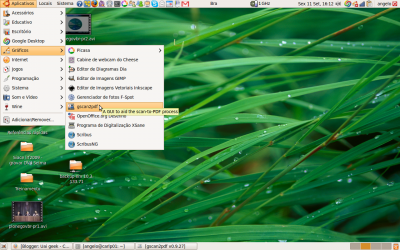
Gscan2pdf pode ajudar bastante, pois é muito mais intuitivo!
Podem importar imagens, ou tirá-las directamente do scanner, escolher o OCR (o programa que vai transformar a imagem dum texo em texto), a língua do texto, e zás!
Aparece o texto embaixo, já pronto a ser gravado ou copiado.

Já usei, e funciona!
Tirei esta dica muito importante deste Post, Publicado por Angelo Marcondes de Oliveira Neto em 15/09/2009, vão vê-lo, agora:


http://www.vivaolinux.com.br/dica/OCR-no-Ubuntu-9.04-utilizando-tesseract-e-gscan2pdf


.

.

quinta-feira, 15 de outubro de 2009

Vamos aos Instructables!

Vamos aos Instructables!


O primeiro, é um Alimentador de Gatos à pata, mas acho que há alguns canitos que até faziam isto, (mover a bola para comer a ração), também!

http://www.instructables.com/id/Cat-Powered-Auto-Feeder/


Um medidor de consumo eléctrico analógico.
http://www.instructables.com/id/Build-an-Analog-Electricity-Usage-Meter/


Um estabilizador para a sua Câmera, a partir dum Disco Rígido:
http://www.instructables.com/id/Single-HD-Gyro-Image-stabilizer/


Uma fechadura electrónica:
http://www.instructables.com/id/An-Electronic-Door-Opener/


...E por último, um Suporte Digitalizador, para digitalizar livros, na sua Câmera:
http://www.instructables.com/id/Portable-Paperless-Digital-Copy-Machine/


Notícia de última hora, vi agora isto: