Blog Posts

Mostrar mensagens com a etiqueta vácuo. Mostrar todas as mensagens

terça-feira, 9 de abril de 2019

Ganda Impressora! E uma Laser CNC, uma Cana de Pesca portátil(!), Moldagem sem falhas,

O nosso amigo Angus traz-nos esta Bizarma desta Impressora, da Hungria, País surpreendente, e há muitas boas razões para o entusiasmo dele...
E para o meu entusiasmo, também!
Maravilha.


CraftBot 3 3D Printer Review - Heavy Duty IDEX Beast
Maker's Muse

Today we're checking out the CraftBot 3! A huge, heavily built 3D Printer with Independent Dual Extrusion (IDEX) from CraftUnique, Hungary.


Da enigmática Empresa J&R Technology vem-nos este vídeo duma Laser CNC de Fibra, caso sério, pois corta METAL!
Boa!
O link para a Empresa está no vídeo:


Fiber Metal Cutting Demo Video from J&R
J&R Technology

J&R specialized in design, R&D and production of CO2&fiber laser machines for cutting, engraving, and marking.

https://www.youtube.com/watch?v=kaEVkuYJVi0&t=6s


Algo de fantástico, uma Cana de pesca Portátil, que podem imprimir, nas vossas Impressoras, para exibir à Malta...


PortaReel Portable Fishing Pole
MechEngineerMike

This is our originally designed "PortaReel" Portable Fishing Pole! Its the smallest full function fishing rod available, a super useful tool to add to your fishing toolbox!


Isto é importantíssimo!
Tanto pela Técnica de produdcção de excelentes peças de fundição usando vácuo;
Quanto pela Cera de moldagem, que é mesmo superior;
Como, até, pela própria BOMBA DE VÁCUO que pode servir para N engenhoquices diferentes!
Fenomenal.


EASY build Vacuum Casting machine system for Lost Wax / PLA Casting - DIY chamber & Pump : lwc #6
VegOilGuy

Vacuum casting machines are expensive. But can you make one? YES… here’s a easy, simple construction, low cost vacuum arrangement to assist with you lost wax or lost PLA casting. Many of the parts you may already have lying around and the rest are cheap as chips. Building a vacuum system has literally saved me thousands and just as importantly it’s dramatically improved the quality of my metal castings… beautiful, clear and precise details matching exactly the original wax pattern, with no pockets, no porosity and no sand. This really is a cheap and simple solution to better lost wax casting!

https://www.youtube.com/watch?v=EGNnH_xbjR4


Só coisas boas!
Agora é esta pequena maravilha de Fresa CNC, da qual, que podem Imprimir muitas das partes!
Toca a fazer uma, e mais nada!


DIY 3D Printed Dremel CNC
Nikus

When I got my first 3D printer I was extremely happy with all the new possibilities to create things but after some time I noticed the limitations of 3D printing. Plastic is easy to melt, sometimes it's not mechanically resistant enough and most importantly sometimes doesn't look good. Don't take me wrong here, I love 3D printing and I like plastic (except plastic waste) but there are things that look, work or feel way better when made out of nonplastic material. Imagine all your furniture made out of plastic. Sometimes I prefer wood, when I need strength, metal (mostly aluminum) is a way to go. That's where CNC milling machines are used. Usually, the cost of such machine is really high, most of the hobbyist, small makers can't afford such expensive equipment. That's why the idea of building my own CNC machine sparked in my head.


E terminamos por hoje, com esta ideia Estratosférica, atenção, malta das Universidades, como fazerem os vossos próprios Balões Estratosféricos, para o bem da CIÊNCIA!
MUÁHÁHÁHÁHÁHÁ!


How to Make a Picoballoon
Jakub_Nagy

What is a picoballoon and why would I want to build it?! I hear you ask. Let me explain. You all probably know what a HAB (High Altitude Balloon) is. It's a bunch of weird electronics stuff connected to a balloon. There are soooo many tutorials regarding HABs here on Instructables.
BUT, and that's a very big BUT what they don't tell you most times in the tutorial is the cost of the filling gas. Now, you can build a decent HAB tracker under 50€, but if it weighs 200g (which is a pretty optimistic guess with the batteries, cameras, etc.) the helium to fill the balloon can cost you 200€ or more, which is just too much for many makers like me.
So, as you can guess, picoballoons solve this problem by just not being bulky and heavy. Picoballoon is just a word for a light HAB. Light, what do I mean by light? In general, picoballoons are lighter than 20g. Now, just imagine that a processor, transmitter, a PCB, GPS, antennas, a solar panel and also a battery with a mass same as a disposable coffee cup or a spoon. Isn't that just insane?




domingo, 18 de outubro de 2015

2 Ideias geniais! E mais um Torno de Madeira a partir dum Engenho, Vácuo barato, e um Osciloscópio dum Smartphone!

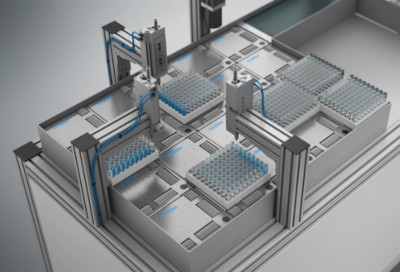
Dica da Wonder Engineering, este Sistema de Paletização, Motion Cube, da Festo, parece-me também ser uma solução perfeita para sistemas de Treliça CNC muito mais rápidos, simples e económicos.
Ainda por cima, é modular, o que significa que se podem imprimir peças um comprimento e largura incríveis!
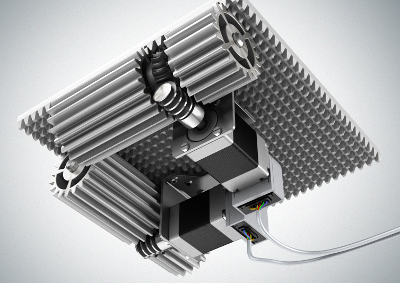
Mas vejam só a ideia, um par de rodas dentadas em cada eixo, e uma placa que é nada mais que 2 perfis de Cremalheira:


Transport system allows individual mass production 
Festo is developing a modular palletising system that will transport workpieces independently and simultaneously to different assembly stations, allowing different processes to be carried out on each item, and resulting in individually customised products. The system, called Motion Cube, has won the Automation and Robotics category of the 2015 Handling Awards announced at the Motek show in Germany this week.
The system, which is still at the prototype stage, consists of modules containing a drive mechanism in a cube-shaped housing that transports pallets from one module to the next and allows specific assembly tasks to be carried out. The modules are combined to form matrixes that depend on the application.
Different products can be handled in parallel, making simultaneous processes possible and saving time. Unlike conventional conveyors, several travel commands can be carried out simultaneously. Individual pallets can be overtaken and workstations can be skipped, if required.
Because conventional conveyor systems transport pallets on conveyor belts, the operating system and the sequence of pallets are fixed. To change the sequence, you need to install deflectors and several conveyor belts, adding cost and requiring more space. Festo says that the Motion Cube palletising system, by contrast, can be deployed flexibly and can react immediately to any changes in sequences and target positions. It can be expanded easily and can be adapted quickly to changing production conditions. More positioning modules can be added at a relatively low cost, allowing the palletising system to be expanded or modified almost without limit. The system also allows production lines to be set up in small spaces.

http://www.drivesncontrols.com/news/fullstory.php/aid/4921/Transport_system_allows_individual_mass_production.html


Dica da nossa amiga da Abripi, a Professora Angélica Colombo Ponciano.
Este autêntico Génio Brasileiro, vai dar àgua 100% potável ao Nordeste, se Deus quizer, com esta ideia de utilizar para filtrar a àgua, os mesmos Microorganismos que permitem às plantas das regiões de Àgua Salobra sobreviver.


Pesquisador desenvolve dessalinizador perfeito!Professora Angelica Colombo Ponciano 
Esse Pesquisador usa GOMOS de BAMBU em ÁGUA SALGADA para TRANSFORMAR Naturalmente em ÁGUA POTÁVEL
Sensacional!! 
https://www.facebook.com/video.php?v=1498275650495064&pnref=story


Podem aproveitar os vossos Engenhos para tornear peças simples, em madeira, com esta engenhosa adaptação:


Lathe attachments for a Drill Press

guy90 
I was scratching my head about this concept for ages, but I'm pleased to see now that it works and share it with you all! Here's a way to make Lathe attachments for a drill stand. It's cheap, and you won't have to dismantle an old drill to do it. 
One thing I should probably mention before we go on, is that this is essentially a mini lathe. It's certainly not cut out for tough jobs- like turning a quadrilateral form into something circular. This jig is more for adding details, making tool handles from old branches and broom handles etc. Tougher jobs would require tougher bearings, speed control, etc. 


Eis como podem preservar a vàcuo, por menos de 2 Euros, usando Seringas, Ziplocks, e material de Aquário, neste sistema:


$2 vacuum sealer Life hack
MadScienceHacks

I entered this Instructable into the "First Time Author" contest on Instructables.com .If you feel that this post deserves to win, click 'Vote' button at the top-right of the screen.
Lets get started!
In this quick life hack, I'll show you how to make a super cheap vacuum sealer that you can use to vacuum seal just about anything!


E que tal transformarem o vosso Smartphone num Osciloscópio, e num Gerador de Sinais?
Poupariam assim um dinheirão! 
Podem-no fazer, assim:


OscilloPhone: Use your Smartphone as an Oscilloscope / Signal Generator

loboat 
OscilloPhone: Use your Smartphone as an Oscilloscope / Signal Generator
by Loann BOUDIN | 2015
Oscilloscopes and Signal Generators are two essential electronics devices to create and test electronic circuits. Unfortunately, these devices are very expensive for students starting electronics, or makers who want use electronic circuits in their creations just once...
The idea of my project is to rethink your smartphone as a portable, powerful and secured platform, able to simulate an oscilloscope and a signal generator for your electronic circuits. Here, your phone isn't just an accessorize or an ordinairy remote control : it becomes the center of the project, and a tool to help you create better things in the future. 


segunda-feira, 10 de junho de 2013

O Molde já feito! E um Canhão a Vácuo, e mais uma Impressora 3D para fazerem em casa!

Eis o Molde para Sugru, para fazerem uma série de Pen&Note, com o vosso Logotipo, porque é bem chato ter um Bloco-Notas...
E esquecer a Caneta!

Aberto, o encaixe do Relevo, e vêem a parte onde gravam a vossa mensagem e/ou Logotipo, sempre em Negativo, como os Carimbos...


Reparem que a tampa não é segura pelos Parafusos, por isso pode-se tirar e pôr...


Toda a Superfície interior do Molde, que vai estar em contacto com o Sugru, é coberta por uma película não aderente, vulgo, Cera de encerar...


E é assim!
As próximas Fotos disto, vão ser da peça a ser moldada!


Isto é espectacular, e para além disso, este Instructable liga a outro do mesmo Autor sobre como fazerem a vossa prórpia Bomba de Vácuo, para o que quizerem...
É 2 vezes bom!

How to Make a Vacuum Cannon

NightHawkInLight
A vacuum cannon is an interesting physics demonstration that shows how much atmospheric pressure there is at the earths surface, though we do not feel it because our bodies have the same amount of pressure both inside and out. By removing air pressure from inside of a length of pipe the balance with atmospheric pressure is removed, and if the seal is broken on one end air pressure will rush in quickly enough to throw a projectile with a good deal of force.


E para que não vos falte nada, cá vai mais uma Impressora 3D para fazerem em vossas casa, esta parece-me bem simples, até eu era capaz de a fazer! 
LOL


3DPrintMi - Assembly Guide

 gyronictonic


3DPrintMi is an open source, Reprap 3D Printer designed and built from the ground up. As part of the Reprap movement, it has the ability to self replicate by printing a portion of itself and assembled together with fasteners.


quarta-feira, 2 de janeiro de 2013

Pistolas a 10 tostões!

Uma ideia genial!
Para o quê, comprimir ar, se já temos a Atmosfera?
Por isso, esta Nerf, de qualidade, da Hasbro, à venda nas Lojas de Conveniência á beira das Estações de Serviço, por 5 euros, paga uma leva duas, funciona...
A Vácuo!
O ar a entrar, tem 1 Atmosfera de pressão!
Uma boa ideia para Presente!
Comprei logo duas...


quarta-feira, 3 de fevereiro de 2010

Mais um Material-Maravilha


http://ceramics.org/ceramictechtoday/tag/jae-kwon/


PhysOrg.com)

-- Spray-on liquid glass is transparent, non-toxic, and can protect virtually any surface against almost any damage from hazards such as water, UV radiation, dirt, heat, and bacterial infections. The coating is also flexible and breathable, which makes it suitable for use on an enormous array of products.


E esta, hem?
Vidro líquido, é transparente, não-tóxico, e protege de àgua, Radiação Ultra-Violeta, sujidade, calor, e infecções!
Flexível, E respirável?

Vão lá:

http://www.physorg.com/news184310039.html

Mais isto, UMA PILHA ATÓMICA PARA ENGENHOCAS!

http://ceramics.org/ceramictechtoday/tag/jae-kwon/


.

segunda-feira, 10 de agosto de 2009

Ciência divertida!

Ora aqui está uma Série que poderia ter ajudado Portugal a criar Cientistas e Técnicos, lamentávelmente, não cá passou:

Despertaria vocações dedicadas à Ciẽncia, em muita criança, se cá tivessemos visto esta Série.
Julius Sumner Miller, um Cientista e um Divulgador entusiástico, despertava o interesse em míudos e graúdos por experiẽncias que são o oposto das Aulas sonolentas de "professores" desmotivados.
Vejam a série toda no Youtube:

http://www.youtube.com/watch?v=KCcZyW-6-5o

segunda-feira, 20 de julho de 2009

O fantástico tubo de vórtices Hilsh


Só o nome dá vontade de construír um...
Com nada mais complicado que material de canalização, e Ar Comprimido, obterão ar a 300º dum lado to tubo... e -45ºC do outro!

E quanto a construcção e documentos, estão à larga:

Um E-Livro, em Inglês:
http://books.google.com/books?atm_aiy=1940&ie=ISO-8859-1&id=9CkDAAAAMBAJ&q=hilsch#search_anchor

Uma página Web, também em Inglês:
http://www.visi.com/~darus/hilsch/#fig237

Um Instructable:

http://www.instructables.com/id/The-Hilsch-vortex-tube/


E um trabalho científico também com Instrucções, em Espanhol:
http://www.sbfisica.org.br/rbef/pdf/304305.pdf

Mãos à obra!

segunda-feira, 22 de junho de 2009

Como fazer um Molde


Aprendem-se coisas úteis, de vez em quando, na TV.

Quando no Canal Discovery se fizeram estes modelos de crâneos, em Alumínio, como se fizeram os Moldes?

Elementar, realmente, Trabalhos Manuais da Escola Primária!
Eis um exemplo:

1 - Corta-se primeiro um Paralelepípedo em Esferovite, com as dimensões do que se queira fazer. Por cima das faces, colocam-se desenhos com vistas de lado, de cima, e de frente do sólido;


2 - Cortam-se essas projecções, sempre à esquadria, de forma a que os perfis cortados sejam iguais a todo o corte;


3 - Arredondam-se todos os detalhes que sejam arredondados;


4- Como o Esferovite desparece em fumo, quando em contacto com Alumínio derretido, serve de Molde Sacrificável.
É posto numa caixa com Areia, seca, e de Quartzo, enterrado a 10 Cm, deixando apenas uma entrada para o Alumínio, e uma saída para os gases.

Verte-se o Alumínio, espera-se meia-hora, e já está!


Claro que não sai acabado, e o Alumínio também enche a entrada e a saída, mas é uma questão de serrar, lixar, e polir.

Bom trabalho!