Blog Posts

quinta-feira, 9 de abril de 2015

Um Robot Cortador de espuma, Actobotics, e 3 novos Materiais de Impressão

Este Instructable é porreiro primeiro, porque nos ensina a fazer um Cortador de espuma de rolo, e depois, porque nos apresenta este Sistema de contrucção, o Actobotics, que é incrível, e não só para Robots!

Vamos
primeiro ao Robot:


Robot Foam Cutter

jgschmidt

In the course of making stuff for myself and my customers, I frequently perform tedious tasks that could be automated. One of these is cutting foam sheets from a large roll. In the picture you see the roll of foam I start with and the desired end result, which is a stack of 12" by 71/4" pieces of foam. I've used paper cutters, rulers and razor blades, and so on and always dreaded when I ran out and had to cut more.
I've been experimenting with the Actobotics™ robot assembly system from ServoCity, and while cutting my last batch of foam realized that I should be able to make an affordable machine to do this for me. The second picture shows the result: the Robot Foam Cutter.
While you may not need a machine to do the same thing, this Instructable may give you some ideas for automating some of the tedious things you need to do.
UPDATE: I've attached a bill of materials (BOM) spreadsheet with prices in the parts section. My total cost for this project, not counting parts on hand, was about $300. Depending on your frame of reference, this may seem scary expensive or pocket change. For me time is money, and sometimes I have more money than time. For the amount of time this has saved me in the past, and will in the future, it is well worth it.


Passemos agora ao tal Sistema Actobotics, uam achado!
Imaginem um Meccano, mas com estrutura para coisas a sério, e estes furinhos todos que vos permitem atarrachar-lhe o que quizerem, e ONDE quizerem!
Só isto, por si, era muito bom!
MAS TEM MAIS!

É uma quantidade de Motores, Roldanas, Rodas Dentadas, Correias, Tubos, Kits, e mais um sem-fim de acessórios e peças, que fazem contruír um Protótipo, uma brincadeira...
...Mas com resultados de respeito!


DREAM. DESIGN. BUILD. REPEAT.

Actobotics is a ball bearing based precision building system. The unique overlapping hole patterns allow for virtually unlimited mounting possibilities, and the precision components offer structures with tight tolerances and low friction. The intuitive design makes building easy for both the experienced engineer and novice hobbyist. As you can see from the product categories shown below, the Actobotics line is vast and continues to expand at a rapid pace. We hope you enjoy working with Actobotics as much as we do!
https://www.servocity.com/html/actoboticstm.html


Três de uma vez, que temos mais que fazer, cá vão Materiais novos para imprimirem em 3D, um, mais preciso, outro re-ciclado, e outro super-forte:

Mais preciso, dica da 3D Printers Online Store,um Material, que por ser mais bem-fabricado, garante Impressões sem problemas de Qualidade:


FILAMENTO - World's Next Generation 3D Printer Material
 
A new company Creadition produces a series of high quality printing materials has launched in KickStarter that will take you by surprise, especially if you have used other filaments before. I hope everyone would have come across bad prints. There are many factors that rely on the poor quality of prints mainly due to poor quality of filament, jumping, irregular extrusion, bubbles. If you have faced these problems before then you will prefer to order FIAMENTO.


Reciclado, notícia da mesma Fonte, eis algo que é produzido a partir de desperdício alimentar, sim, restos de comida!

 
Agridust - 3D printing filament from food waste

Is 3d printing a Green Technology? This is one question most people try to avoid, in fear that their answer might just start an un-ending debate. We have been pulled into many such debates and one thing that we have learned from it is that taking sides can make your best friend on of your fiercest opponent. According to us the debate supporting it or against it is completely unfair as consumer 3d printing is in its infancy. And like we all know kids learns from their mistakes, we should give 3d printing some time to mature as a fool proof solution to production of every day products.


E por fim, dica da Makezine, um super-resistente Filamento da Taulman3D, este, não dá de si tão fácilmente, e é alegadamente, tão resistente quanto o ABS:


Taulman3D Releases New, Super Strong Nylon Filament

Matt Shultz

Tom Martz of Taulman3D joined the crowds at the Midwest RepRap Fest this past weekend in Goshen, Indiana. While there, Tom took to the stage to present his company’s brand new Alloy 910, a high-strength nylon filament. Alloy 910 came about after Taulman’s corporate clients asked for a stronger nylon formulation with less flexibility than many other nylons. Tom and his team managed to formulate a new filament that has a tensile strength of 8,100 PSI, and only 25% maximum elongation (compared to ABS 5,800 PSI and 30% elongation). The Taulman team also claims that 910 has a comparable shrinkage as PLA, making it a great material for printing large rugged prints.


terça-feira, 7 de abril de 2015

PATENT 2015 - FIRST INTERNATIONAL CONGRESS OF INVENTORS, INNOVATORS & CREATIVES

Ora cá vai este Convite a todos os Engenhocas, que possam participar neste Evento inédito em Portugal:


Talvez queira participar de alguma forma no evento que vai decorrer na FIL Parque das Nações de 23 a 26 de Abril próximos. Vai acontecer em Portugal o "PATENT 2015 - FIRST INTERNATIONAL CONGRESS OF INVENTORS, INNOVATORS & CREATIVES".

Posso adiantar que há umas horas tive a confirmação da vinda a Portugal pela primeira vez das mais altas individualidades do Mundo Criativo, o Exmo Sr. Aliireza Rastegar, Presidente da maior organização de Inventores do Mundo com cerca de 2 milhões de Membros em cerca de 85 países; o Exmo Principe Joel Shaka Momodu, presidente da AFRICAN NETWORK OF INVENTORS; o Presidente da AEI - Associação Europeia de Inventores; a Exma Dra Roxandra Pamukova, Vice Presidente da BULGARIAN ASSOCIATION OF INVENTORS e outros. 

Vem em comitiva dar apoio aos Criativos de Portugal e chegarão ao Aeroporto da Portela Lisboa no dia 22 pelas 08.30 da manhã.Dê uma vista de olhos na nossa pagina Inventarium-Ciencia que encontra mais informação. Caso conheçam alguns Inventores e Criativos comuniquem-lhes que nos contactem com urgência se quiserem participar no evento como exibidores tendo espaço para stand gratuito e o que necessitarem para fazer uma boa apresentação. 

 Leiam por favor a Carta de Convite que contem toda a informação pertinente. Pela primeira vez um evento à escala Mundial irá decorrer em Portugal com o alto patrocínio da IFIA sem fins lucrativos de maneira a realmente ajudar os Inventores Portugueses. O meu email é f.lopes@inventarium-srd.com Continuem com a Vossa Obra que estão a fazer um Bom Trabalho. Saudações Criativas a todos.


segunda-feira, 6 de abril de 2015

Dia de Instructables Impecáveis

O meu trabalho está facilitado, hoje, Instructables tão indispensáveis, para tanta gente, que, para bom Engenhocas, meia palavra basta!
Sem mais cá vão eles, que é uma limpeza...


Primeiro, não gastem mais que 30 Dólares para fazerem este bacano Scanner 3D, e começarem a digitalizar tudo o que sejam Objectos à mão.
Para que não vos falte nada, até o Software, o Sardauscan, é incluído!


Build a 30$ laser Scanner

Sardau
Introduction
This instructable will guide you to build a 3D scanner for less than $30, or even $12 if you already have a USB webcam.
Seeing the price tag and limitations of commercial scanners I decided to challenge myself to build my own. It had to be cheaper and easy for anybody to build one using a 3D printer.
Result
The "Sardauscan" is a laser scanner, comparable to other professional laser scanners but for less than 20-30 times the price, and it has twice the number of lasers.
My design principles were:
· Keep it simple
· Keep it low cost
· Make it evolutive
· Provide a complete solution
The scanner is completely open source and open hardware:
· The "Sardauscan" software is written in C# - the full source code is available.
· You can write plugins for your own hardware or for your tasks.
The software allows you to scan, smooth, build meshes and export to various formats.


Mas, já agora, que estamos nisto, porque não construírem o vosso próprio Smartphone?


Build Your Own Smartphone

Mach_5 

This tutorial brings you from start to finish in constructing your very own smartphone. You will start by 3D printing a case, then soldering printed circuit boards together, assembly, and finally installing a mobile OS onto your phone and using Python to make it yours. You can learn more about this project at hackaday.io/project/5083
Skills Required:
  • Basic Soldering
  • Familiarity with the Raspberry Pi
OR:
Lots of time and Patience
http://www.instructables.com/id/Build-Your-Own-Smartphone/


...E quando falta alguma Ferramenta, na Oficina, como seja, no Torno de Madeira...
Façam vocês mesmo!


DIY Lathe add ons

adenda2

I bought a small harbor freight lathe for 200 something and never had the money to buy all the tools I wanted for it. so I started creating them as I went. hope you are inspired.

http://www.instructables.com/id/Lathe-tools-on-the-cheap/


Quase no fim, eis como fazerem um pequeno CNC com o Arduin, só para saberem como se faz...
para fazerem, depois, maior!


Mini Arduino CNC

me_zain

This instructable shows you how to build a cheap and easy, but very small CNC using Arduino UNO. You can use it to mill thin wood, different foams or you can use it for plotting different sketches and also can be used for engraving and etching purposes.Inspired by the Small Arduino CNC (thank you very much for your help), i made it easily.
PARTS YOU NEED:
For this project you will need:
3 old CD/DVD-Roms
1 Computer power supply
3 Easydriver boards
1 Arduino Uno
2 pieces of Wood


...E para rematar, cá vai esta Máquina CNC que faz de tudo, Impressão 3D, Fresa 3D, e corte  Laser, numa só caixa!
É bom?
É nada menos que ter tudo para se ser um Fabber, num só canto da Oficina!


Triple Threat: BoXZY Puts Printing, Milling, and Lasers in One Small Box 

Matt Schultz

On my way to the Midwest RepRap Fest, I stopped in at HackPittsburgh to meet up with the BoXZY team and take a look at their new machine in person. BoXZY is doing well on Kickstarter; with its promise of being an all in one 3D printer, milling machine, and laser etcher, it’s enticing backers. The BoXZY features a thick aluminum case that creates a stiff structure to help support its milling function. All movements are achieved with precision ball screws instead of the belts often found in 3D printers. I expressed my concern about the exposed screws getting “gummed up” from the milling operation, but the team ensured me that through their testing they have not seen any contamination in their bearings from milled material, and that they are working on a system to help ensure this.


quinta-feira, 2 de abril de 2015

Impressora monobloco, um Corrector de Impressões, um Mini-Torno de Madeira, e Tekever na Fox!

Eis uma Impressora 3D que aposta na simplicidade, e assim há pouco que estar constantemente a calibrar...
Para além de outros truques porreiros:


Tiko "unibody" 3D printer hits Kickstarter

Dario Borghino 

Tiko, a new budget 3D printer seeking funding through Kickstarter, takes a number of interesting design choices to minimize costs without sacrificing the quality of the print – chief among these is the use of a cheap, single-part "unibody" frame that requires very little calibration.
Ordinarily, the frame is one of the most expensive components of a 3D printer. To allow for precision printing, the multiple beams that make it up need to be machined to a high standard and then regularly aligned during their lifetime to ensure a consistent performance. This raises costs and makes it so that users often need to spend time calibrating the beams before they can start using their printers.
The Tiko gets rid of these complications with an enclosed "unibody" design that incorporates the pre-aligned beams on the inside of its frame. According to its creators, the result is a strong and lightweight chassis that is virtually impossible to misalign and that can 3D-print with accuracy (down to 50 microns) despite the lack of high-precision components.


Algumas Impressoras, algumas Impressões deixam muito a desejar, em termos de Qualidade...
Pois agora, podem corrigir isso com este Corrector de Impressões!
Alguém tinha de pensar nisto.


Retouch3D cleans up the glitches on 3D-printed items

Ben Coxworth

If you've never used a 3D printer, then you might not be aware of the fact that the objects they create don't always emerge in their final, flawless form. They often contain small printing errors, fringes of stray material, and supporting structures that need to be removed. Retouch3D uses heat to melt away those imperfections.
People already use things such as soldering irons, razor blades and sandpaper to finesse their 3D-printed creations. According to the designers of Retouch3D, however, their device allows for much more precise control.
This is partly because its heat level can be set to the melting point of the printing material in question – examples include things like PLA (polylactic acid), ABS (acrylonitrile butadiene styrene), resins or even wax. Users can look up those temperatures on the company website.


E que tal terem em vossa casa um Mini-Torno?
Este é para Madeira, e já ajuda muito, para uma data de coisas, como Modelagem, e trabalhar Plástico e até Alumínio.
Parece que com cera de Parafina, nas Ferramentas de Madeira, pode-se trabalhar Alumínio, sem arruínar as tais ferramentas...
Lembrem-se é que o Alumínio não muda de cor, quando aquece!


Mini Wood Lathe
laffinm 

Before I begin, I would like to ask you to vote for this instructable. It was made as an entry for the Tools Contest here on Instructables, and I would very much appreciate your vote. Winning contests helps me build, upgrade and stay interested in this hobby, and continue creating more content for you readers. Thank You

A little over two months ago, I found plans for this mini lathe in an issue of Shopnotes, and decided that I would try to build it in time to be entered in the Tools Contest. I had never built a wooden machine before, but seeing lots of them over on woodgears.ca, I was very excited to try one on my own. I am only 15 years old now, so my experience in woodworking is quite limited, but I still managed to complete it without too many problems along the way. Along with the lack of experience, I also do not have a large lumber supply. I built the entire lathe out of scrap plywood found in the garbage. My dad occasionally finds cut-off pieces of 3/4 inch plywood on job sites, and having a few around was enough to complete the project. (The only parts I had to purchase was a longer v-belt, and some large nuts and bolts.)

http://www.instructables.com/id/Mini-Wood-Lathe/


E apareceu na Fox, esta Empresa Portuguesa, por isso, cá vai a Notícia, para vos inspirar a fazerem aquilo que sonham fazer, sem medos, nem complexos de Inferioridade!
Vão à luta!


Tekever CEO on the company’s brain-controlled drone

Mar. 26, 2015 - 4:10 - Tekever Co-Founder and CEO Ricardo Mendes on the ‘brain drone’ allowing users to control a drone using brainwaves.


http://video.foxbusiness.com/v/4136135741001/tekever-ceo-on-the-companys-brain-controlled-drone/?#sp=show-clips


terça-feira, 31 de março de 2015

Imprimir 3D para Joalharia, novidades da Ponoko, 3D para a cerâmica, e a LittleBits dá-vos Música!

Dos 4 cantos do Mundo vêem notícias bacanas, como esta Impressora 3D para Cera de Joalharia, que também poderá servir para várias outras finalidades, vão à página de Facebook respectiva, para saberem mais:


Os nossos amigos da ponoko, têem uma nova Página, vão lá ver e têem várias Dicas para a Fabricação das vossas criações:


New Homepage Now Live

We've given the front page of our site a major facelift, with the goal of providing newcomers an easier way of learning about who we are and what we do.

This is version one: Next we'll be unveiling a new & improved materials catalog and an updated Ponoko showroom.

We would love to get your feedback on our new site. Head over to the blog to let us know what you think!


Da 3D Printers online store, vem-nos esta notícia, 4 Impressoras 3D para projectos de Cerâmica, é espectacular o que se pode conseguir, para Objectos com outro Acabamento, e durabilidade...
Em vários tamanhos, e com a possibilidade se usarem 2 tipos diferentes de Argila!
É bom.


4 New LUTUM 3D printers to revolutionize Digital Pottery

3d printing is probably the most versatile technological development we have seen for a long time. While we keep reporting about different kinds of Plastic based printers, companies like Vormvrij remind us that there is more to 3d printing than just plastic. The beauty of 3d printing is that with a little modification to an everyday FDM printer it can be hacked into making products like Chocolates, pancakes and even Clay pottery. Vormvrij a Dutch company has announced 4 new 3d printers that can print using CLAY.
These Clay printing LUTUM 3D printers are available in all shapes and sizes and also features the world’s first dual color claystruder which allows the user to print two colors or different kinds of clay on a single print. The company has launched 4 variants of these 3d printers, they are mentioned below.

https://www.3dprintersonlinestore.com/lutum-3d-printers-to-revolutionize-digital-pottery


E eis uma notícia agradável, da Makezine, podem usar os módulos da LittleBits, para animar a vida, com esta proposta bem interessante:


littleBits Releases MIDI and USB I/O Modules, Connects Analog and Digital Instruments

Sophia Smith

LittleBits, purveyors of the simple-to-use electronic components with magnetic connectors, is releasing some brand new bits to expand its music capabilities: a MIDI module, a USB I/O module, and a CV module. Musical makers now have the ability to connect their littleBits Synth Kit to any musical equipment they want!
In collaboration with KORG, littleBits launched their Synth Kit back in November 2013. The littleBits Synth Kit allows anyone to make an analog instrument right out of the box and hook it up to a computer, amplifier, or headphones. In an effort to create harmony (pun intended) between analog and digital worlds. These latest bits connect directly into the Synth Kit world to push those capabilities even further.

http://makezine.com/2015/03/31/littlebits-midi-usb-io-cv/


sexta-feira, 27 de março de 2015

Controlem tudo, Impressão 3D para Moldes de Injecção, e um Misturador Magnético

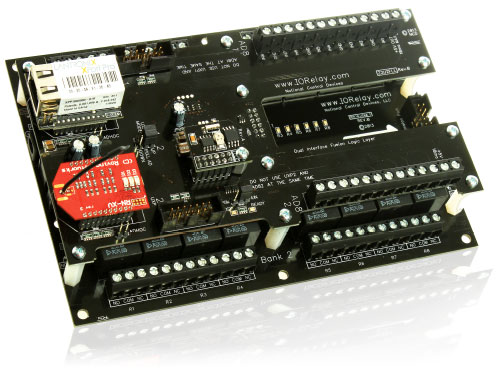
Dica do nosso amigo Magoardo, eis uma placa electrónica que vos permite controlar tudo lá em casa, ou onde for, respondendo a sinais exteriores, controlado pelo Smartphone, ou sendo temporizado, controlado por Computador, etc. e tudo, mais configurável que sei lá o quê...


Complete Control 

The Fusion series is our 4th Generation relay controller offering the ultimate relay control solution... without exception. Capable of making decisions to control relays based on sensor reading. Fusion series controllers offer easy setup without programming. Fusion controllers can be adapted to any automation application you could imagine. Combining ProXR Computer Control, Reactor Sensor Control, Taralist Time Scheduling, and Remote Access wireless communications, it's the best of our technologies merged into a single controller.

Fusion at a Glance

  • Sensor & Time Automated Relays
  • Computer Controlled Relays
  • Manual Override of Automation
  • Push Notification of Sensor Data
  • 2 Communication Ports
  • 2 Relay Banks totaling 16 Relays
  • 16 10-Bit A/D Converters
  • 2 UXP I/O Expansion Ports
  • FXR Relay Expansion Port
  • I²C Expansion Port


Como eu estou sempre a dizer, é um desperdício repetir N vezes uma Impressão 3D, quando se podem fazer Moldes para Injecção, só uma vez...
Pois aqui, dica da 3DSystems, está um Webninar, para dia 7 do próximo Mês, onde se podem inscrever para se inteirarem disso.


Bi-Link Makes the Impossible Possible with 3D Printed Injection Molds

3D printing isn't just for prototyping anymore. Just ask Bi-Link, a global, family-owned engineering and manufacturing company that helps their customers innovate and get their products to market faster and more economically. See how Bi-Link pushes the boundaries of 3D printing by producing injection mold tooling and production-quality sample parts…Read more

https://attendee.gotowebinar.com/register/144151837202322178?source=3DS_eBlast_March26


E cá vai como fazerem um Misturador Magnético para os vossos Laboratórios caseiros, para que não vos falte nada!


Simple DIY Magnetic Stirrer

JWSmythe 

This instructables is to show how to build your own magnetic stirrer from parts you may have at home.

This one was built to mix E-cigarette vape juice. You could use it to stir almost any liquids, so it can be used for mixing vape juice, mixing for cooking, or in a chemistry lab.
Time:
About 30 minutes


    quinta-feira, 26 de março de 2015

    Flexures!

    Não há maneira de se exagerar a importância DESTA Lição do Grande Mestr, Dan Gelbart, o que isto abre de possibilidades para o Corte Laser CNC é incrível, imagines, máquinas de uma peça só e fazer do Acrílico, material de Mola!

    Nem cá ponho mais do que estas Fontes de Sabedoria, para que vocês se CONCENTEM só nesta Matéria fenomenal...

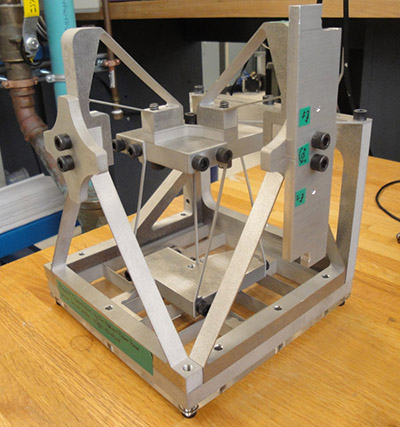
    Vejam só esta imagem!


    Uma máquina de 1 SÓ PEÇA, com 2 Alavancas, e Molas Lineares!


    Building Prototypes Dan Gelbart part 10 of 18 Flexures


    Mas tem ainda mais, pessoal das Engenhocas e Fabbers, uma Lição completa do MIT...
    Sobre o mesmo assunto, mais aprofundado!


    Flexures

    © Marcel Thomas

    1 Introduction
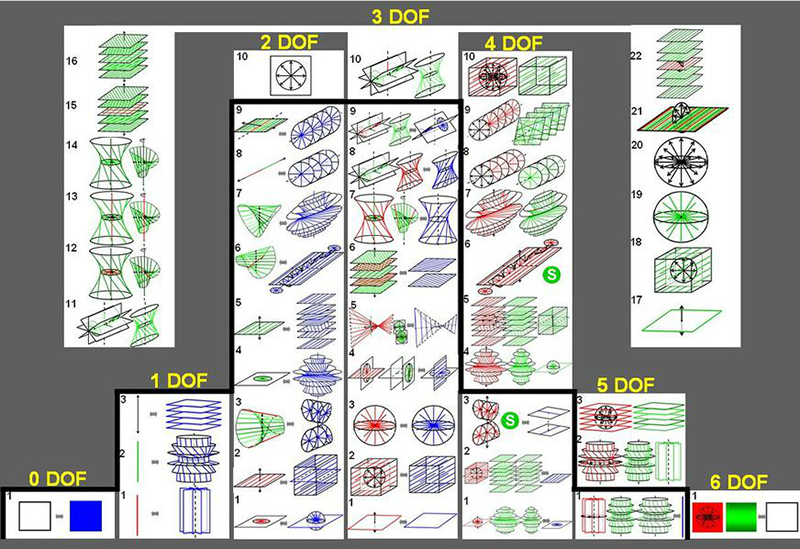
    Flexures are bearings that allow motion by bending load elements such as beams. The arrangment of beams can be designed to be compliant in its degree(s) of freedom (DOF), but relatively stiff in its degree(s) of constraint (DOC). This allows engineers to provide motion in desired directions, but constraint in other directions. Flexures are important for engineers because they allow stiction-less, controlled, limited-range motion. These well-designed, well-understood springs can then be implemented in precision machines to allow the development of medical devices and machines for electronic fabrication. This entry is about understanding the most important parameters for flexure design. The functional requirements for flexures include (but are not limited to): desired kinematics, range of motion, stiffness, load capacity, repeatability, mode shapes/frequencies, and an error budget.
    Designing flexures involves developing a model, using FEA, and experimentally verifying the models. There should be a pencil-and-paper approximation that allows you to see which variables are most important and it gets you in the ballpark of the correct dimensions. In other words, the model shows you which direction to go and by how much. How short can I make this beam so that it can be at 30% of the yield stress? The model should answer questions like that, keeping real-world constraints in mind.
    By carefully applying these equations to your system, you should have a decent approximation for its behavior. Once the equations are developed, you should put these variables in a MATLAB script or an Excel spreadsheet. That way, you can change one variable at a time and see how that affects the entire system. Flexures are typically modeled using FEA, which is the subject of another entry.