Blog Posts

segunda-feira, 16 de setembro de 2013

É votar, no Museu, rapaziada! E Nural, para montar estruturas e peças, uma Impressora/Fresa CNC(!), um Programa 3D GRÁTIS, e um brinquedo pró Tareco.

Já podem começar a votar no nosso Museu das Invenções em Lisboa, para que este Museu se torne numa realidade!


Para votar neste projecto, nada mais simples:

Enviem um SMS grátis para o número 4646 com o texto: 

OPLX 203

Atenção ao espaço, entre as Letras e os Números.


Uma dica do nosso amigo e Inventor Fernando Lopes, a pasta reparadora Nural, da Pattex, faz maravilhas, na reparação a frio de peças dos Automóveis, que era um pesadelo reparar doutra forma...
E digo eu, se esta pasta até dá para ser trabalhada, lixada, furada, e pintada, não será uma forma de se construírem uma data de estruturas e peças complicadas, a partir de placas, e tubos, etc?

Adhesive Pattex Nural 21


This adhesive is a cold-welding metal specially formulated for repairing metals.
It binds to iron, steel, aluminum, copper, brass, tin and lead.
Once welded can be sanded, polished, drilled and painted.

http://www.feca.cat/eng/item/6FNURAL110.html


Um Luxo!
Uma Impressora 3D que também é uma fresa CNC, o que vos dará asas...
Imaginem uma Impressura que vos pode imprimir em 4 cores, ou 2 Materiais completamente diferentes, aliada a uma Fresa que vos fará as peças mais exigentes, e têem uma ideia do que isto significa!


License to mill: Mebotics' Microfactory combines 3D printer and milling machine

James Holloway

Not content with the quality of parts made from 3D printers, and frustrated by the noise and mess created by milling machines, startup Mebotics has designed and built a machine that is both a 3D printer and computer-controlled milling machine at once. And because it's enclosed and can be connected to a vacuum cleaner, the company claims that mess is put to bed, too. Mebotics has turned to crowd-funding to bring the Microfactory (for that's its name) to market.

http://www.gizmag.com/mebotics-microfactory/29065/


A malta da Designspark não se cansa de ser uma Malta porreira, por isso, inscrevam-se, se já não lá estão, porque ganham à borla, que é o mesmo que dizer, grátis, um Programa 3D para vocês criarem sem limites, e dispôem de Vídeos e tutoriais, para além de duas imensas fontes de ficheiros 3D de Peças e Componentes!


The Gift Of Invention

Welcome to DesignSpark Mechanical – the home of FREE professional 3D design software
At DesignSpark we love helping engineers create world-changing products. It's why we've made our new 3D Design Tool available to all engineers and designers as a FREE download.
DesignSpark Mechanical is packed with time-saving features to help you design more easily, quickly and creatively than ever before.
  • Produce highly detailed dimensioned worksheets
  • Remove bottlenecks by making amendments and additions to your design in seconds, rather than waiting for the CAD department to rework in history-based CAD tools
  • Combine your creation with off-the-shelf components from RS Components and the Allied Electronics 3D library
  • Create geometry easily with powerful and intuitive gesture-based modelling, no need to be a CAD expert
  • And best of all, it's completely free! This is not a cut down version of an expensive product or software with a time-limited license.


E para a paródia, para a palhaçada, eis um Brinquedo para os vossos Gatos, que vai dar um relax prós bichos, e risadas prós donos, a ver os palermas todos entretidos a brincar:


Self Petting Station

Attmos

This is a fun little project that can be completed in an hour or two depending on what you have laying around the house.  It's a self-petting station for your cats so that they can get a good back scratching while you're at work or away on vacation.  I found the Ad while looking for toys to keep my cats active, I hate seeing them board.  Here is a link to the original Ad;               http://www.drsfostersmith.com/product/prod_display.cfm?c=3261+1897+26492&pcatid=26492 .                                                                                                                                                                            As you can see in the Ad, they want $18 for this product.  I made mine for about $6.  


sexta-feira, 13 de setembro de 2013

Votem no Museu, CNC E-magazine, E Placa de Carbono

A Proposta do Museu da Criatividade e Invenção de Lisboa vai estar a votação, a partir de 2ª Feira que vem, por isso, VOTEM!


Museu da Criatividade e Invenção de Lisboa
Assim chega à fase de projeto esta nossa proposta do Museu da Criatividade e Invenção da Cidade de Lisboa! Caros amigos temos projeto com o número 203, a ser votado a partir de dia 16 de setembro no site:


Acabou de saír mais esta E-Magazine, sobre CNC, e meus amigos, é de folhear...
Aprende-se muito sobre tudo o que é a CNC:


Dear Members and Friends of CNCzone.com,

It´s done! We are really happy to introduce you to the first edition of CNC-Arena´s eMagazine, proudly affiliated by CNCzone and made especially for our common network.

You are now invited to discover trends in the world of manufacturing. All you have to do is to read, listen, click pulsating icons and watch the videos our editors embedded into the content.

Here´s an extract of the contents:
  • Why did CNCzone entered into the co-operation with CNC-Arena?
  • Mori Seiki´s CEO talks about current market demands in the US
  • Dave Edstrom / MTConnect focuses the next industrial revolution
  • Cyclists Take Additive Manufacturing
  • And much more ...
http://www.cnczone.com/emagazine/


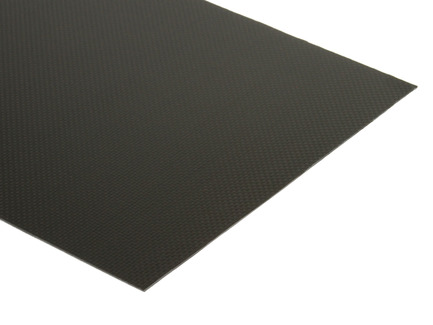
E da Inventables, vem-nos mais esta proposta, Placa de Carbono, algo de muito leve, e fortíssimo, para os vossos Veículos e tantas das vossas Engenhocas...


Carbon Fiber Sheet

Lightweight, rigid and incredibly strong

Our carbon fiber sheets are plain weave with a glossy finish. The weave is 3k, meaning there are 3,000 filaments per roving. The first few millimeters of one or more edges may not have the best surface quality due to the fabrication and cutting process.

https://www.inventables.com/technologies/carbon-fiber-sheet


quinta-feira, 12 de setembro de 2013

Pololu, com cabos incríveis, Ponoko e Lâ, Lego que lê, e a Fab Academy

Assistam a esta bela Geek apresentar-vos estas Ligações e cabos da Pololu, que são um espectáculo...


New video: Pololu cables and wires

Emily is back with another short video, this time showing how easy it is to use our large selection of wiring products to make clean, custom cables for your electronics project.


Enrolar Novelos de Lâ!
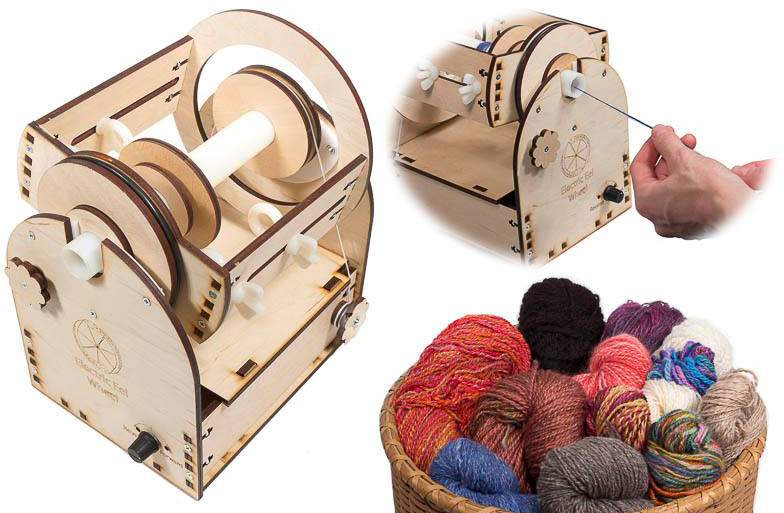
Eis algo que tem sido um Sucesso, na Ponoko, uma Máquina de enrolar Lâ, algo mesmo divertido, só de ver, quanto mais de montar!


Spin your own Wool Yarn with the Electric Eel Wheel
Spinning wheels always bring to mind fairy tales: Rumpelstiltskin spinning straw into gold in exchange for a maiden’s first born child, Sleeping Beauty cursedly pricking her finger on the spindle.
But luckily, Maurice Ribble’s story isn’t so grim (pun intended.) Maurice is a computer engineer who lives with his wife Emily in the Boston area. “I always say my wife’s first love is knitting because she’s done it for much longer than she’s known me,” he says.
Emily often spins her own yarn for her knitting projects and totes a manual spinning wheel to her knitting group. “The mechanics of the spinning wheel were fascinating to my engineering mind and her need to travel with it gave me some great reasons to set about making a very portable, electric spinning wheel,” Maurice explains.


Depois, temos este Robot feito de Lego Technik, que "lê" os Livors Kindle, página, por página, carregando no botão, até o livro acabar:


Lego robot that strips DRM off Kindle books

Cory Doctorow

Peter Purgathofer, an associate professor at Vienna University of Technology, built a Lego Mindstorms robot that presses "next page" on his Kindle repeatedly while it faces his laptop's webcam. The cam snaps a picture of each screen and saves it to a folder that is automatically processed through an online optical character recognition program. The result is an automated means of redigitizing DRM-crippled ebooks in a clear digital format. It's clunky compared to simply removing the DRM using common software, but unlike those DRM-circumvention tools, this setup does not violate the law.


E o FabLab EDP voltou em grande, depois de colaborar neste projecto, a Fab Academy, boa ideia!


About

How to Make Almost Anything
The Fab Academy is a Digital Fabrication Program directed by Neil Gershenfeld of MIT’s Center For Bits and Atoms and based on MIT’s rapid prototyping course, MAS 863: How to Make (Almost) Anything. The Fab Academy began as an outreach project from the CBA, and has since spread to Fab Labs around the world. The program provides advanced digital fabrication instruction for students through an unique, hands-on curriculum and access to technological tools and resources.
Learn to Turn Codes into Things
Just as communications and computation went from analog to digital, resulting in PCs and the Internet, the digitization of fabrication is leading to personal fabricators that will allow anyone to make almost anything, anywhere. The development of digital fabrication is based on creating codes that don’t just describe things, they are things, much as proteins are coded in molecular biology. This research roadmap is ultimately aiming at a Star Trek-style replicator, but prototype versions of these capabilities are already available in field fab labs.
At the Fab Academy, you will learn how to envision, prototype and document your ideas through many hours of hands-on experience with digital fabrication tools. We take a variety of code formats and turn them into physical objects.


sexta-feira, 6 de setembro de 2013

Vídeos bacanos, Ben Heck, Element14, e Tecido Reflector

\Jon Cantin partilha conosco estas suas memórias, do que o inspirou, na sua caminhada, para criar os seus Vídeos impecáveis,, e vale a pena ver, porque ele viu coisas realmente porreiras...
Como este Show do Ben Heck, mas há muito mais!!


CNCKing.com: My video inspirations growing-up

Well, it has taken two years and the final finishing touches are now being made on my 4th design book (7th overall) CNCKing.com: Rise of the CNC and I’m very excited at the potential it has in the market place. It has taken me 5 years to get to this point and time has really gone so fast… I’m having it checked over by another editor with a fine tooth comb before releasing the digital PDF version first followed by the printed on-demand version a few weeks down the road.
Now that the book is essentially out of my hands, it’s nice to reflect on how much I’ve learned and processed through the years – there is yet so much to be made and so many directions I can take CNCKing.com. Looking at Ben Heck’s videos (who wrote the foreword to my book) I see I have a tremendous amount of growth to make in the video component of my site – I’ve finally gotten over my “video fright” and instead of having to make hundreds of takes because I kept forgetting what I was going to say or memorized as soon as the “record” button was activated, I can do it now pretty much in only a few.


No Vídeo anunciam o Site Element14.com, e é mesmo de lá ir, que para Engenheiros e Engenhocas da Electrónica, há de tudo um pouco, Arduino Raspi, chips que são programados em Pithon, etc. 
Tem um Blog com novidades, um Board de discussões globais, e vendem também!


About the element14 Community: Ask Questions. Get Answers. It's Easy.

element14 offers the first online community specifically for engineers - from electronic design all the way through maintenance and repair. The community is a place where engineers and electronic enthusiasts:

Connect with engineers and experts
Get accurate information, answers and tools from a wide range of independent sources and manufacturers
Find design solutions and services that save time
Can be inspired by the latest innovations

As part of the element 14 Evolution we want to make your job easier than ever, so we've developed user-friendly resources that allow you to ask questions, get answers and stay up-to-date on engineering topics.

http://www.element14.com/community/index.jspa


...E para os vossos projectos mais brilhantes, fornecida pela Inventables, eis um Tecido eflector, para levarem à Estrada, em roupa, acessórios, etc:


Flexible Glow in the Dark Sheet

This vinyl sheet is thin and stretchy with a smooth, satin finish. It can be cut with scissors, die cut or sewn. It’s ideal for use in apparel and costumes, as well as any project that requires a stunning glow. The material is eco-friendly, nontoxic and machine-washable.
You can charge and re-charge the sheet in UV light (natural daylight, lamp or black light) in 5-30 minutes, and the glow will last for 8+ hours until fully recharged again.
This photoluminescent sheet features a proprietary technology for superior performance. It works at the molecular level to absorb the energy of UV light through exposure to sun, lamplight or black lights. When light is removed, the absorbed energy is emitted as a glowing light. The brightness of glow is dependent on color selected, dimension of material used, and darkness of surroundings. It is either charging or emitting light, depending on the presence of another light source.
This material is currently only available in Lime. Other colors are coming soon.

https://www.inventables.com/technologies/flexible-glow-in-the-dark-sheet


quinta-feira, 5 de setembro de 2013

Os Ímanes são estranhos... E Arduino Congelado(!), o Museu das Invenções estará a votos, e Papercraft Mecânico...

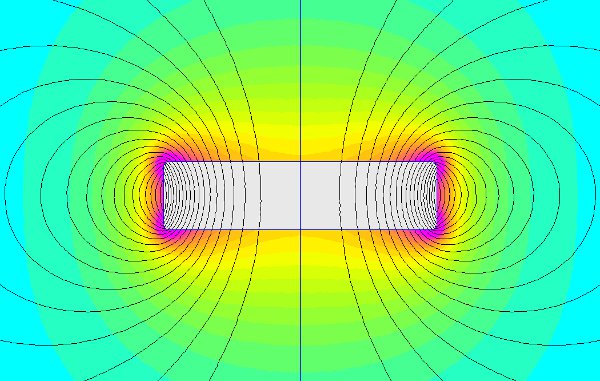
Os Ímanes são estranhos... Podem-se calcular as forças de atracção de dois Ímanes de Diâmetro igual, mas de Diâmetro diferente... Já é outra coisa!
Vejam este artigo  do Blogue da KJMagnetics, onde ainda podem encontrar um App para calcular forças de atracção de Ímanes de diâmetro igual, e um gráfico para diferentes.
E se quizerem ver como os Ímanes mais achatados têem uma atracção desigual, vejam este Vídeo:


Magnets Are Weird

In this article, we discuss a few things that might make you question what you think you know about magnets.  We’ll show magnets stronger at the edges than at the center.  We'll see magnets that won’t attract to center upon one another.  We’ll even make the north pole of one magnet stick to the north pole of another.
Mental Models of Magnets
The forces between magnets have long fascinated us.  It is a strange thing to think about: forces that you can’t see can cause things to move.  Albert Einstein described his first interest in science stemming from his fascination with a magnetic compass at a young age.
When we think of magnets, most of us think about how they work in terms of an analogy:  We might think of magnets as having invisible mechanical springs between them.  Or we follow simple rules that apply in most situations:  “Opposites attract” or “the north pole of one magnet attracts to the south pole of another” to predict their behavior.
In many cases, this way of thinking works pretty well.  In some situations, though, it completely fails to predict the actual behavior of magnets.  The “model” is too simplified, and doesn’t accurately describe how magnets behave.  Whenever we find magnets behaving in ways that don’t seem intuitive, we find ourselves muttering, “Magnets are weird!”


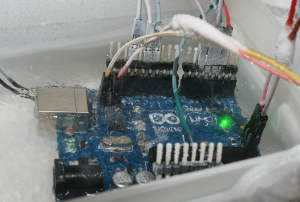
Dica do nosso amigo Alan Metcalfe, o Arduino agora foi congelado, para se conseguir mais velocidade dele, por isso, se são fâns do Overclocking, leiam isto:  


Overclocking Arduino UNO with liquid nitrogen

I must be missing the over-clocking gene, but a lot of modders love to push a piece of kit that bit further, sometimes by any means necessary.
That seems to be the case with a modder called Michail who has managed to overclock an Arduino using liquid nitrogen, no less. Cooling to -196°C he hits speeds of 65.3MHz.
Why overclock a dev board with liquid nitrogen? He answers this one in a blog post – because he could, and he wanted to learn how electronics behave at cryogenic temperatures. And he says he was just curious to see “how much juice you can squeeze out of AVR if you push hard enough”. (AVR is the “C” environment for programming Atmel chips.)


A partir do dia 16 de Setembro, podem votar na proposta 395, que já figura no Lisboa Participa, como um Projecto, e podem ir à página do Facebook, também:
  

projectos

Cultura
Museu da Criatividade e Invenção de Lisboa

Museu que aborda a aplicação da ciência com fins utilitários, comerciais ou industriais, i.e. as invenções, com um foco na inventividade e criatividade de origem portuguesa, dando a conhecer ao público em geral o que se tem feito e faz neste domínio e sendo também um espaço activo de fomento da criatividade, permitindo experiências hands-on que atraiam todo o tipo de público mas com um foco na camada infanto juvenil.
A definir
500000.00
18 meses
 
 
Vão já agora à página do Facebook, e carreguem em "Like"!


E Rob Ives volta a atacar, com esta maravilha mecânica, e em Paperctaft, por isso, sigam este Projecto, e boa sorte, Rob!


Using a Ratchet to Drive a Key

I'm working on a project for client that has a decorative clockwork key on its side. I'd really like key to turn as the model operates. The character itself will be jumping up and down so I'm trying to harness this motion to turn the key. If I can get the mechanism to work well it would apply well to a clockwork robot model like the one in the sketch below which I can then make into a model for robives.com.


terça-feira, 3 de setembro de 2013

Do Laser para a Fresa, Engenhocas pá criançada, Impressão 3D no Espaço, e TV de Cartão!


Se já fizeram algumas coisas com Desenhos Vectoriais que mandam cortar em placas, por Laser, fazer o mesmo Desenho, mas com uma Fresa CNC, não é tão simples...
Porque o corte da Ferramenta de Corte é muito mais grosso que o do Laser CNC!
Pois o nosso amigo Jon cantin dá-vos estes pareceres, e a sua experiência pessoal a fazer isso mesmo, por isso, têem aqui onde aprender como o fazer, para os vossos projectos:


Sydney Harbour Bridge: CNC Laser to Router Conversion 3 ~ Taking Shape 
Continuing on the file conversion here on CNCKing.com… As I design all my models based on material thickness, these kind of thickness issues will reek havoc on the final design if I don’t catch all of them. Although I work in a 3D environment, it’s really 2D extruded to the material thickness. In this picture, you see a major problem. If I layer a piece over the bottom step that’s 4mm (squares help for sizing), I will have 2mm sticking out and intersecting the piece above it. Solution? Bring it down to 4mm and review the model closely to catch all of these.
The model will already be highly modified simply due to the span doubling but throw-in a 150% increase in size using the same material thickness and what may “appear” easy and straight forward has a lot of issues that could derail it in the real world. I went through TONNES of these issues with my earlier models so I know what to watch-out for but sometimes they can be hard to spot until you cut the model out and build it in the real world for the first time.

http://blog.cncking.com/sydney-harbour-bridge-cnc-laser-router-conversion-3-taking-shape/


Isto é que motiva a criançada a meter mãos à obra! Os Vibrabots são umas Engenhocas simplissíssimas, e todavia, divertidas, logo que se montam!
Estas, até têem Controle Remoto:


RC circuit for a Bibberbeest / vibrobot

ynze
Last February I posted a vibrobot project "Scary bots and Super Creeps", making vibrobots out of connectors, cable binders and electrical wire. The creatures are named "bibberbeest" in Dutch.
Making Bibberbeests with kids is a HUGE success at schools, parties and festivals (second video in this step)! In the past months I witnessed 500 kids (6 yrs and up) making their very own, unique Bibberbeest.

Now what is more fun than a Bibberbeest? A remote controlled bibberbeest, using a standard audio/video RC? And it makes the project a bit more challenging to high school kids like monster-marit and emilyvanleemput :-)
So what I needed was a receiver circuit for a standard TV RC that can switch on and off a Bibberbeest, working on 3 Volts max.

At first I was tempted to go the microcontroller way, inspired by Masynmachien's Wiebelbot. But then I bumped into this IR toggle switch diagram, which I eventually used with some small modifications. The circuit worked fine on a breadboard, but turns out to be a bit unpredictable as a Bibberbeest brain... So the circuit in this I'ble is not a nicely polished and tested end result. It's a proof of concept and hopefully an inspiration if you're into vibrating creature making...


E tinha de acontecer, o Fabbing vai chegar ao Espaço!
Estes bacanos obtiveram um Prémio da Nasa, e lá vão eles, continuar a desenvolver uma ideia que vai facilitar enormemente a Exploração Espacial, porque o que se Fabricar lá encima...
Não presisa duma fortuna par ser montado cá embaixo, e mandado por Foguetão!


SpaceFab: 3D printing and robotic assembly in space

Colin Dunjohn

SpiderFab, a series of technologies under development by Tethers Unlimited, Inc. (TUI), combines 3D printing and robotic assembly to build and create spaceship components and structures in orbit. The groundbreaking systems are being designed to enable on-orbit construction of antennas, booms, solar arrays, trusses and other multifunctional components, ten to hundreds of times larger than currently possible with existing technology.
TUI has recently received an additional US$500,000 phase 2 NASA Innovative Advanced Concepts (NIAC) contract, supplementing an initial $100,000 phase 1 contract awarded in August 2012 to develop the new technology.


E chegámos à Televisão de Cartão! Mais própriamente, Televisores de Cartão uma versão em Cartão dos Televisores, Aparelhos de Televisão mais primitivos, os Mecânicos(!), e vejam como é fácil de fazer, utilizando uma Placa Arduino:


A cardboard televisor (with arduino and LEDs)

Sparticles

Recently I saw a documentary about the history of the television.  And to my surprise they showed that there existed a mechanical television before the well known CRT televisions.

Those mechanical televisions or televisors were pretty smart and simple.
A CRT is simply an electron beam that scans a surface covered with a luminescent phosphor line by line. And the intensity of the beam is then directly proportional with the whiteness of that particular spot on the screen.

A televisor works in a very similar way. But instead of an electron beam, holes are used. Holes in a spirally pattern on a disk scan a small area as the disk rotates.  After that particular area an electrical lamp varies its intensity. Bright means a bright spot wherever a hole is located.

There are some videos on youtube from people who have built other televisors. With more lines and far better image quality than this one. (but they aren't made out of cardboard)

This instructable documents the build of such a very small 24 line televisor completely from scrap cardboard, scavenged electronic parts a laptop and an arduino.
The image quality is very, very low but it is built out of cardboard and it has only 24 lines.
But it was a fun build.
If you want a good display, there are much better alternatives, (pretty much everything is a better alternative).


segunda-feira, 2 de setembro de 2013

Plasma pró Povo! Fantasmaravilhoso! E um Raspi para Server, um app para Digitalizar em 3D, e o Auto-Piloto mais pequeno do Mundo.

Isto é que é Malta porreira! 
Não têem muito dinheiro, mas precisam dum Cortador de Plasma?

(Silêncio, que se vai assistir a um Espectáculo... Pasmem com o Plasma!!!)

.

Querem um? É muito caro?
Estes bacanos da Torchmate, pensando em tanto Engenhoca sem grandes meios, como EU, fornecem uma maravilha de Kit, em que elae vos vendem apenas o que vocês não podem construír;
A Estrutura, podem bem ser vocês a fazer, ou mandar fazer, e poupa-vos uma Fortuna!
E ainda... Podem mandar vir um outro Kit, de aparafusar tudo, numa Estrutura de Alumínio, ou uma data de mais opções.
Sim, senhor!


Torchmate 1 DIY (do-it-yourself) Kit
  Most people who have a need for a CNC cutting machine are metal fabricators, who given enough time, could probably design and build the mechanical part of a coordinate drive cutting machine. However, just because you may be capable of doing something doesn't necessarily make it the most economical decision. While the physical machines may look simple, it took us hundreds of hours of experimentation, construction of prototypes, and modifications before we felt they were ready for the public. Since then, our machines have undergone further refinements based on customer feedback and suggestions.

Spending hundreds of hours of your time and ending up with an inferior machine with no warranty is false economy. The time would be better spent using the machine to do what you intend it to do. Those who want to save money by doing part of the fabrication can do so by purchasing our Torchmate 1 CNC DIY kit. The Torchmate 1 was our original offering to small shops that could benefit from the CNC process but could not justify the high cost of commercial units on the market at the time.

http://torchmate.com/products/torchmate_1/


Querem ter o vosso próprio Server, por pouco dinheiro?
Usem um Raspberry Pi!
Ou algum PC velho, ou que já não usem...
É bom!


Ultimate Pi Home Server

DrWilson
 Welcome reader.
First please note: This instructable can be done within a day, but a weekend is certainly recommended.

In this instructable I hope to teach you key skills involved with setting up and configuring a Linux Server. The knowledge used here can be applied to almost all PC architectures so if you don't own a Pi
(Why not dude?) or it's tied up in another project, any old or unused PC will work. In more detail the main skills taught will be:We


Sabemos que uma Campanha do Kickstarter é um Sucesso, quando ele ultrapassa a Meta, nas calmas...
Como esta, um App de Browser, que vos permite fazer Scans 3D, a partir duma Câmara de Profundidade, ou Paralaxe, e assim podem digitalizar em 3D sem limites de tamanho!


The 3D Scan-to-Print Web App

Volumental

The Future is Here. 

3D printers give you the promise to print amazing objects and unlock your creative potential. But to make 3D prints you have to first make a 3D model - and creating 3D prints from complex 3D models can quickly turn into a tricky process of complicated computer programs, tedious iterations and lots of melted plastic in the trash.
Imagine making a 3D model using only a depth camera and your browser, a process so quick that in moments your fully-textured 3D printable model loads on your web browser. The water-tight, closed model is then downloaded to your computer or sent off to an online printing service, ready to print. The dream of a replicator would be realized. The only limit would be your imagination.


E que tal, um Auto-Piloto bem pequeno?
Este, promete ser de bolso, e com um Autopiloto, nem precisa de controles!


TU Delft has developed the world’s smallest autopilot

Randall Marsh

As the word "drone" has become so commonplace that you can literally build a UAV out of anything, researchers are aiming to make the technology smaller and more usable in everyday practice. Bart Remes, project manager at the Micro Aerial Vehicle Laboratory at the TU Delft faculty of Aerospace Engineering, has led a group of researchers to the creation of the world's smallest autopilot.
The team's goal is to eventually create MAVs (Micro Aerial Vehicles) small enough to fit into your pocket, but that does little good when you have to carry around a controller for the craft as well – hence, the quest to create a tiny autopilot system.