Acabou de saír mais esta E-Magazine, sobre CNC, e meus amigos, é de folhear...
Aprende-se muito sobre tudo o que é a CNC:
Dear Members and Friends of CNCzone.com,
It´s done! We are
really happy to introduce you to the first edition of CNC-Arena´s
eMagazine, proudly affiliated by CNCzone and made especially for our
common network.
You are now invited to discover trends in the
world of manufacturing. All you have to do is to read, listen, click
pulsating icons and watch the videos our editors embedded into the
content.
Here´s an extract of the contents:
Why did CNCzone entered into the co-operation with CNC-Arena?
Mori Seiki´s CEO talks about current market demands in the US
Dave Edstrom / MTConnect focuses the next industrial revolution
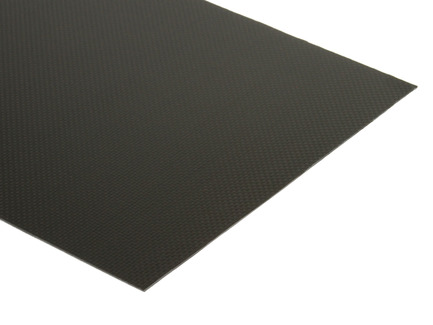
E da Inventables, vem-nos mais esta proposta, Placa de Carbono, algo de muito leve, e fortíssimo, para os vossos Veículos e tantas das vossas Engenhocas...
Carbon Fiber Sheet
Lightweight, rigid and incredibly strong
Our carbon fiber sheets are plain weave with a glossy finish. The weave
is 3k, meaning there are 3,000 filaments per roving. The first few
millimeters of one or more edges may not have the best surface quality
due to the fabrication and cutting process.
Os Ímanes são estranhos... Podem-se calcular as forças de atracção de dois Ímanes de Diâmetro igual, mas de Diâmetro diferente... Já é outra coisa!
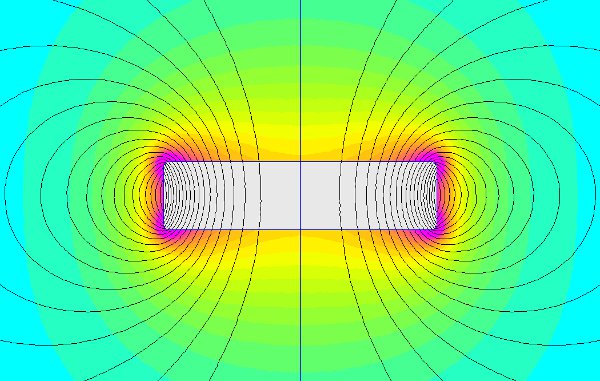
Vejam este artigo do Blogue da KJMagnetics, onde ainda podem encontrar um App para calcular forças de atracção de Ímanes de diâmetro igual, e um gráfico para diferentes. E se quizerem ver como os Ímanes mais achatados têem uma atracção desigual, vejam este Vídeo:
Magnets Are Weird
In this article, we discuss a few things that might make you question
what you think you know about magnets. We’ll show magnets stronger at
the edges than at the center. We'll see magnets that won’t attract to
center upon one another. We’ll even make the north pole of one magnet
stick to the north pole of another.
Mental Models of Magnets
The forces between magnets have long fascinated us. It is a strange
thing to think about: forces that you can’t see can cause things to
move. Albert Einstein described his first interest in science stemming
from his fascination with a magnetic compass at a young age.
When we think of magnets, most of us think about how they work in terms
of an analogy: We might think of magnets as having invisible
mechanical springs between them. Or we follow simple rules that apply
in most situations: “Opposites attract” or “the north pole of one
magnet attracts to the south pole of another” to predict their behavior.
In many cases, this way of thinking works pretty well. In some
situations, though, it completely fails to predict the actual behavior
of magnets. The “model” is too simplified, and doesn’t accurately
describe how magnets behave. Whenever we find magnets behaving in ways
that don’t seem intuitive, we find ourselves muttering, “Magnets are
weird!”
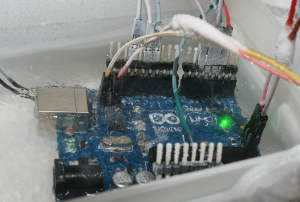
Dica do nosso amigo Alan Metcalfe, o Arduino agora foi congelado, para se conseguir mais velocidade dele, por isso, se são fâns do Overclocking, leiam isto:
Overclocking Arduino UNO with liquid nitrogen
I must be missing the over-clocking gene, but a lot of modders love to
push a piece of kit that bit further, sometimes by any means necessary.
That seems to be the case with a modder called Michail who has managed to overclock an Arduino using liquid nitrogen, no less. Cooling to -196°C he hits speeds of 65.3MHz.
Why overclock a dev board with liquid nitrogen? He answers this one
in a blog post – because he could, and he wanted to learn how
electronics behave at cryogenic temperatures. And he says he was just
curious to see “how much juice you can squeeze out of AVR if you push
hard enough”. (AVR is the “C” environment for programming Atmel chips.)
A partir do dia 16 de Setembro, podem votar na proposta 395, que já figura no Lisboa Participa, como um Projecto, e podem ir à página do Facebook, também:
projectos
Cultura
Museu da Criatividade e Invenção de Lisboa
Museu que aborda a
aplicação da ciência com fins utilitários, comerciais ou industriais,
i.e. as invenções, com um foco na inventividade e criatividade de origem
portuguesa, dando a conhecer ao público em geral o que se tem feito e
faz neste domínio e sendo também um espaço activo de fomento da
criatividade, permitindo experiências hands-on que atraiam todo o tipo
de público mas com um foco na camada infanto juvenil.
E Rob Ives volta a atacar, com esta maravilha mecânica, e em Paperctaft, por isso, sigam este Projecto, e boa sorte, Rob!
Using a Ratchet to Drive a Key
I'm working on a project for client that has a decorative clockwork key
on its side. I'd really like key to turn as the model operates. The
character itself will be jumping up and down so I'm trying to harness
this motion to turn the key. If I can get the mechanism to work well it
would apply well to a clockwork robot model like the one in the sketch
below which I can then make into a model for robives.com.