Blog Posts

Mostrar mensagens com a etiqueta gerador eólico. Mostrar todas as mensagens

sábado, 5 de fevereiro de 2011

Notícias do caraças!

Um Viaduto que tem TURBINAS DE VENTO!
Grande Itália, que não tem medo de ideias novas, que não venham de fora...

Attractive Italian Viaduct Has Wind Turbines Built In
By Rebecca Boyle

Wind Turbine Viaduct via New Italian Blood

A new bridge concept incorporates wind and solar energy into its design, generating 40 million kilowatt-hours per year — and looking pretty slick to boot.

The Solar Wind concept would use the space between an existing viaduct in southern Italy to install 26 wind turbines, which designers Francesco Colarossi, Giovanna Saracino and Luisa Saracino say could provide 36 million kilowatt hours of electricity every year. 


A Europa vai ser a fornecedora da Estação Espacial Internacional, com o seu veículo de Carga robotizado:

With Robotic Cargo Ferry Launch, Europe Will Become an Official Supplier to the ISS This Month
By Clay Dillow

The ESA’s newest Automated Transfer Vehicle--ATV-2, otherwise known as Johannes Kepler--is loaded up and primed for its February 15th launch to the International Space Station, marking a several significant milestones for the European Space Agency and its contribution to ISS operations. Among those benchmarks, it marks the first “operational” flight for the ESA’s ATVs, the 200th launch aboard the European Ariane 5 rocket, and the heaviest load an Ariane 5 has ever hurled into orbit.
http://www.popsci.com/technology/article/2011-02/europe-will-become-official-supplier-iss-upcoming-robotic-cargo-ferry-launch


Uma Cidade Flutuante!
Floating megacity designed for the banks of the Mississippi
By Darren Quick
Arcologies, which are essentially entire cities crammed into a single high population density megastructure, are still the realm of science fiction – or games such as Simcity. But with the rebuilding of New Orleans after Hurricane Katrina ongoing, a group of designers have come up with the proposal for just such a structure designed to sit on the bank of the Mississippi. Called the New Orleans Arcology Habitat (NOAH), the structure would house 40,000 residents along with all services and amenities that would allow them to live their entire lives within its walls if they so desired.


Um Skate-maravilha, oh, yeah...

Freerider Skatecycle combines snowboard, skateboard and casterboard
By Darren Quick
As devices such as the Pulse Kick ‘n’ Go Xcelerator and T-Board show, designers are always looking for new and interesting (and hopefully profitable) ways to provide kids with the various cuts and scrapes that are an essential part of growing up. The latest pretender to the throne still occupied by bikes, skateboards and scooters is the Freerider Skatecycle – a two wheeled recreational vehicle that allegedly combines the “foot control of snowboarding, the balanced turning of skateboarding, and the nimble, undulating movements of casterboarding.”

quarta-feira, 4 de agosto de 2010

Novidades

Começou a corrida para os Mega-Geradores!

Julgam que isto é grande?

Isto, é que é grande!!!

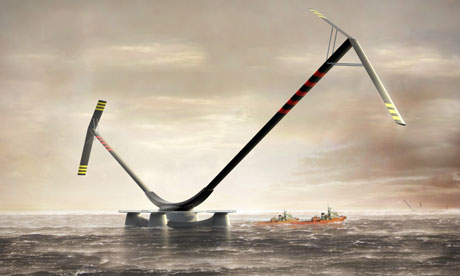
Engineers race to design world's biggest offshore wind turbines

British firm to design mammoth offshore wind turbines with 275m wingspan that produce three times power of standard models

• Interactive: The race to build bigger turbines
The revolutionary 10MW Aerogenerator X, a new breed of mammoth offshore wind turbine in development by British firm Arup. Illustration: Wind Power Limited and Grimshaw

British, American and Norwegian engineers are in a race to design and build the holy grail of wind turbines – giant, 10MW offshore machines twice the size and power of anything seen before – that could transform the global energy market because of their economies of scale.
http://www.guardian.co.uk/environment/2010/jul/26/offshore-turbine-britain

O Progresso não pára, mais uma nova maneira de produzir Hidrogénio:


New Process for Hydrogen Storage and Release
The elephant in closet of the loudly promoted hydrogen economy was that we had no practical method of storing a high concentration of hydrogen. A little thought showed one that we had to store it using chemical binding as an intermediate step. During the Second War, the Germans learned how to use hydrazine (NH3) for this purpose. Of course, it was scarier to work with than pure hydrogen.

Now we seem to have a possible solution using ammonia borane. The yield and process conditions seem sufficiently benign that it can work quite well in this role. What is not addressed is how we might produce the Ammonia Borane. That is often the real problem. I think hydrazine needed 600 atmospheres and high temperatures and all the costs associated.
http://globalwarming-arclein.blogspot.com/2010/08/new-process-for-hydrogen-storage-and.html

...E este é um Link valiosíssimo, uma fonte de Informação sobre uma data de coisas:

AIChE Journal Book Cover
Subscribing to the AIChE Journal is like having access to nine topical journals in the field. You’ll quickly find the latest examinations on the topics you care most about in our unique "Perspective" column and thoughtful reviews. And, of course, you'll find all the rigorously reviewed papers on groundbreaking research for which the AIChE Journal is celebrated. Articles are categorized by:
  • Fluid Mechanics and Transport Phenomena
  • Particle Technology and Fluidization
  • Separations
  • Process Systems Engineering
  • Reactors, Kinetics, and Catalysis
  • Materials, Interfaces, and Electrochemical Phenomena
  • Thermodynamics
  • Bioengineering, Food, and Natural Products
  • Environmental and Energy Engineering
To help you stay ahead of the curve, the Journal has greatly expanded both the number of papers published and the scope of its editorial content, with coverage of such fast developing areas as nanotechnology, biological engineering, and sustainability.
Editor: Stanley I. Sandler, University of Delaware
http://www.aiche.org/publications/aichejournal/index.aspx

Para acabar, esta solução incrível para o aumento da necessidade de Satélites:

Scots Engineers Prove Space Pioneer's 25-Year-Old Theory


by Staff Writers
Glasgow, UK (SPX) Jul 27, 2010
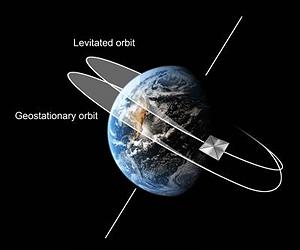
When American space pioneer, Dr Robert L Forward, proposed in 1984 a way of greatly improving satellite telecommunications using a new family of orbits, some claimed it was impossible. But now engineers at the University of Strathclyde's Advanced Space Concepts Laboratory have proved that Forward was right.
The late Dr Forward - a renowned physicist who worked in the United States and from his second home in Scotland - believed it was possible to use 'displaced orbits' to deploy more satellites to the north or south of the Earth's equator, helping to meet the growing demand for communications.
He proposed that the orbit of a geostationary satellite could be pushed above - or below - the usual geostationary ring around the Earth, which follows the line of the equator, by using a large solar sail propelled by the pressure of sunlight. However, critics later claimed that such 'displaced orbits' were impossible due to the unusual dynamics of the problem.
Now graduate student Shahid Baig and Professor Colin McInnes, Director of the Advanced Space Concepts Laboratory, have shown that Forward was in fact correct, in a new paper published in the Journal of Guidance, Control and Dynamics.
http://www.spacemart.com/reports/Scots_Engineers_Prove_Space_Pioneer_25_Year_Old_Theory_999.html


sábado, 3 de abril de 2010

Intrigante!

Intrigante!
Turbinas que accionam pistões que geram ar comprimido, que enche balões sub-aquáticos, que fazem andar outras turbinas, que por sua vez, geram electricidade (ufa!):

http://environmentalresearchweb.org/cws/article/news/42195


...E o Semi-Condutor mais pequeno do Mundo!

U.S. scientists say they have created the world's smallest superconductor -- a sheet of four pairs of molecules less than one nanometer wide.

The Ohio University-led study is said to provide the first evidence that nanoscale molecular superconducting wires can be fabricated and used for nanoscale electronic devices and energy applications.

http://www.energy-daily.com/reports/Scientists_create_smallest_superconductor_999.html


.

quarta-feira, 20 de janeiro de 2010

Engenhocas em acção!

Caso ainda não saibam, "Engenhocas", pelo menos neste Blog, é um elogio...
De outro Engenhocas!
Eis alguns, em acção:

Este amigo não fica à espera do que vem de lá de fora, e deitou MÃOS À OBRA!


Mais Inovação do mesmo campo, para verem que o Mundo não para:

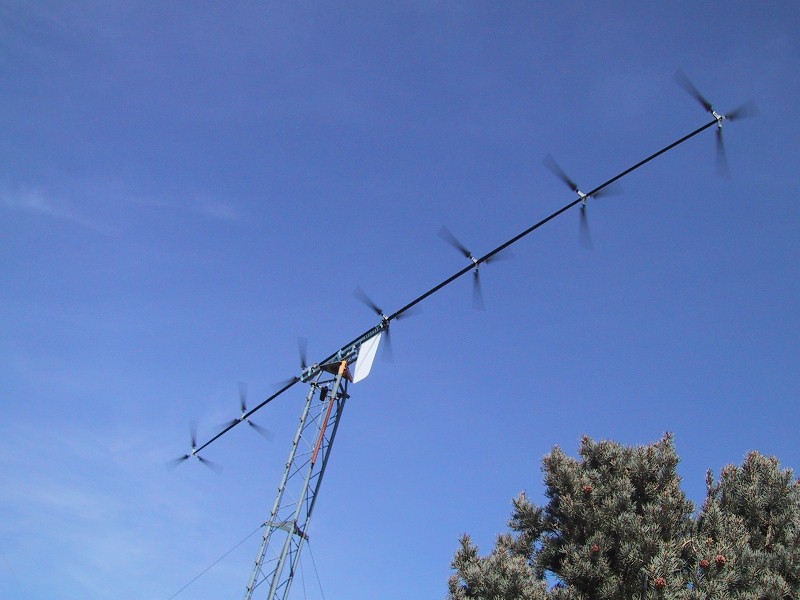
5300 watts at 32.5 mph one minute average with no furling - translates to 6000 watts at sea level
Latest Data Confirms the Immense Power-Gathering Ability of the Multi-Rotor!!! More Rotors = More Power!!! See newly-generated power curves below:


http://www.speakerfactory.net/wind_old.htm

Mas é da Competição que nasce a melhor solução, e eu cá, torço pelos nossos...


Que ganhe o melhor, e que o melhor fale Português! :)

Eis algo de intrigante:

http://www.imagesco.com/psi/esp.html

segunda-feira, 2 de novembro de 2009

Serradura, e tacos!

Um grande abraço aos 7 seguidores deste Blog! :D


Isto parece aquela anedota do Zé das Argolas, mas, meus amigos, isto é POUPAR DINHEIRO!


Toda aquela serradura aos montes nas Serrações, transformada em Combustível de Churascada?
Para ensacar e vender?

É BOM!

Os gajos têem de tudo, como na Farmácia;

Aquecedores a partir dos tais tacos:


Geradores eólicos:


Painéis Solares:


Vídeos, Livros, etc. Vão lá:

http://www.stakproperties.com/


.

segunda-feira, 19 de outubro de 2009

Truque e dicas pró que der e vier


Como nunca se sabe o dia de amanhã, aqui vão umas dicas sobre como sobreviver a uma data de Desastres:

Eis algo simples, um filtro para a água, não custa nada estar preparado:


Vejam tudo, aqui:
http://www.popularmechanics.com/survival/

quarta-feira, 30 de setembro de 2009

Sobrevivência!


Um muito bom bloco de artigos na Popular Mechanics na Net, não é uma palhaçada estilo Mad Max, mas sim uma série de vários artigos explicando como sobreviver a vários Desastres:

http://www.popularmechanics.com/survival/

Eis um exemplo, e algo muito simples, um rádio que funciona à manivela, para quando não há eletricidade, e há lanternas assim, também: