Blog Posts

Mostrar mensagens com a etiqueta espelhos. Mostrar todas as mensagens

terça-feira, 28 de dezembro de 2010

Petróleo em Portugal... Do Sol!

Uma maneira de transformar a Energia Solar em Combustível, Petróleo em Portugal!


Breakthrough solar reactor makes fuel from sunlight
By Darren Quick
17:23 December 26, 2010

Because conventional photovoltaic panels produce electricity directly from sunlight, the energy they generate must either be used as it is produced or stored – either in batteries or by using the electricity to produce a fuel that acts as a storage medium for the energy. Now U.S. and Swiss researchers have developed a prototype device that directly converts the Sun’s rays into fuels that can be stored, allowing the energy to be used at night or transported to locations where it is needed.

A BBC report citing a paper appearing in the journal Science describes how the prototype device uses a quartz window and cavity to focus sunlight into a cylinder lined with cerium oxide. Cerium oxide, also known as ceria, is hygroscopic (meaning that it attracts and holds water molecules from the surrounding environment) and will also absorb a small amount of carbon dioxide. As the sunlight heats the ceria, it thermochemically breaks down the water and carbon dioxide pumped into the cylinder to produce carbon monoxide and hydrogen that can be converted to a liquid fuel.


...E Como fazer os vossos próprios ROVs!


Education and inspiration via underwater robot
By Ben Coxworth
17:33 December 26, 2010

If you like gadgets, and you like the ocean, then you must like ROVs – it’s just that simple. For the uninitiated, ROVs (Remote Operated Vehicles) are small unmanned submarines that are used for underwater operations deemed too deep, dangerous or difficult for human divers. They’re tethered to a support ship, from which a human operator controls them in real time, watching a live video feed from an onboard camera. It’s all incredibly appealing to those of us who are fascinated by the prospect of what secrets lurk beneath the surface of the ocean... or of the local pond. A few dedicated souls go so far as to trying to create their own homebuilt ROVs, many of them turning to what has become the bible on the subject, Build Your Own Underwater Robot and other Wet Projects. Gizmag had a chance to talk to the two authors of the book, and found out what inspired them to pursue such an unlikely project.

quinta-feira, 23 de dezembro de 2010

Feliz Natal!

Querem aprender a desenhar?

Fazem-no com esta caixa:

Funciona assim:

E monta-se à mão, e sem  ferramentas:


Podem encomendar os desenhos em formato vectorial, e depois mandar cortar à Itália, e é só montar::

http://www.ponoko.com/design-your-own/products/draughtsman-learning-aid-5073

E já agora,
UM FELIZ NATAL!!!

quinta-feira, 1 de julho de 2010

sábado, 19 de junho de 2010

Notícias

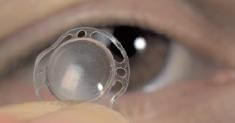
Uma Córnea Artificial, foi criada na Europa, e poderá restaurar a visão a Milhares de pessoas:
An artificial cornea (prototype shown here) could restore sight to thousands starting this year


Germany’s Artificial Cornea Ready To Restore Sight To Thousands
June 2nd, 2010 by Aaron Saenz

An expansive EU project to produce an artificial cornea has found success thanks to the work of Joachim Storsberg of the Fraunhofer Institute for Applied Polymer Research IAP in Germany. Storsberg helped develop a new version of an opthalmological polymer which the eye will bond to and still allow to function properly. The new polymer could help restore sight to thousands waiting for corneal transplants around the world. The artificial cornea has passed clinical trials and is ready to see expanded use in patients this year. Very soon those with corneal blindness may find a ready cure in the form of the new implant.

Corneal blindness affects millions around the world. According to the WHO, about 5 million cases of blindness in the world (as of 2001) were a result of corneal damage or dystrophy. We’ve seen several high-tech approaches to fighting corneal blindness including the application of embryonic stem cells to generate new tissue. For most of those affected around the world, however, corneal transplants represent the surest and most accessible treatment for their condition. A readily accessible, easily made artificial cornea is a huge boon to corneal transplants.

Telescópios de Alta qualidade, para o Povo!

The 91-actuator Array That Manipulates the Liquid Mirror:  Denis Brousseau, et al.

Liquid Mirror Breakthrough Could Make State-of-the-Art Optics Cheap
By Clay Dillow

A $120 million Earth-based telescope using brand new adaptive optics just trumped Hubble's deep space image clarity three-fold, but such high tech optics aren't just reserved for high-dollar observatories. A breakthrough in deformable liquid mirror technology could drastically reduce the price associated with adaptive optics, making the best in high-tech telescopes more widely available.

Imagine a volume of reflective liquid like mercury in a bowl. Spin the bowl, and the liquid will push toward the edges, forming a concave mirror as smooth as the best mirror glass. But unlike highly specialized mirror glass, it's just a bowl of mercury. It costs next to nothing by comparison. 


...E o Grafeno caminha a passos largos para um PC perto de vós, agora já desenharam padrões neles: 
Writing Circuits on Graphene
A heated AFM tip can draw nanometers-wide conductive lines on graphene oxide.
By Prachi Patel
Hot wire: An AFM tip heated to over 150 °C can etch an insulating graphene oxide surface to create thin conductive nanoscale wires.
Credit: Debin Wang, Georgia Tech

Using a heated atomic force microscope tip, researchers have drawn nanoscale conductive patterns on insulating graphene oxide. This simple trick to control graphene oxide's conductivity could pave the way for etching electronic circuits into the carbon material, an important advance toward high-speed, low-power, and potentially cheaper computer processors.

Graphene, an atom-thick carbon sheet, is a promising replacement for silicon in electronic circuits, since it transports electrons much faster. IBM researchers have already made transistors, the building blocks of electronic circuits, with graphene that work 10 times faster than their silicon counterparts. But to make these transistors, researchers first have to alter the graphene's electronic properties by cutting it into thin ribbons, which are then incorporated into devices. Researchers have made these nanoribbons with lithography, with chemical solution-based processes, or by unzipping carbon nanotubes. 
Graphene, an atom-thick carbon sheet, is a promising replacement for silicon in electronic circuits, since it transports electrons much faster. IBM researchers have already made transistors, the building blocks of electronic circuits, with graphene that work 10 times faster than their silicon counterparts. But to make these transistors, researchers first have to alter the graphene's electronic properties by cutting it into thin ribbons, which are then incorporated into devices. Researchers have made these nanoribbons with lithography, with chemical solution-based processes, or by unzipping carbon nanotubes.
http://www.technologyreview.com/computing/25547/

quinta-feira, 6 de maio de 2010

Asteróides!

O Asteróide Pallas, vai estrar visível para os telescópios, 524 Km dele...


http://www.space.com/spacewatch/asteroid-pallas-visible-from-earth-100505.html


...E parece que os Mamutes tinham Anti-coagulante no sangue!


Mammoths had more than woolly coats to protect them from the frigid conditions of their sub-zero stomping grounds, scientists have discovered.
The extinct beasts had a form of antifreeze blood that kept their bodies supplied with oxygen in the sub-zero temperatures, according to a study of DNA extracted from 43,000-year-old mammoth remains.
A genetic adaptation in the woolly mammoths' haemoglobin – the molecular cage that carries oxygen in the blood – allowed them to thrive at high latitudes without losing much heat.

http://www.guardian.co.uk/science/2010/may/02/woolly-mammoth-antifreeze-blood


.

quarta-feira, 5 de maio de 2010

Espelhos em rolo!

Eis algo para todos os Engenhocas, um espelho que vem em rolo, e estica, numa moldura, com ar quente.

Quando um espelho em vidro não é solução, pelo peso, ou pelo perigo, eis uma alernativa, para além dos espelhos em Acrílico, porque é o mais leve possível:
http://www.rosco.com/uk/propscenic/mirrors.asp#Mirrors

Mas para quem quer mesmo espelhos em Acrílico, aqui vai um Link:

http://www.americanacrylics.com/images/mirrordisplay.gif