Blog Posts

Mostrar mensagens com a etiqueta motores eléctricos. Mostrar todas as mensagens

domingo, 18 de outubro de 2020

Escrever em Braille! E a LEGO, antes dos blocos, E-Books para Engenhocas, Jeremy Fielding, e Ebonizar uma secretária!

Isto é fantástcio, e tremendamente útil, uma máquina portátil de Braille!

Vai dar uma autonomia enorme para os cegos, parabéns ao Inventor.


Write in Braille With B.E.E! - DIY Braille Embosser

alatorre

Braille as a form of communication has always interested me greatly- so when I saw a contest about making Tools, I took it as an opportunity to develop an idea that I had been thinking about for the past year or so.

When researching how Braille worked and the tools that were used to generate said writing, I was surprised to see how expensive they were. It was as if there were two price ranges:

Very expensive and very precise (we are talking upwards of $2000)
Very cheap and not very precise
For Braille to be read quickly and easily, there are a series of dimensions one must follow (such as the distance between bumps, from the edge of the paper etc.). As such, I thought that a tool that would be very useful would be one that was cheap and even Open Source, whilst also capable of stimulating the interaction between the blind and those who aren't.

With that in mind, our team developed B.E.E (which stands for Braille Embossing Experience).

Our goal was to create a tool for embossing which could be made at home, would cost less than $5 to make, and could be carried inside a backpack without disrupting any usual movements.

This Instructable will detail not only the way to construct your own B.E.E unit, but also all the design process and work that it took to arrive to where to product is today. 


Um facto bem divertido, a LEGO começou a sua vida fazendo PATOS em Madeira!
E vocês podem fazer um, é muito divertido, o raio do patito!


Wooden LEGO Duck

BrittLiv

I have been obsessed with LEGO ever since I can remember. Those small plastic building blocks were definitely one of my favorite toys as a kid and I still buy LEGO sets from time to time, even though I am in my thirties now (I have also written three Instructables that have to do with LEGO so far).

As a new mother my son is definitely still too young for the small LEGO pieces, but he has a bunch of LEGO PRIMOS.

I have known for a few years that the LEGO company has also produced wooden toys and wanted to buy one. Sadly they are rare and most of the time really expensive. The wooden LEGO duck is by far my favorite toy of that line, but I was never able to buy it. So I finally decided to make my own. The bonus of making one myself is that I can give it to my son and not worry about its value.

The special thing about it is that when it moves it opens and closes its beak. I hope that you will have as much fun with it as I do.

https://www.instructables.com/Wooden-LEGO-Duck/


Eis uma quantidade de eBooks, com de tudo um pouco para os Geeks e Engenhocas, desde como começar uma Carreira de sucesso na Engenharia, á Introdução aos Díodos!

Inscrevam-se na Element 14, que vale a pena!


eBooks

Element14

NEW! Finding a Successful Career in Engineering Part 1

Learn about landing the job you want, developing your professional network, what to expect from your work day, and more in our new careers eBook.


At element14, we work closely with engineers and manufacturers to bring the best technology, support and information together to help you create innovative electronic systems. 

https://www.element14.com/community/community/publications/ebooks


Volto a lembrar-vos deste autêntico Professor em tudo o que diz respeito a Motors Eléctricos, o nosso amigo, Jeremy Fielding.

Há quem saiba, e depois, há quem saiba explicar!


Jeremy Fielding

My goal is simple. Draw people to mechanical engineering with amazing projects, Inspire them with ideas, then teach them how to do it. 

I am fascinated with all things mechanical, but also cover some electrical, and electronics as well. 

If you would like to contribute to future projects please check my Patreon page. 

https://www.patreon.com/jeremyfieldingsr

Please use my website, to contact me. I also have a frequency asked questions list you should check first for quick answers. 


E se não sabiam, eu também não, pode-se transformar a aparência dum móvel, para parecer de èbano, com vinagre e palh-de-aço!

Sempre a aprender...


Ebonizing A Desk With Vinegar And Steel Wool | Furniture Restoration | Refinishing

Dashner Design & Restoration

In this video I ebonize a mid century desk using vinegar and steel wool.

https://www.youtube.com/watch?v=bNDpXrrLl-Q&ab_channel=DashnerDesign&Restoration


quarta-feira, 17 de outubro de 2018

3D no Mapa! E imprimir peças que encaixam, MESMO, grandes Motores, Um Osciloscópio de Bolso, e uma Impressora de 60 €!

O que vos pode safar a vida de muitas chatiçes, é este simpático Mapa de Fornecedores de Filmento , peças, e Impressoras 3D, dos nosso amigos da Reprap.pt
Poupa-vos terem de esperar meses por uma peçita de nada, por encontrarem a Loja mais perto de vocês, que uma Loja física, é outra coisa...
Vão lá:


Mapa de onde adquirir uma Impressora 3D, Peças e Filamentos para uma RepRap em Portugal
Mapa de Peças, Filamentos e Impressoras 3D


Não és administrador deste mapa? Pede-nos que enviamos-te o link para alterares e adicionares a tua localização. Este mapa também é para quem tem uma impressora 3D e quer imprimir. Vê como está organizado e adiciona uma nova camada ou adiciona a uma camada já existente.

https://reprap.pt/impressoras-impressao-3d-em-portugal


Tantas vezes que se tem de ajustar à bruta, e por tentativas, quando se quer imprimir em 3D, peças que encaixem umas nas outas...
Mais uma dor-de-cabeça!
Mas a scupteo vem-nos ajudar, com este belo deste Tutorial, sobre como ajustar a Impressão para peças que servem, à primeira!
Fantástico.


The ultimate guide to designing 3D printed interlocking parts
Katarzyna Plewa

With 3D printing technologies, the design freedom is just endless. Additive Manufacturing allows for the absolutely new use of design tools, such as interlocking tools. Thanks to 3D printing you are not able to combine different technologies and materials. Discover the benefits of 3D printed interlocking parts now!

In this blog post, we will go over the advantages of 3D printing interlocking parts, we will advise you which 3D technology will the best for different production needs and our 3D printing experts will show you our own study case of designing interlocking parts.

What are the benefits of 3D printing interlocking parts?

First of all, Additive Manufacturing gives you a wide range of materials, providing you with the best choice for your production needs. Every product you design is different, and to give you the best 3D printing experience we offer 18 materials across 8 3D technologies. Surely, one of them will perfectly fit your manufacturing preferences, whether you need your parts to be flexible or heat resistant.

Additive Manufacturing gives you amazing design freedom as the technology is capable of much more than traditional manufacturing methods. Your products can reach a new level of complexity allowing for better solutions for your production needs. Indeed, with 3D printing, you can easily design interlocking parts thanks to the high accuracy of 3D printing.


https://www.sculpteo.com/blog/2018/10/10/the-ultimate-guide-to-designing-3d-printed-interlocking-parts/


A não ser que queiram queimar Motores, e aleijar os dedos, podem muito bem recootrer a este Mini-Curso de 5 Aulas, sobre como montar e controlar as bestas que arranjam nas Sucatteiras e afins, para fazerem aquele Kart eléctrico, ou lá o que seja...


LARGE MOTORS CLASS
randofo

In this class I will show you how to control motors that are suitable for building go-karts, electric scooters, large robots, and much more. This requires a very different set of knowledge and skills than would be necessary for controlling a small hobby motor.
This class is intended for students with some experience working with motors, and mechanical systems. By the end of the class you will learn how to pick the correct power supply, build a control circuit, and adjust the speed of a motor. You will also learn how to make a circuit which reverses the direction the motor is spinning.
Motor control is demonstrated by a range of techniques such as using motor controllers with analog throttles and also with Arduinos and motor controllers.
I hope that you will come join me in the wild world or large motor control.


Um Oscisloscópio de Bolso? 
Ainda melhor, do tamanho duma caixinha de Fósforos!
Espantem os Colegas com esta pequena maravilha, que nem preciso de dizer mais nada, bolas, isto é a ambição de qualquer Engenhocas que se preze!


Oscilloscope in a Matchbox - Arduino
Peter Balch

Why would I want a tiny oscillscope? I've got a room full of electronic Stuff including four oscillscopes. But it's a fuss using them. It would be nice to have something that fits in my pocket, that sits next to the circuit I'm working on and that's as easy to use as a multimeter.
This oscilloscope costs the price of an Arduino Nano (£2 and a display (£3) plus a few pence for resistors, etc. It's specification is:
  •  max 1M samples/second, min 1000sps
  •  8-bits per sample
  •  DC 0-5V; AC +/- 550mV, AC +/- 117mV, AC +/- 25mV
  •  USB "PC scope" or built-in display
  •  could be battery-powered
  •  optional logic display
  •  optional frequency meter
  •  optional voltmeter


Conseguem ter uma Impressora 3D em casa, com cerca de 60 Euros, e Material Reciclado!
Sabe-se lá quantos Jovens Génios não se despertará com esta bela Miniatura, que pode imprimir...
Miniaturas!
É que isto é mais un Curso de CNC disfarçado, que outra coisa, com o bánus de se ter algo de bem útil, no fim, e se conheço a Malta Geek, quem faz esta, fará outra bem maior, um dia...
Quem faz um Cesto, faz um Cento!


Intro: EWaste 60$ 3DPrinter
mikelllc

This project describes the design of a very low budget 3D Printer that is mainly built out of recycled electronic components. The result is a small format printer for less than 100$.
First of all, we learn how a generic CNC system works (by assembling and calibrating bearings, guides and threads) and then teach the machine to respond to g-code instructions. After that, we add a small plastic extruder and give an overview on plastic extrusion calibration, driver power tuning and other few operations that will bring the printer to live. Following this instructions you will get a small footprint 3D Printer that is built with about an 80% of recycled components, which gives it a great potential and helps to reduce the cost significantly.
On one side you get an introduction to machine building and digital fabrication and on the other side you get a small 3D Printer built out of reused electronic parts. This should help us to be more conscious about the big problems related with e-waste generation.


terça-feira, 5 de junho de 2018

Façam o vosso Smartphone! E desenhem a vossa roda de Genebra, aprendam Soldadura,


Isto é porreiro.
Faça o vosso próprio Smartphonne, seja por carolice, seja por estarem faltos de pagar um exagero...


Don't wanna pay trough your nose, for a Smartphone? 
Build one!


Building Poorna, your first KitePhone
Shree Kumar

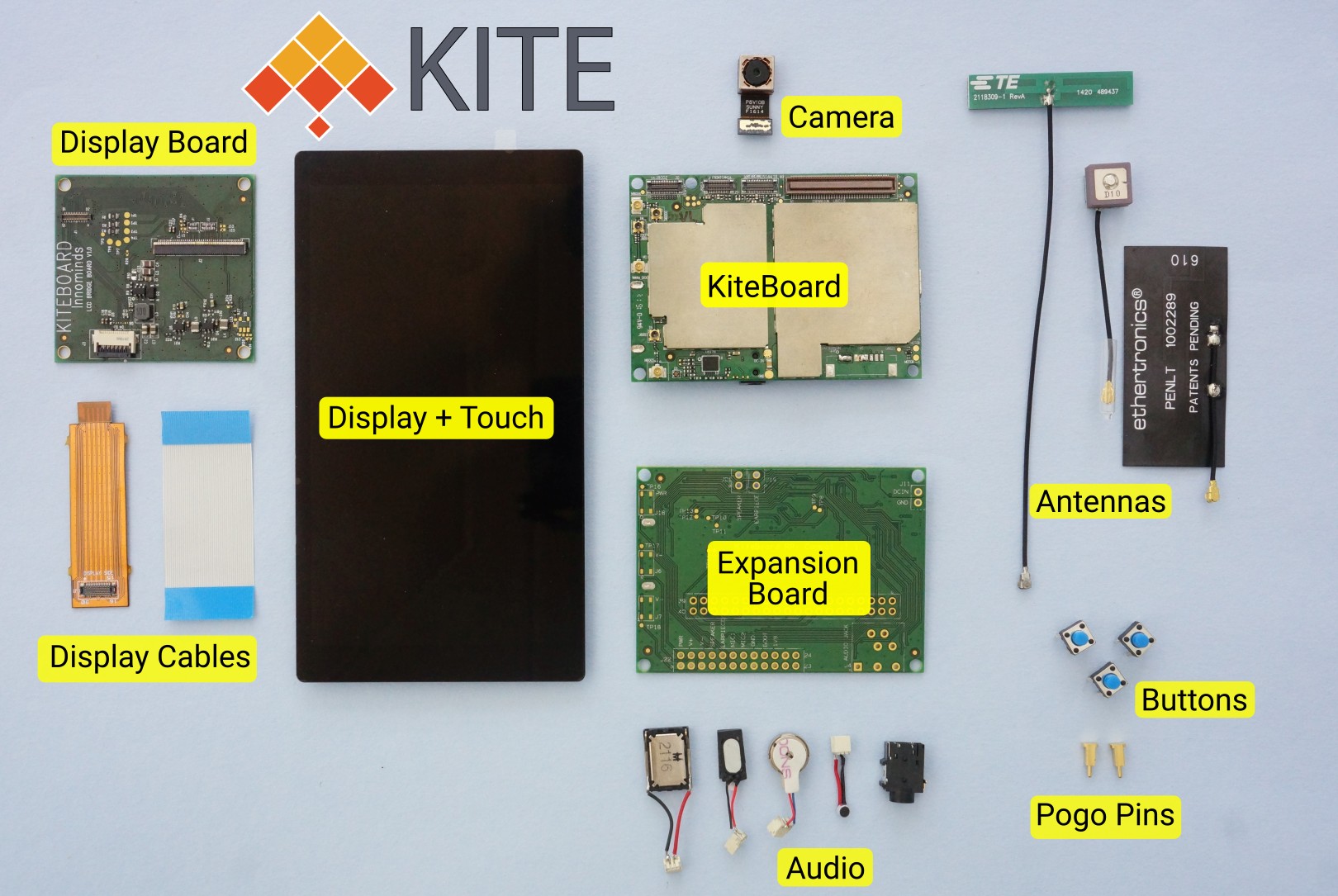
A KitePhone is simply a phone built using the Kite Kit. Consumer phones go through a teardown, so that folks can understand how they are built. Kite is built for makers, so we take a "build" approach here.
In this post, I will show you how we’ve put together a minimally complete model of a phone. We call this model, “Poorna”. Poorna is a Sanskrit word, commonly meaning “complete”. It can also mean “zero”, and there are philosophical interpretations too, but then I digress. Poorna is a complete phone providing functionality like the smartphone in your pocket. No additional bells & whistles, just pure Android.
Here is a short overview video (exactly 2 minutes, 17 seconds) of how to build Poorna, starting from Kite:

http://www.kiteboard.io/blog/building-poorna-your-first-kitephone


Uma Roda de Genebra, não há quem não acabe por querer fazer uma...
Portanto, aprendam como desenhar uma, como a quizerem!


You'll end up by wanting to make some kind of Geneva Wheel, soo...
Design your own, as you want it.


Make Geneva Wheels of Any Size in a Easier Way
iGreeny

It's not so hard to find the formulas and diagrams if you want to design a Geneva wheel of your own, and you can do it following this article: Make Geneva wheels of any size and this video.
but I feel it's not very friendly to non-engineer readers - at least it took me quite a while to pull out the math and geometry I've learned back in high school. So i decided to translate the formulas into plain English and clearer steps. I also made 2 videos simply recording how I designed it in Fusion 360.
Variables you can decide freely (within a reasonable range)
  •  the quantity of the slots on the Geneva wheel;
  •  the radius of the drive pin;
  •  the Geneva wheel radius;
  •  drive pin clearance.
You and use any CAD software you feel comfortable with because we only need basic sketch functions for designing.


https://www.instructables.com/id/Make-Geneva-Wheels-of-Any-Size-in-a-Easier-Way/


Sem Soldadura, ficam muito diminuídos, quanto a fazerem engenhocas em Metal, por isso, aprendam, neste Curso, só para vós:


Without Welding, there's no real Metal-made gizmo building hability.
So, get to learn, on a Welding Class, just for you:


WELDING CLASS
audreyobscura

Metal has been worked by humans for thousands of years. Over time, the techniques and technology used to produce and shape metal goods have been driven by the innovations of science and technology.
Before we dive into some of the technical processes available for welding metal together, let's first take a moment to define a weld. A weld is a fabrication process that joins materials, usually metals or thermoplastics, by fusion. Fusing materials is distinctly different than other kinds of lower temperature metal-joining techniques such as soldering, which do not melt the base metal.
Metal welding is the fusing of two pieces of metal to create one solid continuous piece. All welders work on the same principle: A gas torch or electric welder is used to generate precisely directed heat to melt material, and a filler material is introduced by the operator to complete the fusion.
As these processes became more accessible, we've come so far that you - yes YOU! - can learn how to weld easily.


Um Molde para um Molde! Estou farto de dizer isto, a Impressão 3D foi feita para Moldes!
Por isso, vejam como se faz, para poderem fabricar algo em números de jeito:


3D Printing a Mold for a Mold! I keep telling you, 3D printing was made for Molds!
Watch how it's made, so you can produce anything in decent numbers: 


3D Printing a Mold for a Mold
Charlotte_J

I have always loved the 3D model of the 'Vaas met oor' (Cup with ear) by Joris Van Tubergen. A couple of years ago I did my first attempt to make ceramic cups of the model. I succeeded and love drinking my coffee from these cups.
Recently I wanted to make some more of them. Only thing: I did not like the handwork that was needed to create the mold.
Inspired by the option 'Mold' in the software for my Ultimaker 3D printer (Cura) I started to think about printing a mold for a mold.
This Instructable shows what I did to print a mold for a mold and how I was able to use it.

https://www.instructables.com/id/3D-Printing-a-Mold-for-a-Mold/


ESTE, parece que não é um Motor Lingrinhas, comparado com os de Explosão...
Quase 4 vezes mais Torque do que o melhor já feito, até agora!
Leiam.


Seems Electric Motors are leaving the Wimpy League...
Have a read, a new Motor, almost 4 times more torque than the best there was, so far!


Magnax prepares to manufacture radically high-powered, compact axial flux electric motor
Loz Blain

After nearly a decade in development, Belgian startup Magnax claims it has developed an ultra-high power, lightweight, compact axial flux electric motor with performance figures that blow away everything in the conventional radial flux world. Crucially, it says it's worked out how to manufacture them too.
It might not have the romance of combustion engine tuning, but it seems a bit of a battle is brewing to develop the kinds of high-performance motors that will power the electric cars, motorcycles, aircraft and industrial equipment of the future.
A week ago we wrote about Equipmake's spoke motor design, which allows it to pump out some 9 kilowatts per kilogram with exceptional cooling and continuous power production ability.
To put that kind of power production in perspective, the ludicrously fast 193-horsepower BMW S1000RR superbike of 2011 – a power-to-weight beast that would slay just about anything in the automotive world – has a lightweight motor that makes a puny 2.4 kilowatts per kilogram. So 9 kW/kg is no joke.