Blog Posts

Mostrar mensagens com a etiqueta amplificador estereofónico. Mostrar todas as mensagens

sexta-feira, 21 de dezembro de 2012

Mais Dremmels, Raspi na Net, Chatter, um Disco em 3D, e tirar rebites.

Eis outra Dremel interessante, a Dremel Trio:


E se a virarem ao contrário, e instalarem numa bancada, vira uma espécie de Serra omnidireccional para cortar placa, mas uma que, ao contrário das Serras Pendulares, pode furar a placa, sem se mudar de Ferramenta...

Já fiz o mesmo, e só com um Clone de Dremel:


DREMEL® TRIO™ (6800-2/8)


A nova Dremel TRIO é a ferramenta essencial para todos os participantes em projetos gerais de bricolagem dentro e fora de casa. A Dremel TRIO possui um sistema rotativo 3 em 1 que lhe permite cortar, lixar e fresar com uma única ferramenta. Esta ferramenta versátil, compacta e leve é extremamente poderosa! A Dremel TRIO possui uma ergonomia excecional, um punho com 2 posições e velocidade variável que asseguram o melhor ritmo de trabalho em diversos materiais. Com a tecnologia de corte rotativo a 360° e poder do corte de imersão, esta ferramenta realiza cortes rápidos e livres em madeira, plástico, pladur, metal e azulejos. Para além disso, também existem acessórios e multifixações TRIO dedicados para lixar e fresar, que tornam esta ferramenta um equipamento essencial para o seu projeto desde o início até ao fim! Sistema em espiral 3 em 1 Dremel TRIO: cortar, lixar e fresar.

http://www.dremeleurope.com/pt/pt/ocs/product/6106/437/dremel%C2%AE-trio%E2%84%A2/dremel%C2%AE-trio%E2%84%A2


Notícia da Designspark, a Raspberry Pi está agora também a servir... De Servidor para a Internet!


My Raspberry Pi Thinks It's a Mainframe!

Andrew Back

As the Raspberry Pi started to ship the Sinclair ZX Spectrum turned 30 years old, and comparisons were being made between the two and their role in providing access to affordable computer hardware. Given the phenomenal advances in computing since the birth of the ZX Spectrum, I thought it might be fun to compare the Raspberry Pi with a computer that was closer to the state of the art at around that time, and to see if the Raspberry Pi could fill its shoes...


http://www.designspark.com/blog/my-raspberry-pi-thinks-it-s-a-mainframe


Quando tiverem problemas de CNC e Tornearia Mecânica em geral, vão perguntar aqui, ora eis um Site, The Chatter, da Practical Machinist, onde se respondem a perguntas como a de abaixo, vão ao Link, e verão a resposta:
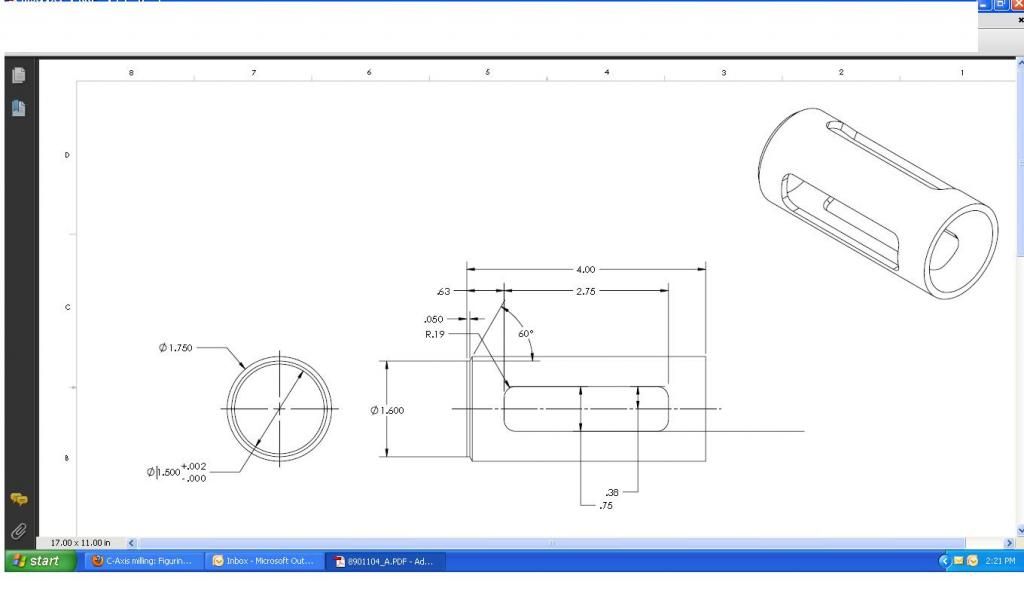

C-Axis milling: Figuring feedrate when simultanious cutting in C & Z

Hi all.
I did some searching/ reading on the topic, but could not figure out how to figure the feed rates when cutting both axis at the same time.
(I'm sure it's due to me being obtuse )

Could someone help and explain the concept to me? Or is there a quick formula, percentage wise of C axis °/sec I could use?

I will be milling some slots in 316SS tube that is Ø1.75OD x 1.5ID.
The slots have .19" corner radii, and I'm using a 4flute, Ø3/16", HSS ruffing mill to cut them out, due to overhang and lack of rigidity. (great concept in SS huh?)


My axial "Z" feed rate (based upon 800rpm, and .0026"IPR) is 2IPM, and 138° per minute "C" rotational.
How do I figure the feeds when using both?

Thanks,

Doug. 


Eis algo para quando partirem os Discos em Vinil, ou apenas para ouvirem o que quizerem no Gira-Discos, uma maneira de imprimirem em 3D uma música à vossa escolha!


3D Printed Record 
amandaghassaei
In an effort to boldly 3D print where no man or woman has 3D printed before, I've created a technique for converting digital audio files into 3D printable 33rpm records and printed some functional prototypes over the weekend. These records play on regular turntables, with regular needles, at regular speeds, just like any vinyl record. Though the audio on the records has a sampling rate of 11kHz (a quarter of typical mp3 audio) and 5-6bit resolution (mp3 audio is 16 bit), it is still easily recognizable, check out the video above to hear what it sounds like.

http://www.instructables.com/id/3D-Printed-Record


E para saberem como se tiram os sacaninhas dos Rebites, aprendam com a nossa amiga Audrey:


Removing Rivets  
audreyobscura
I have just begun the restoration process of my tiny fiberglass trailer. When I pulled the interior lights down off of the hull, there were multiple rivets that were holding them in place, that now needed to get removed.

I gave each rivet a good tug with a pair of pliers to make sure which ones actually needed to get removed. (all of them :P)

I figured out which of my drill bits was the same size as the hole in the rivet, and then used that bit to drill out the rivets.


Como não quero que vos falte nada, eis algo que descobri mesmo agora, a Hitek online, não, não é erro meu, a página aparece mesmo assim, no firefox, e tem uma data de coisas boas para comprar online...
Como a Dremel Trio!
Muáháháhá!


sábado, 17 de dezembro de 2011

Desenhar os vossos próprios Circuitos Electrónicos

Querem desenvolver um Projecto em Electrónica?
Agora, é muito mais fácil, graças a esta iniciativa, descoberta pela Ponoko:


Upverter: online hardware design tool

‘Github for electronics’

Upverter is a new cloud-based electronics engineering design platform. It aims to make it easier for open hardware designers to collaborate and share their projects. It includes an HTML5-based schematic editor and crowd-sourced parts library. Integration with Github takes care of versioning, and their open-source schematic conversion tool hopes to standardise interoperability between all common file formats.


E do nosso amigo Maurício Martins, a newsletter do Open Hardware:


The Open Hardware Weekly


Some members from the 2011 dream team with Ayah & Alicia

After two amazing and inspiring iterations (2011 and 2010), we are excited to announce we are passing the Open Hardware Summit torch!

We had an amazing two years: we collectively created the first OSHW definition (which has been adopted by CERN), communally created a logo for our movement, grew into a community that supports each other on forums, mailing lists and sponsorships, launched the first Open Hardware Scholarship, turned a conference goodie bag into something you would wrestle over, and created a geek red carpet that would have the Oscar’s drooling!


http://paper.li/ledsandchips/1317816319

quinta-feira, 14 de outubro de 2010

Electical What, Electrónica para todos

Imaginem um Site onde podem decifrar toda a panfrenália de símbolos electrónicos, para qualquer um, pois esse Site existe:


WHAT IS ELECTRICALWHAT?!

The image based search provided by ElectricalWhat simplifies searching and researching electronic symbols. ElectricalWhat aggregates electronics symbols into an easily accessible, free and open resource. ElectricalWhat is committed to communal sharing of knowledge and building a richer public domain by providing all content under the Creative Commons Attribution 3.0 License.

Portanto, quando precisarem, cá esta o Link:


http://electricalwhat.com/

terça-feira, 7 de setembro de 2010

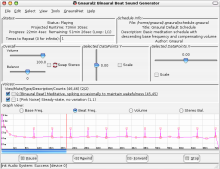
Meditação com um App Binaural

Aparentemente, este App ajuda na Meditação e em Estados Alterados de Consciência.
Como é de borla, é de experimentar:


A explicação da coisa:
In 1839, German experimenter Heinrich Wilhelm Dove discovered that illusory "beats" are perceived when pure tones of slightly different frequency are separately and simultaneously presented to each ear. Dove's insight was to realize that since there is no acoustic mixing of the tones, the perceived beats must exist solely within the auditory system, specifically that part which processes binaural (e.g., "stereo") sound.

While research in to binaural beats continued after that, the subject was viewed largely as no more than a scientific curiosity. Oster's paper was landmark not so much for its laboratory findings, but in how it tied-together the isolated islands of research since Dove in a way that gave the subject a renewed relevance to modern scientific questions.

Oster viewed binaural beats as a tool with applications for both research and medical applications. In terms of research, he felt they could be used to explore the neural pathways involved in hearing, and also to address higher-level questions such as how we locate sounds spatially in our environment, or selectively pick-out individual sounds from a jumbled noise (see "cocktail party effect"). Medically, Oster saw potential for binaural beats as a diagnostic tool, both for auditory impairments, and for a surprising range of non-auditory subjects. Of the latter, most notable was the startling finding that a diminished ability to perceive binaural beats preceded the onset of symptoms of Parkinson's disease. He also corroborated a study showing that the ability to perceive binaural beats fluctuated over hormonal cycles such as menstruation. Most important for Oster's thesis (that binaural beats involved different neural pathways than conventional hearing) was that binaural beats are perceived even when one or both frequencies are below the human hearing threshold.

Do binaural beats influence brainwave activity?

Many consider the idea of binaural beats influencing brainwave activity "controversial", but it is not, actually; only the claims of what that influence amounts to are controversial. That rhythmic stimuli can induce FFR is long studied across many species, comprising a subject known as "driving", and by no means do binaural beats have a monopoly on even auditory driving; the repetitive beating of a drum can induce FFR. But binaural beats do seem to have some advantages over many direct approaches, being arguably more efficient than most auditory means (perhaps because they use more neural circuits than conventional hearing, and a true low-frequency sinusoidal stimulus), and less invasive than some of the non-auditory approaches (like photic or electromagnetic). For example, while effective, it is well known that photic and electromagnetic stimuli can induce seizures. In my experience, binaural beats have been as harmless as anything else I listen to through headphones.
Podem até experimentar sem fazerem o Download grátis do App, indo aqui:

http://gnaural.sourceforge.net/